How a tank turns without front wheels
A tank’s tracks do more than carry it forward: they also steer it. The driver changes how fast the left and right tracks move. If both crawl at the same speed, the hull travels straight. If one slows while the other keeps moving, the faster track pushes that side of the vehicle farther ahead, rotating the hull toward the slower side.
The controls do not simply point the tracks in a new direction, as a car’s steering wheels do. They create a difference in motion across the tank’s width. Depending on the vehicle’s design, the driver’s input may work through clutches and brakes or through a more sophisticated steering transmission that varies power to each track.
The ground becomes part of the steering system
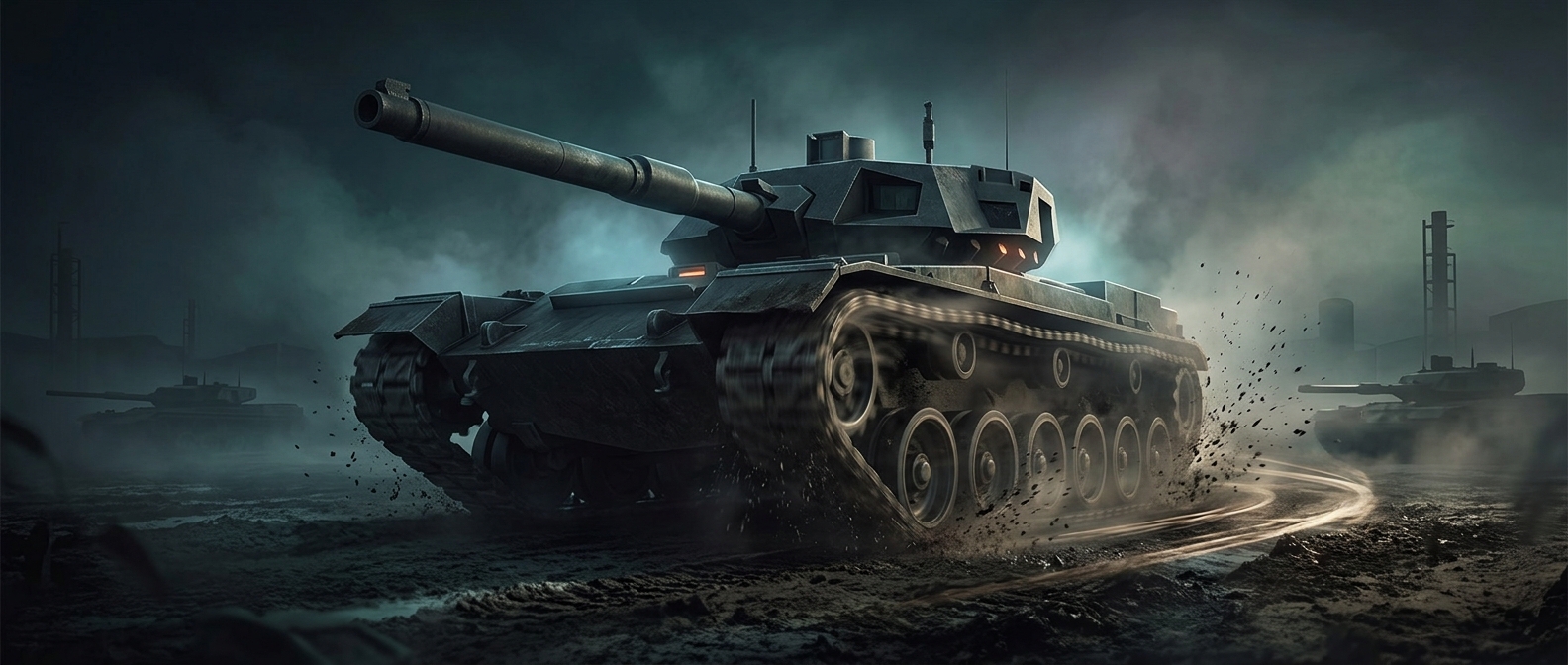
A track is a long belt of linked metal plates. As it moves, its broad contact with the ground gives the tank traction, but turning also means dragging or slipping some of that contact sideways. On firm ground, that resistance can make a turn harder; on loose soil, the tracks may scuff a visible arc as the hull pivots.
If one track stops while the other continues, the tank can turn sharply around the stopped track. Some vehicles can even drive their tracks in opposite directions, rotating almost in place. The tighter the turn, the more the tank relies on the ground giving way beneath its tracks. That is why steering a tracked vehicle is not just a matter of choosing a direction: the surface helps determine how easily the hull can swing around.