Why a submarine toilet needed a valve sequence
At depth, seawater presses hard against a submarine’s hull—and against any opening connected to the outside. A toilet could not simply flush like one on land: opening a pipe directly would invite water in under pressure. U-1206’s deep-water system used a series of valves and an air-powered mechanism to move waste through the hull while controlling that pressure difference. The order mattered. If the valves were operated incorrectly, the sea could enter the boat.
A plumbing problem became a battery hazard
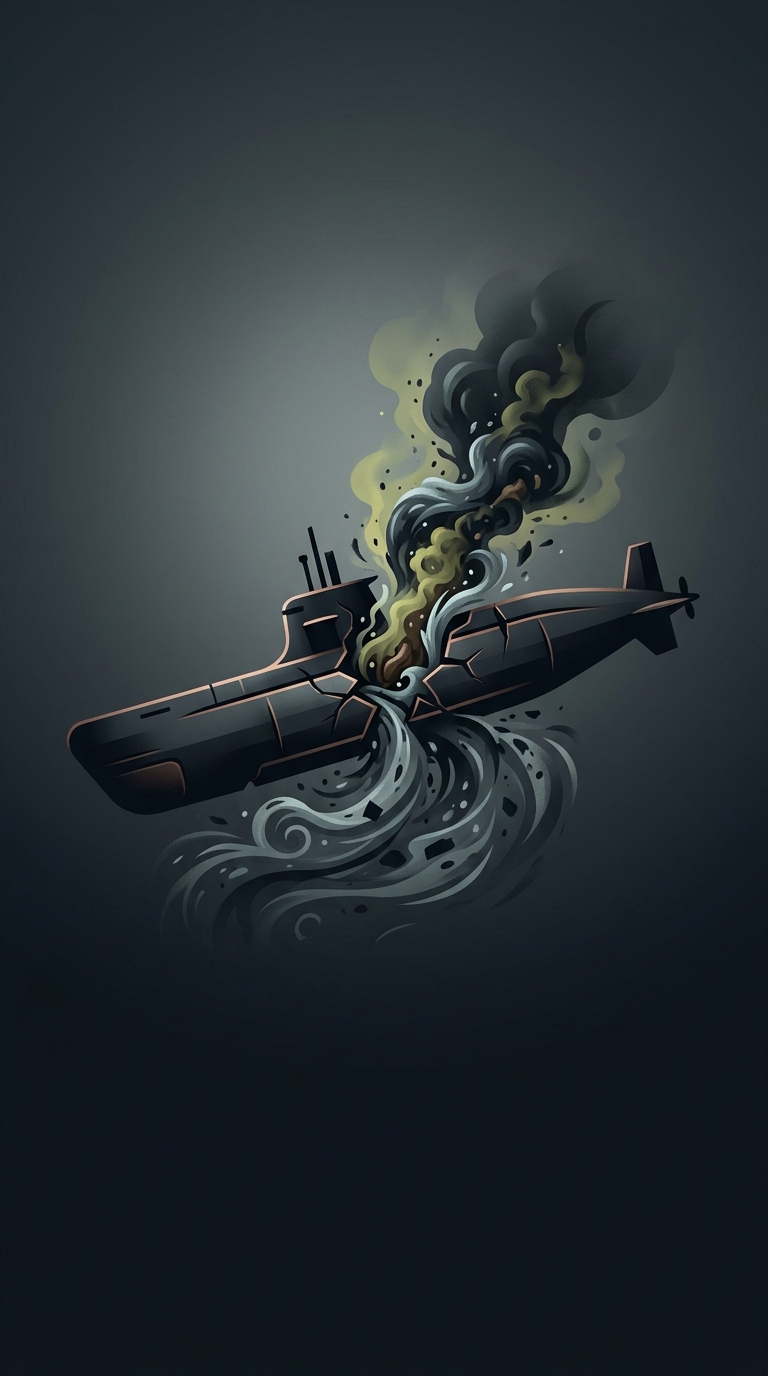
During a patrol in 1945, a toilet incident led to seawater flooding inside U-1206. The water reached the battery compartment. Submarine batteries could release dangerous gas when contaminated by seawater, so the crew faced more than a wet floor: remaining submerged risked exposing them to a poisonous atmosphere.
The boat had to surface to clear the danger. That solved the immediate problem of dealing with the gas, but it exposed the submarine to attack. Allied aircraft spotted it, and the crew abandoned and scuttled the vessel rather than let it be captured.
The cost of a small system failure
Submarines are built around keeping the outside world out: water, air, and pressure all have to be managed through controlled openings. A complicated toilet was therefore not just a convenience. It was another piece of pressure-handling equipment, with a mistake capable of compromising the boat’s safety. On U-1206, a system meant to let the crew live underwater helped force the submarine back to the surface.