Why a right turn begins with a left input
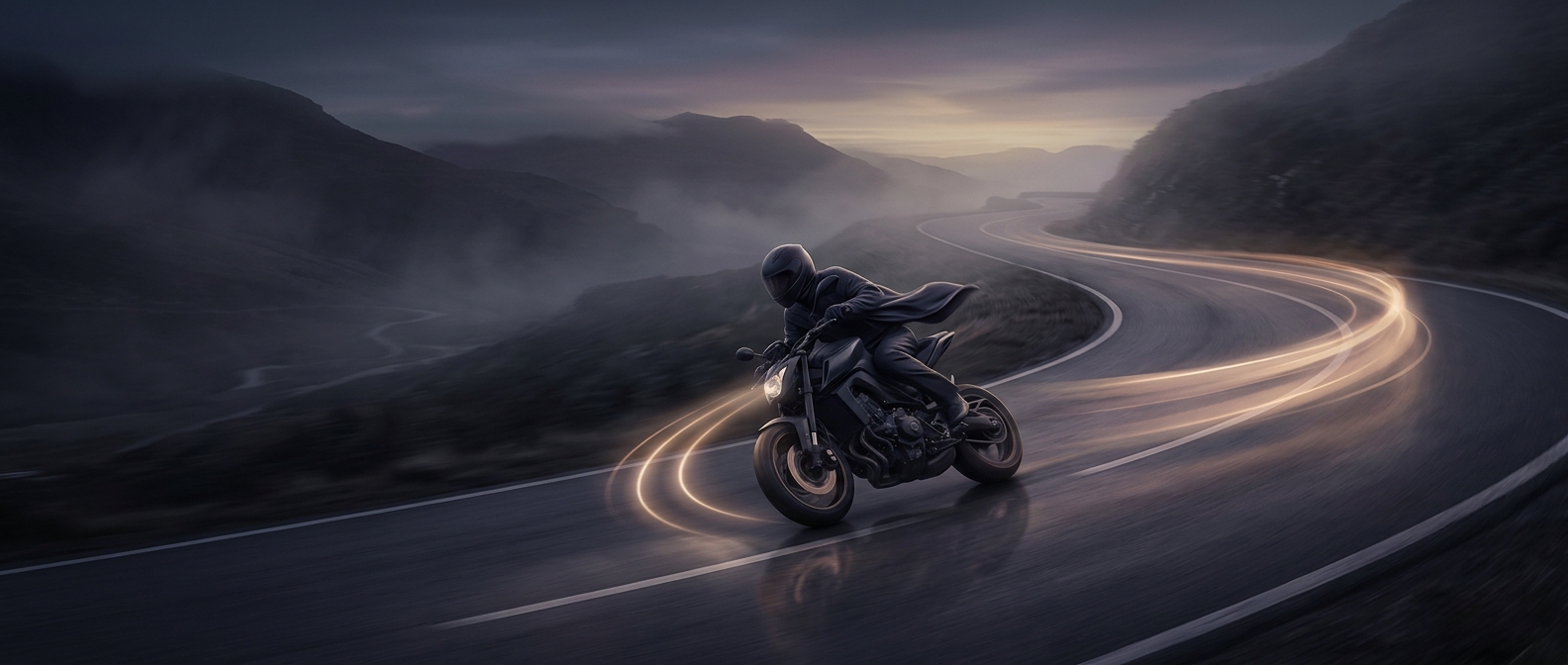
At ordinary road speeds, a motorcycle turns by leaning. The front wheel’s contact with the pavement shifts relative to the bike’s center of mass, and the motorcycle rolls toward the side it will turn. To start a right lean, the rider briefly steers the front wheel left. That small countersteering input moves the tire’s contact path left while the bike’s mass keeps moving forward, tipping the motorcycle to the right.
The rider then steers into the right-hand curve. The lean lets the tires’ grip redirect the motorcycle without requiring it to tip outward. In steady motion, steering and lean settle into a coordinated path around the bend.
A brief correction, not a left turn
This technique is called countersteering: pressing the inside handlebar forward to initiate a turn. For a right turn, that means pressing the right grip; for a left, the left. The initial movement is brief, and at speed it can be subtle enough that a rider may not notice the front wheel pointing momentarily the other way.
The effect is easiest to understand as a way to create lean, not as a deliberate detour. Once the motorcycle is leaning right, its path curves right. The rider adjusts pressure and body position to control how quickly it leans and how tightly it turns.
Why speed changes the feel
At very low speeds, a motorcycle can be maneuvered largely by turning the handlebars in the direction of travel, much like a bicycle being walked or steered through a tight space. As speed rises, the brief opposite steering input becomes the practical way to initiate a controlled lean. The transition is gradual, not a sudden threshold: tires, geometry, speed, and rider movement all affect how the bike responds.
That is why a quick handlebar press can change a motorcycle’s direction so decisively. The rider is not asking the front wheel to take the bike straight into the turn; the input first tips the whole machine, and the lean is what carries it around the curve.