Why a Sink Won’t Reverse at the Equator
A sinkful of water is far too small and short-lived for Earth’s rotation to reliably dictate which way it swirls down the drain. The rotational influence people associate with the Coriolis effect—a subtle deflection caused by Earth turning beneath moving air or water—is real, but in a basin it is overwhelmed by more immediate details.
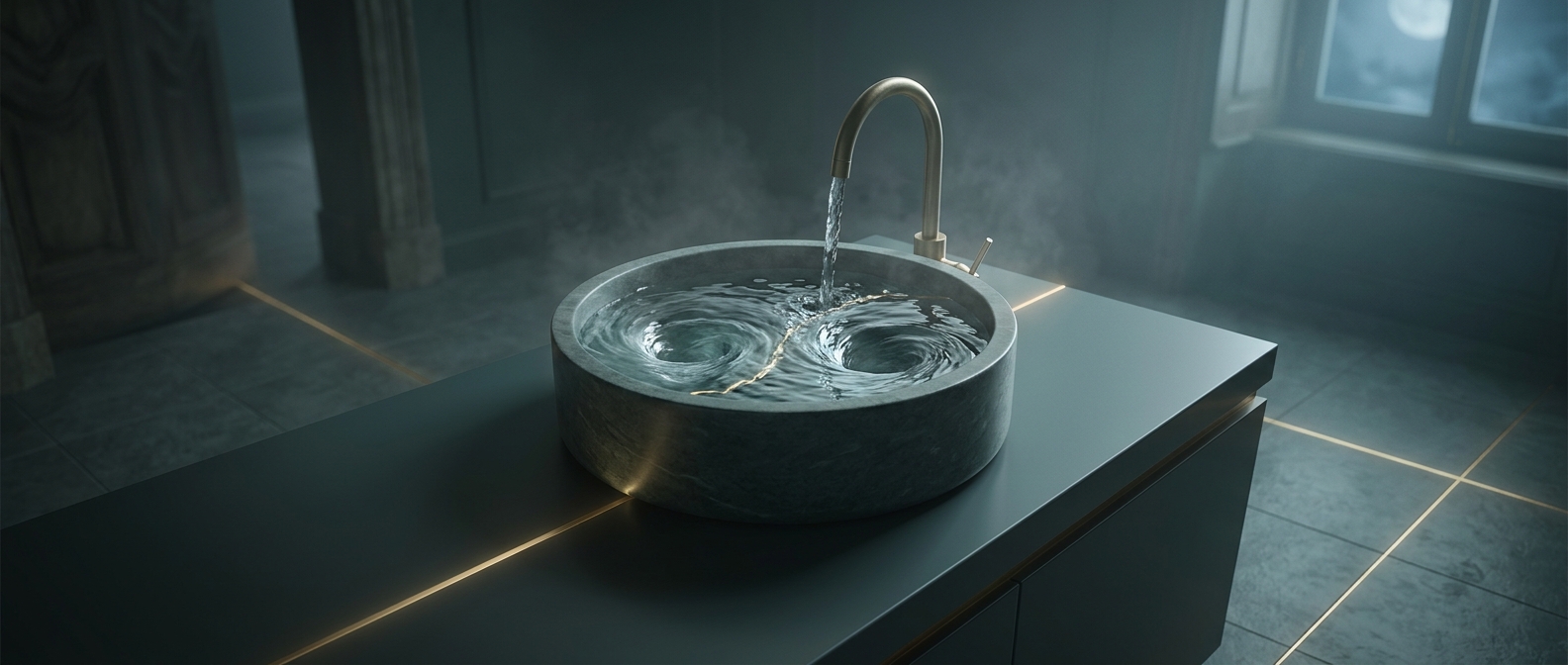
Water may already be moving when the plug comes out. The basin’s shape, a slightly tilted surface, the drain’s design, and even the way the water was poured can set the swirl’s direction. These small disturbances decide the outcome long before the equator’s influence could make a consistent difference.
How the Demonstration Gets Its Opposite Swirls
In a staged equator-side demonstration, an operator can arrange the water’s starting motion differently on each side of the line—for example, by pouring or releasing it with a slight twist. The basin then drains in the direction that motion encourages. Moving the setup across the line makes for a memorable travel stop, but the change in swirl is produced by the demonstration, not by crossing the equator.
Earth’s rotation does shape much larger systems, including weather patterns, where air and water travel over long distances. A kitchen sink is a different scale: its swirl is a record of how that particular basin was filled and disturbed, not a reliable compass for hemispheres.