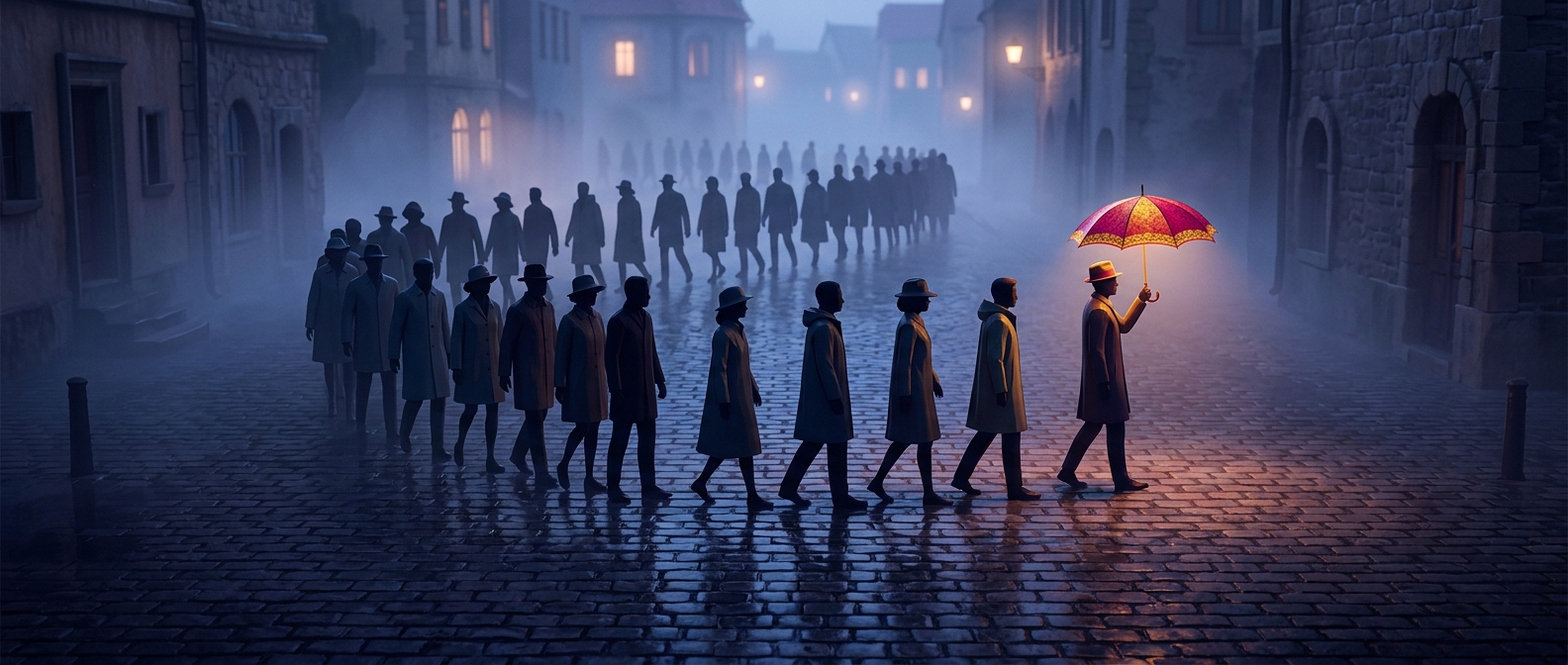
Why a Guide Carries a Marker Above the Crowd
In a busy plaza or museum entrance, a group can lose sight of its guide in seconds. A bright umbrella or raised stick solves a basic visibility problem: it puts a distinctive shape above heads, where people can spot it while moving. The marker is easier to track than a face or coat, especially when the group stretches out or visitors cross between its members.
It also gives the guide a simple way to keep people together without calling out constantly. Travelers can look up, find the marker, and adjust their pace or direction. That matters at turns, crossings, and other moments when stopping to count the group would slow everyone down.
A Simple Signal, Not a Substitute for a Plan
The marker works best when people know what it means: follow it, and regroup if it disappears from view. It cannot make a crowded route less crowded, guarantee that everyone hears instructions, or prevent someone from falling behind. A guide still has to choose where to pause and make sure the group can safely cross or enter a space.
That contrast is part of the odd charm of the setup. The object overhead is almost childishly simple, but it addresses a real coordination challenge: keeping strangers moving as one group through a place full of other people. The more the group blends into the crowd, the more useful that small, unmistakable point of color becomes.