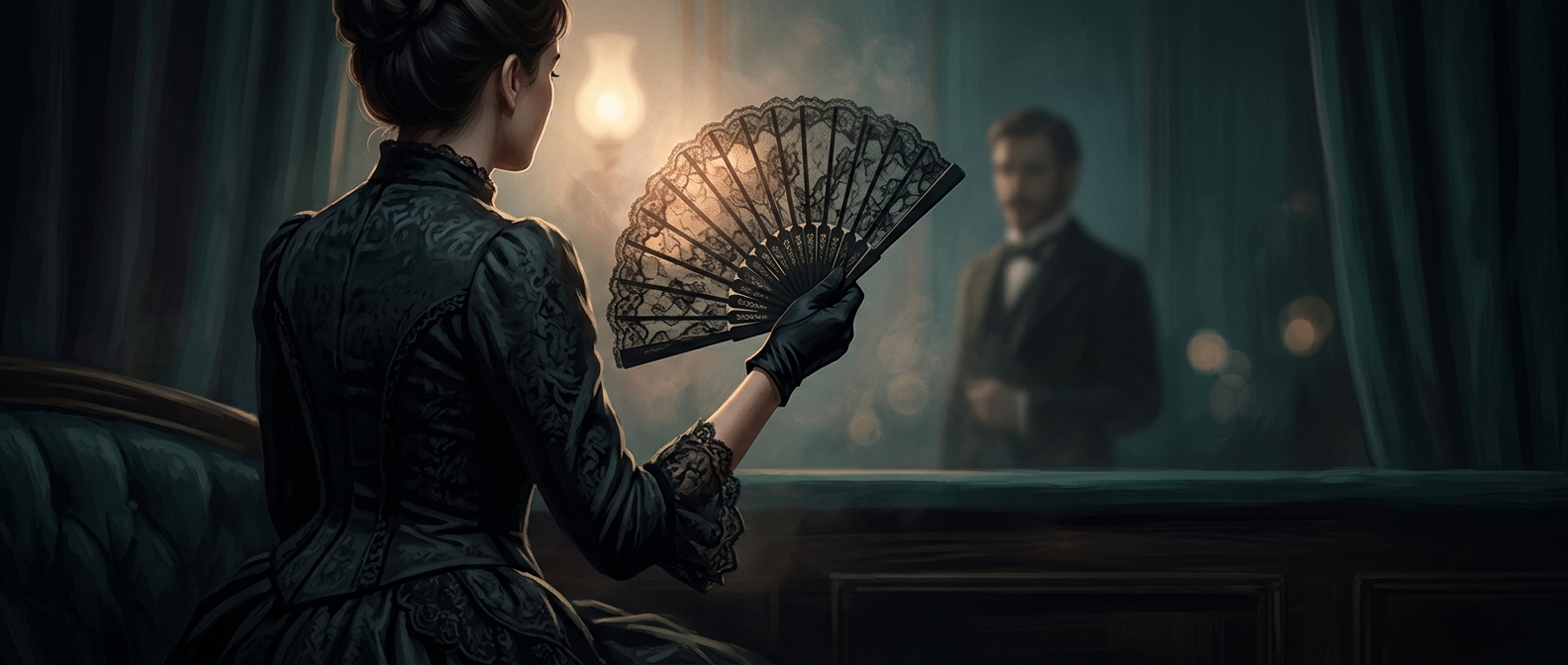
A fan turned gesture into a private signal
In a crowded Victorian gathering, a fan could do more than cool its owner: it gave her a small prop for communicating across a room without speaking. A tap on the left cheek could be read, in one version of the fan’s flirtatious “language,” as an invitation to a secret rendezvous. The message depended on someone noticing the gesture—and knowing how to interpret it.
The code offered cover, not certainty
Fan signals suited a social world where courtship often unfolded under watchful eyes and conversation had to remain decorous. A movement could attract one person’s attention while looking, to everyone else, like an ordinary adjustment of the fan. That made the exchange discreet, though not necessarily secure: a chaperone or rival could still see it.
The gestures were not a single, universally enforced code. Printed guides and playful social conventions offered different interpretations, so a fan’s meaning depended on the people involved. Its usefulness lay less in perfect secrecy than in ambiguity: the sender could signal interest, while retaining room to deny that the motion meant anything at all.
That is the appeal behind the famous cheek tap. The fan did not make flirtation invisible; it made flirtation plausibly ordinary.