How a Lighthouse Turns Color Into a Coastal Boundary
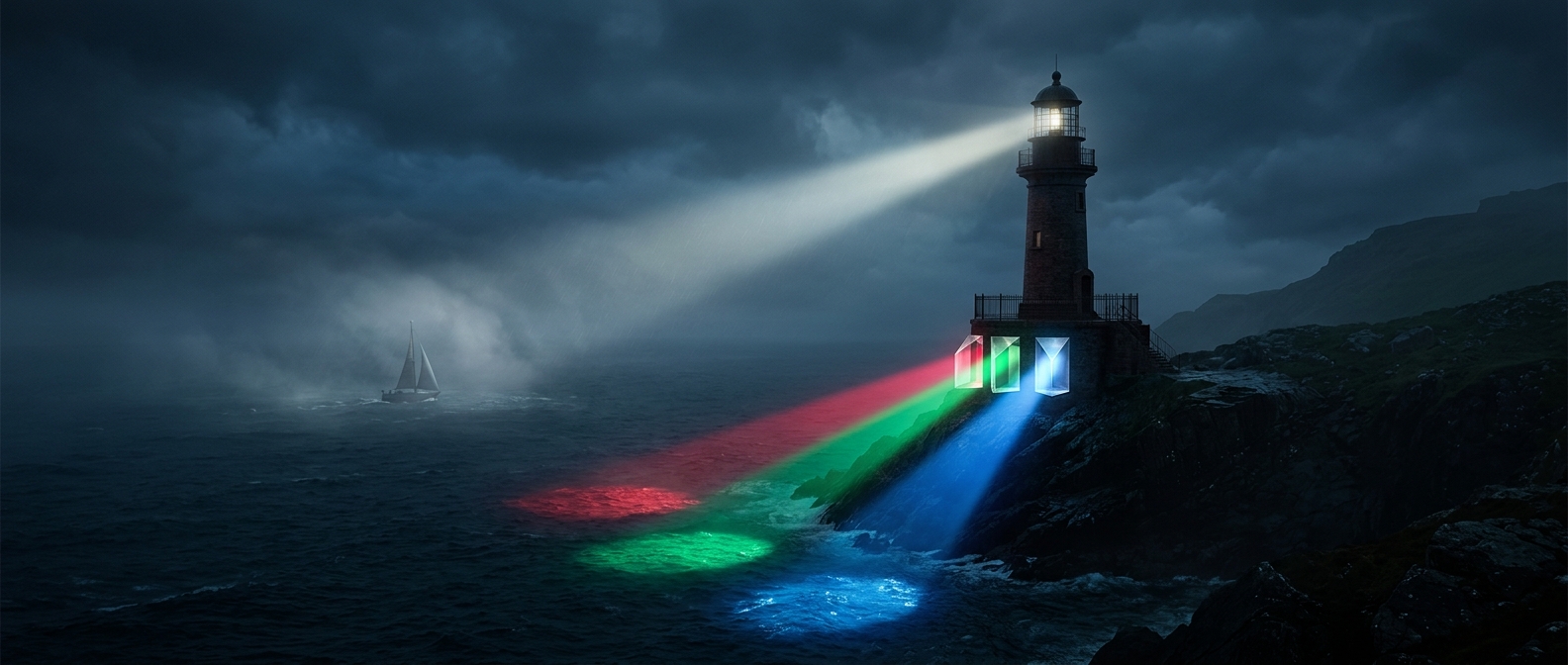
A lighthouse does more than send light out to sea. Some lights are fitted with colored glass that makes the beam appear red or green from particular directions. As a vessel moves along the coast, it may pass from one colored sector into another. The change can mark a boundary in the water—such as the edge of a shoal, a submerged hazard, or the entrance to a channel.
The color is only one part of the signal. A light may also be steady or flash in a distinctive rhythm, and its brightness and position help distinguish it from other lights on shore. Together, these traits give the beacon a recognizable identity, much like a visual landmark that can be checked against a nautical chart.
Why the Chart Matters
A color has no universal meaning by itself. A red sector does not automatically mean “danger” everywhere; its significance depends on the local coastline and the charted directions from which the light is seen. Sailors compare the observed color and flashing pattern with the chart before deciding where they are and which waters are safe to enter.
That makes a sector light a kind of boundary marker rather than a simple warning lamp. From one approach, the beam may indicate navigable water; a small change in the vessel’s bearing can bring a different color into view, signaling that the ship is nearing a hazard. The practical value lies in that precise transition: a subtle shift in hue can reveal that the safe route has changed.