Why a Sextant Needs a Moment of Stillness
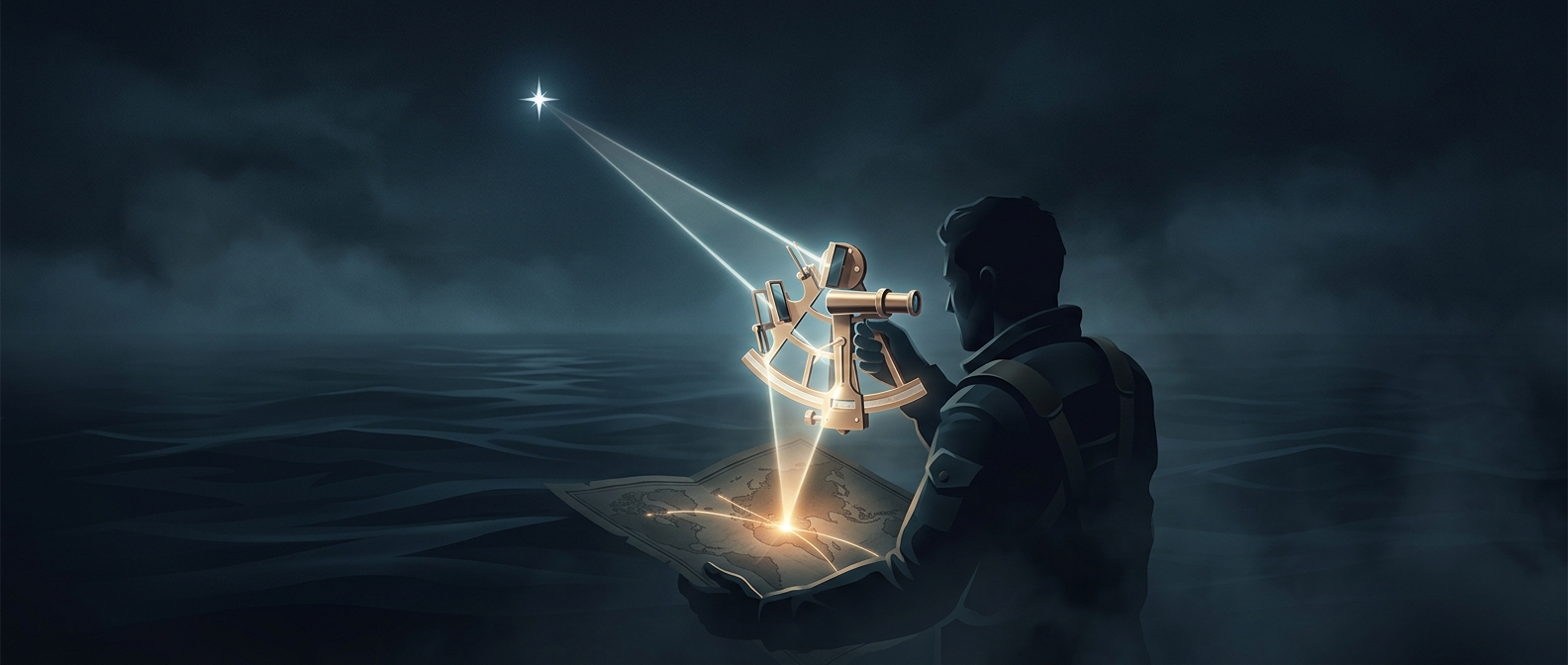
A sextant does not simply point at a star. Its mirrors bring the star’s image down to the visible horizon, and the instrument’s scale records the angle between them. That angle—measured at a particular time—can help a navigator work out a position.
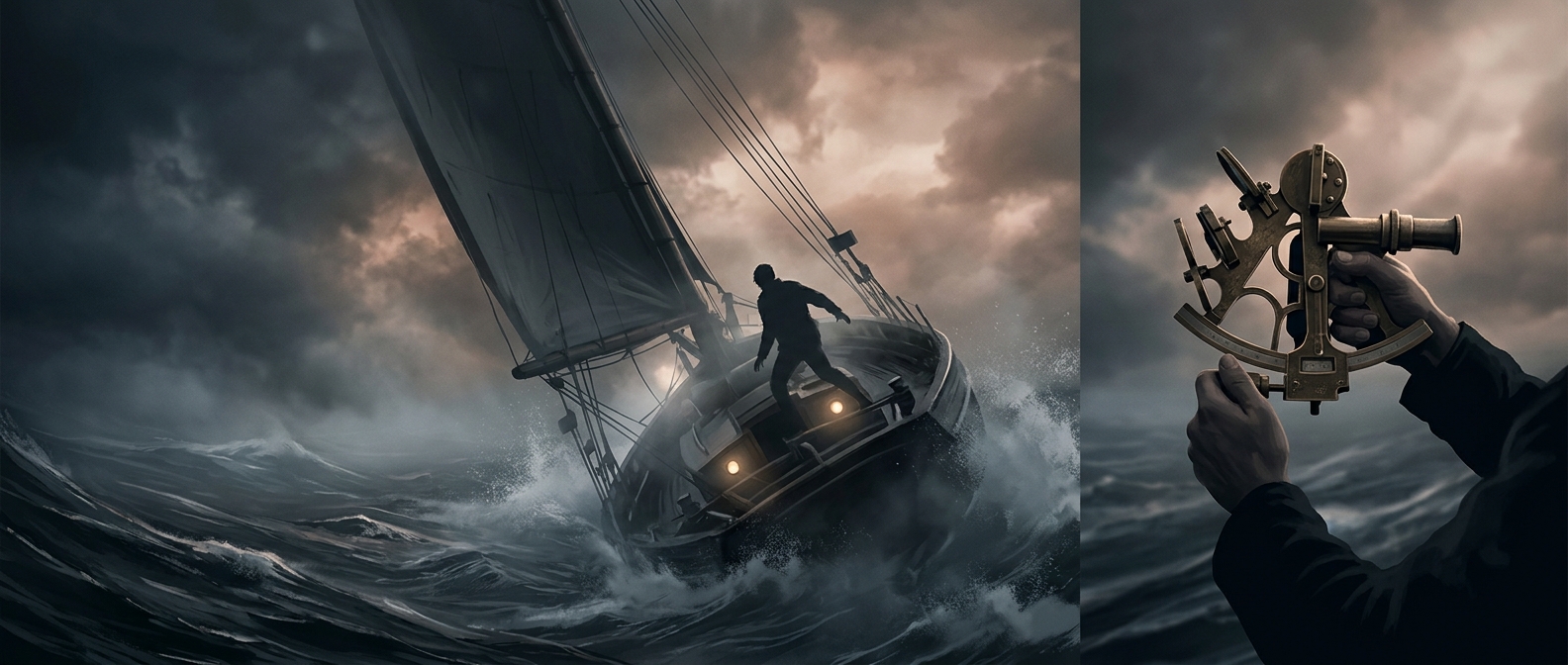
The difficulty is that the horizon is the reference line. On a pitching boat, it rises and falls in the observer’s view, while the star seems to shift against it. The navigator’s hand, the sextant, and the boat are all moving at once, so a small wobble can change the angle being read.
Finding the Useful Instant
Rather than hold a perfect pose for long, a navigator tries to bring the star to the horizon and read the angle during a brief, usable moment. The sextant’s telescope narrows the view, and its adjusting screw lets the user move the reflected image in small increments. Even then, a wave can carry the horizon past the star just as the alignment looks right.
A stable stance helps: bracing against the vessel and keeping the instrument close to the body reduces movement from the arms. Navigators can also take repeated observations, noting the time for each, rather than trusting one hurried sight. The boat’s motion cannot be removed from the view, but careful technique can make the readings more consistent.
A Reading Is Only the Beginning
The angle alone is not a location. It must be combined with the observation time and the celestial body’s known position, then worked through navigation calculations. That makes a shaky sight consequential: a small error in the angle can shift the position inferred from it. At sea, the sextant’s challenge is not merely aiming at a star—it is catching a trustworthy measurement while the reference horizon itself is in motion.