From Pagan Spirits to Fairy Guardians
The fairies of European folklore did not emerge all at once as tiny, kindly protectors. Their ancestry is better understood as a long blending of older beliefs about unseen beings with later local stories. In pre-Christian traditions, people across Europe imagined spirits connected to particular places and forces: a spring, a forest, a household, or the boundary between the living and the dead.
As Christianity spread, these older beings did not simply vanish. In some communities, they were recast as fairies—powerful neighbors in an unseen world, capable of helping people but also of causing harm. “Pagan” here means belonging to pre-Christian religious traditions; it does not point to one unified faith or a single origin story.
Why Guardians Could Be Benevolent—and Dangerous
A fairy’s character often depended on how people treated it and what the story needed to explain. A spirit associated with a home or landscape might reward respect, protect a favored person, or punish a breach of custom. These stories made the supernatural feel close to ordinary life: a household’s luck, a patch of land, or a child’s safety could all seem tied to unseen powers.
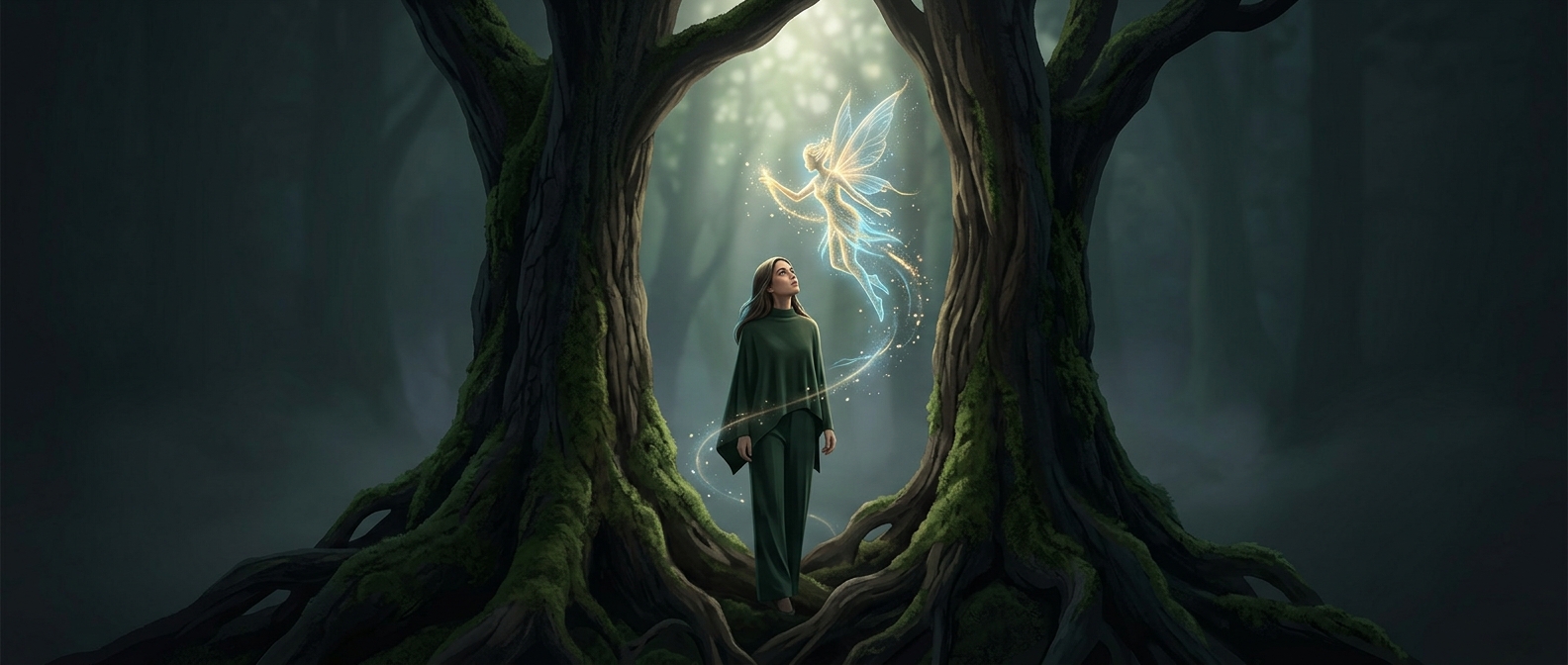
Over time, retellings emphasized some traits more than others. Literary and popular versions increasingly presented fairies as enchanting, helpful guardians, while older folklore often kept their behavior unpredictable. The change was not a clean replacement of one belief by another; it was a gradual reshaping across regions and generations.
That layered history is why a benevolent fairy can still feel faintly uncanny: the protector in the story carries the older idea that the unseen world may help you, but it does not necessarily follow human rules.