A second person changed the flight’s load
An early airplane had little spare capacity. Its wings had to generate enough lift for the aircraft, its engine, and the person aboard; adding a passenger increased the weight the machine had to keep in the air. It also changed how that weight was distributed. A plane’s balance mattered: too much weight in the wrong place could make it harder to control.
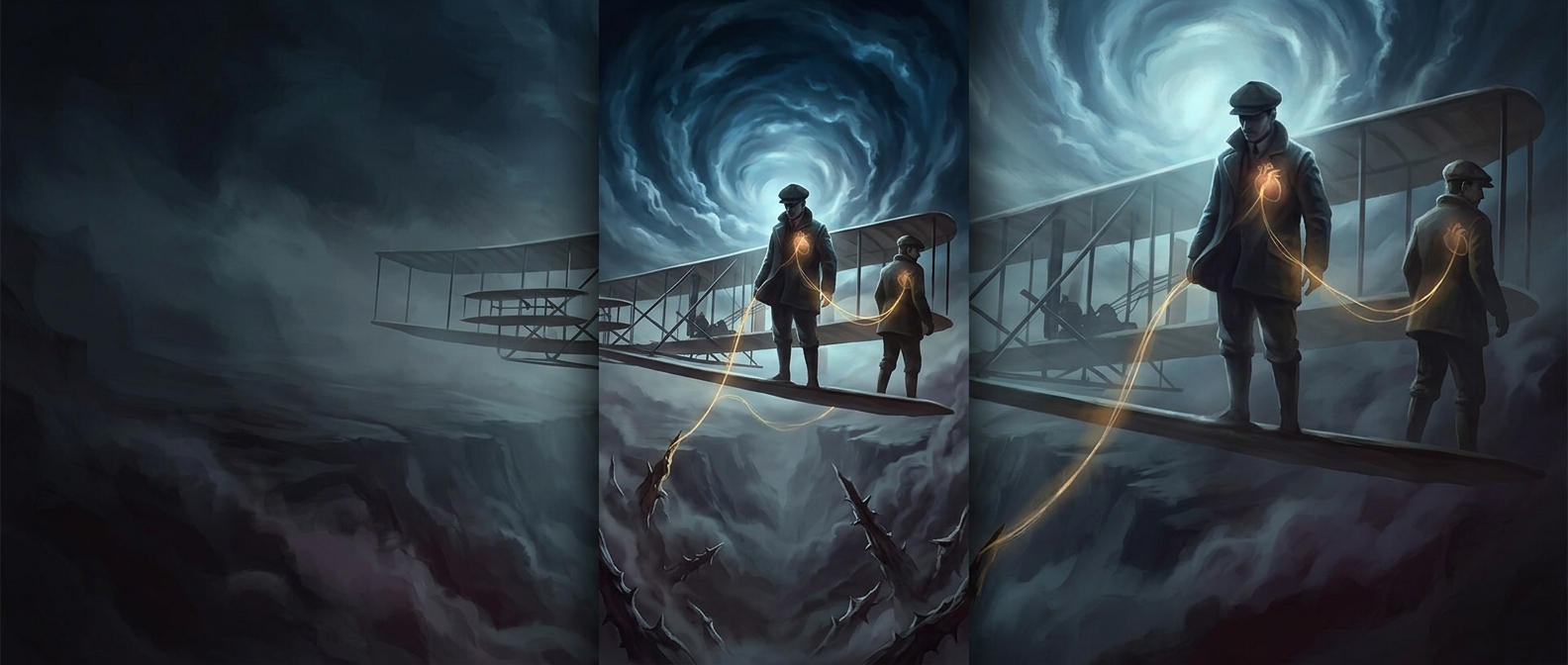
That made Orville Wright’s flight with Wilbur more than a ride. It demonstrated that the airplane could carry a second person while remaining controllable. The challenge was not simply getting both brothers off the ground, but showing that the design could handle a heavier load in flight.
A proof of capacity, not a new routine
Early aircraft were designed around the pilot and the controls, not around comfortable passenger seating. Carrying another person therefore tested a practical limit of the machine. It also hinted at a larger possibility: an airplane might do more than lift its inventor or pilot. It could carry someone who was there to observe, travel, or eventually pay for a seat.
But a successful two-person flight did not instantly make airplanes ready for everyday passenger service. Aircraft still had to become more reliable, useful, and capable of carrying people safely. The brothers’ shared flight was a small but tangible demonstration of what aviation might grow into—and a rare occasion when the Wrights were both aboard the same airplane.