Why Leonardo’s Aerial Screw Could Not Lift Off
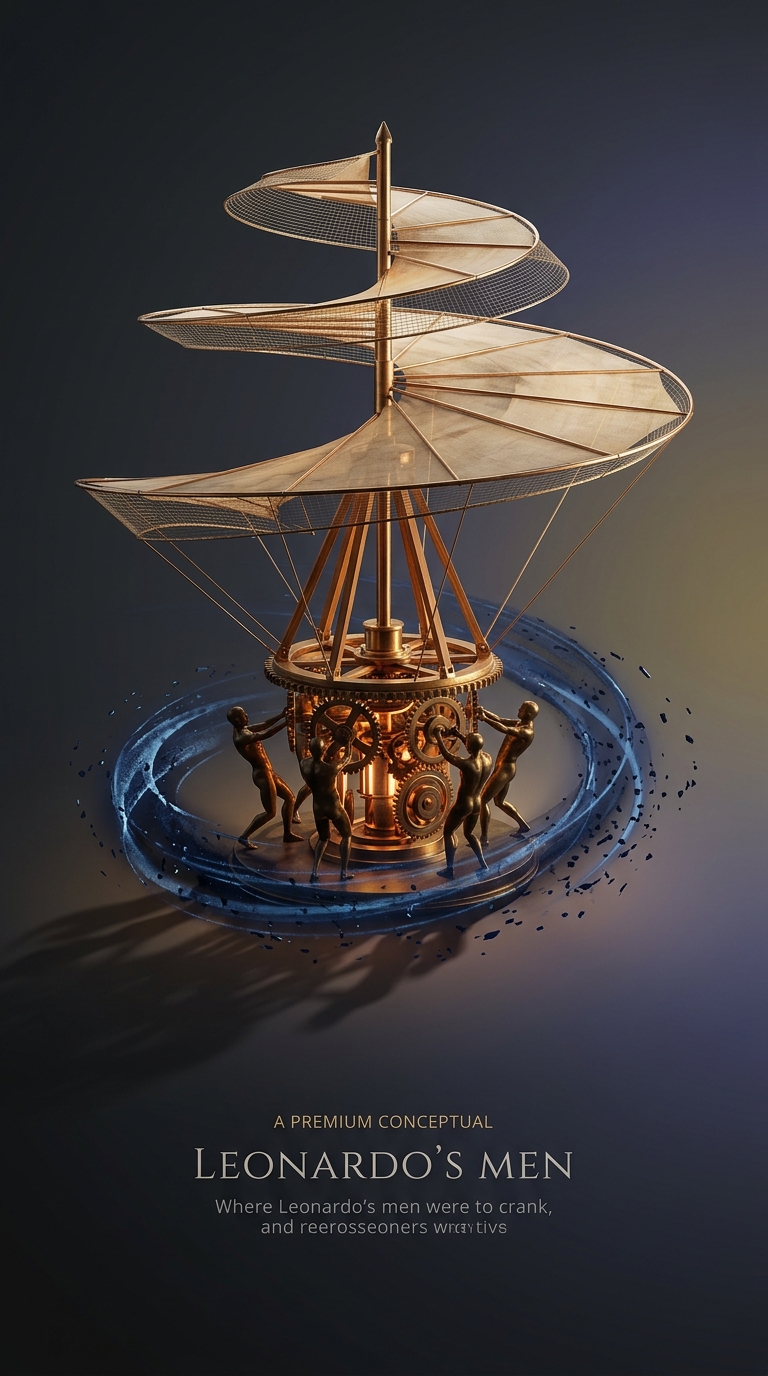
Leonardo da Vinci’s aerial screw imagined a broad, spiral-shaped surface spinning around a vertical shaft. The idea was to drive it upward by making it press air downward—the same basic action that lets a helicopter rise. But a drawing of the principle is not enough: the machine must move a large amount of air fast enough to support its own weight.
The screw could not push against the air as a wood screw pushes against wood. Air has no solid threads for it to grip; the rotating surface would have to generate lift through its motion alone. That takes substantial power, and the proposed machine offered no engine. People turning the structure by hand could not supply the force needed to spin such a large surface at a useful speed while also lifting the crew and machine.
The Missing Step From Sketch to Aircraft
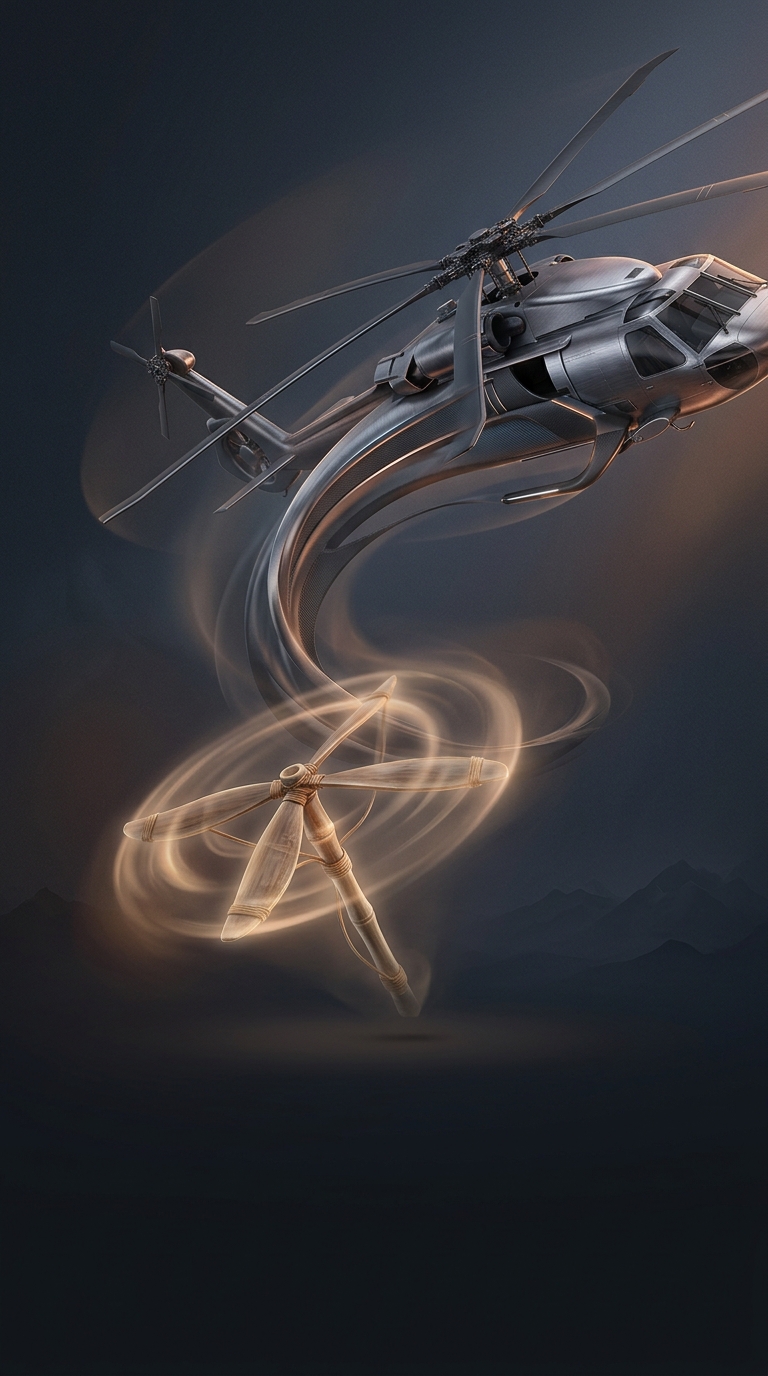
Modern helicopters solve this problem with powered rotors whose carefully shaped blades continually drive air downward. The blades are not simply a spiral sheet: their shape and angle help turn rotation into lift efficiently. An aerial screw would have needed a workable way to create that lift, along with a lightweight structure and a strong source of power.
Leonardo’s sketch is therefore best understood as an early attempt to imagine vertical flight, not a buildable helicopter awaiting the right workshop. Its enduring insight was to look upward for lift by moving air; its practical limit was that a person-powered spiral could not move enough air to carry itself off the ground.