A life viewed from the margins
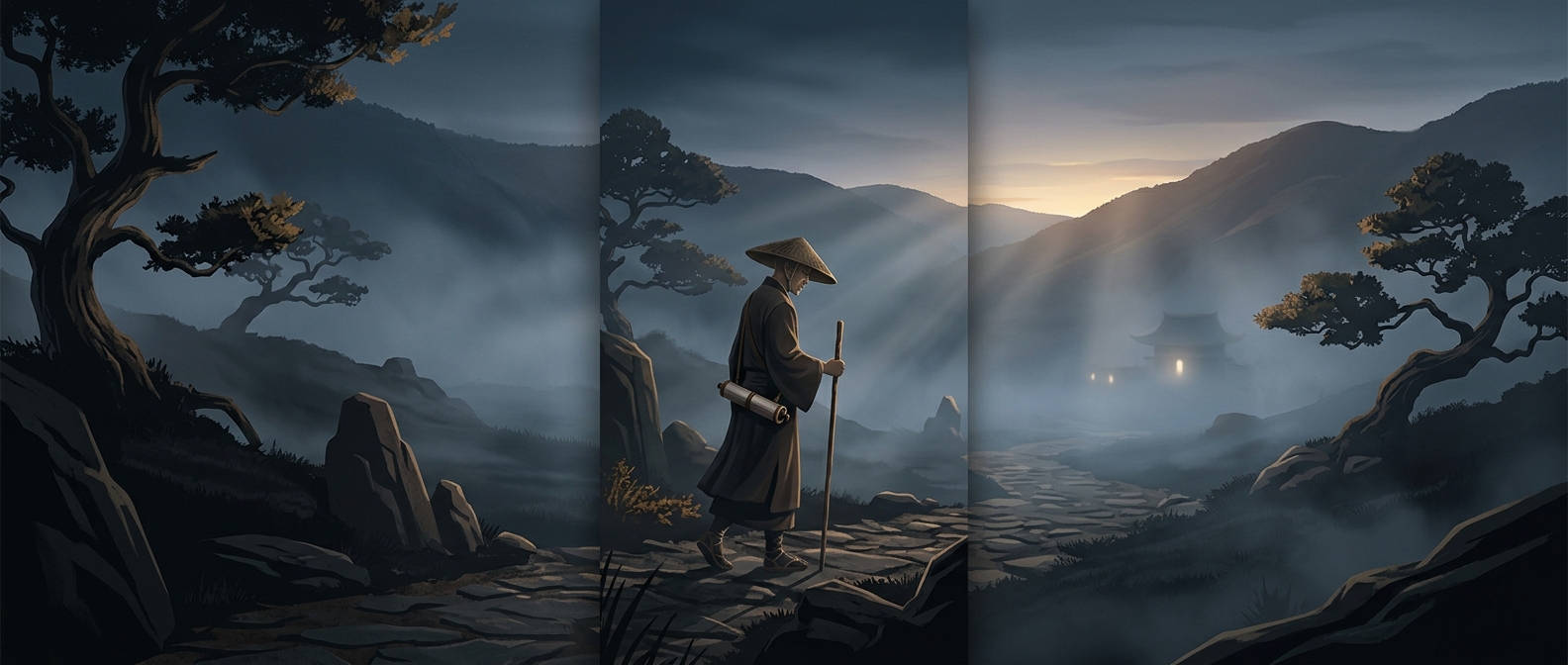
Yoshida Kenkō’s appeal as a medieval wanderer lies less in a record of nonstop travel than in the way he looked at the world. After serving at court, he became a Buddhist recluse—a person who steps back from public life—and wrote short reflections on people, places, and the passing seasons. His best-known work, Tsurezuregusa, often translated as Essays in Idleness, gathers these observations rather than telling a single travel story.
Movement sharpened his attention
For Kenkō, leaving the routines of court and turning toward the natural world made ordinary changes worth noticing: a season advancing, a scene losing its beauty, or a familiar custom revealing something about human behavior. That sensibility fits a Buddhist concern with impermanence—the idea that things change and do not last. Nature was not merely scenery; it offered a way to notice time passing.
His writing also makes the comparison with digital nomads only a metaphor. Kenkō did not travel while working remotely, and his reflections do not describe a modern, location-independent career. What feels familiar is the choice to seek perspective outside settled routines, carrying one’s attention from place to place.
A different kind of travel record
Rather than documenting an itinerary, Kenkō made passing impressions endure on the page. His work suggests that wandering can be intellectual as well as physical: the journey matters because it changes what the observer notices.