Why pilgrims leave stones at Spain’s Cruz de Ferro
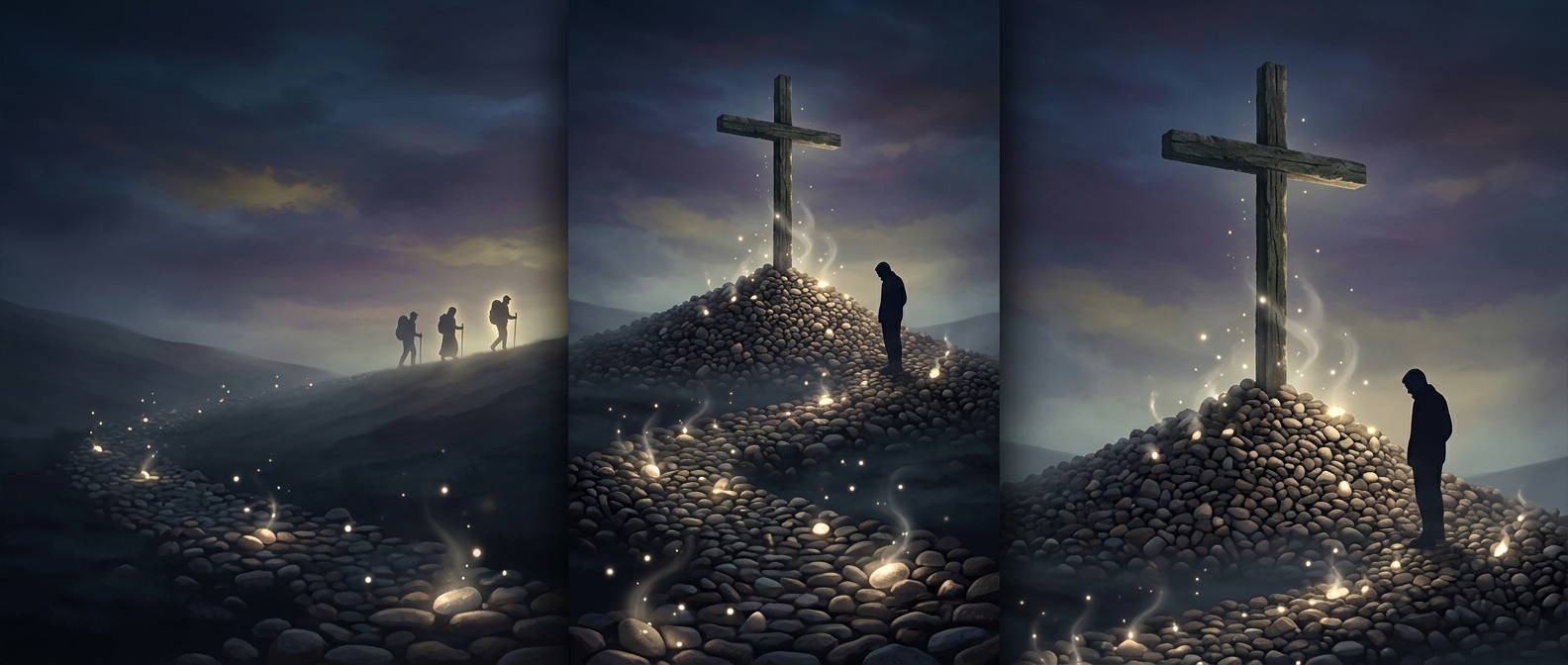
On the Camino de Santiago, the Cruz de Ferro stands on a high mountain pass in the province of León. Pilgrims who bring a stone from home place it at the mound beneath the cross. The gesture turns something inward—regret, grief, a promise, or another personal burden—into something they can physically set down.
The stone’s journey matters. Carrying it uphill makes the act more than a momentary wish: the pilgrim has borne a small weight along the route before choosing to leave it behind. The cross gives that private intention a shared place, without requiring anyone to explain what their stone means.
A mound built from individual journeys
Each stone adds to a pile made by many travelers over time. No single offering tells the whole story, but together they make visible the repeated act of arrival and release. The mound also changes as people continue to add stones, so the ritual leaves a tangible trace rather than ending when a pilgrim walks on.
For someone traveling the Camino, the stop can mark a transition: the burden is not erased, and the path ahead is not suddenly easy. But setting the stone down gives the journey a concrete turning point—one small weight left at the pass while the pilgrim continues onward.