From personal portrait to identity check
Early passport photographs were not yet governed by the familiar, tightly standardized format. When governments began requiring them around World War I, the rules could leave room for pictures that looked more like keepsakes than official records: a traveler might appear with a dog, a guitar, or a very large hat.
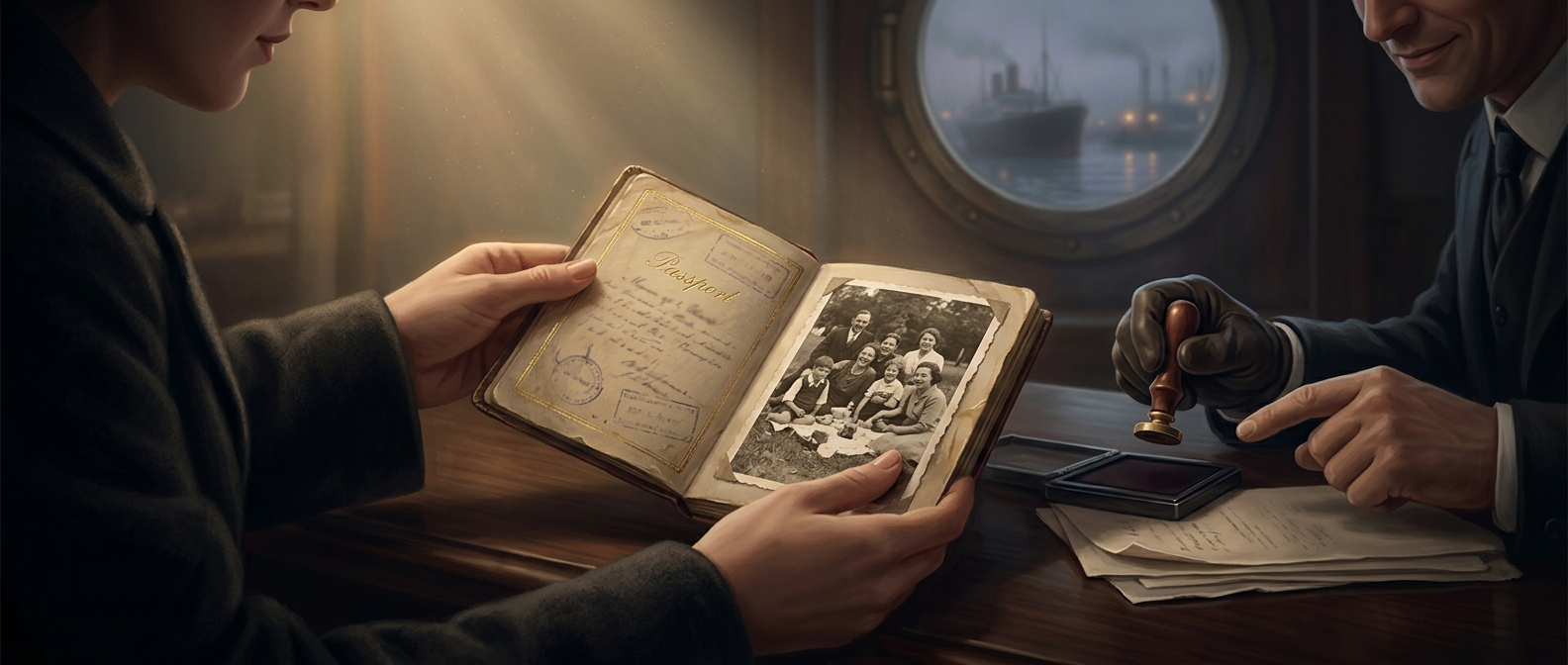
That looseness reflected a new administrative use for photographs. A passport was meant to help officials connect a document to the person standing before them. But requiring a picture did not instantly produce a shared set of rules for how that picture should look. Authorities still had to work out what made a face easy to identify and compare.
Why the rules narrowed
A photograph is most useful at a checkpoint when it draws attention to the same features an official can see in front of them. A brim hiding the face, an object sharing the frame, or an unusual pose can make that comparison harder. As photo identification became routine, rules favoring a clear, unobstructed portrait made passports more consistent and practical to inspect.
The shift was less about declaring hats or dogs improper than about making each image serve the same job. What began as a flexible portrait became a standardized tool: a small picture designed to help determine whether the person holding the passport was the person named inside it.