Passport pages have a second life under ultraviolet light
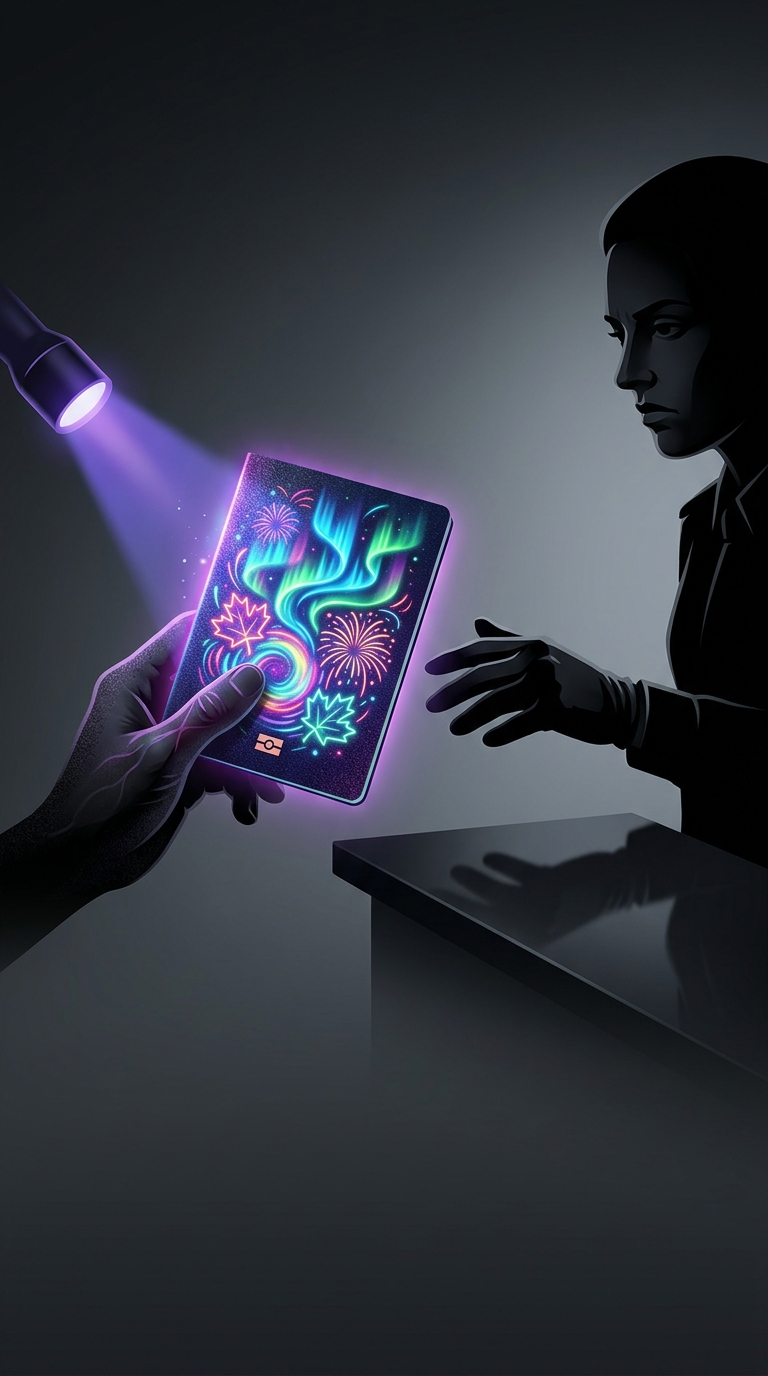
A passport’s printed page is designed to be read in ordinary light, but some of its artwork is made with inks that respond to ultraviolet (UV) light. Under a UV inspection lamp—often called a black light—those inks fluoresce, making images appear that are nearly invisible under normal lighting.
The effect turns decoration into a quiet security check. Norway’s passport reveals a Northern Lights scene under UV light; Canada’s includes glowing maple leaves and fireworks. These details are not secret in the sense that only officials can see them: anyone with the right lamp can reveal them. They are incorporated into documents so trained inspectors can compare what appears with the expected design.
Why the hidden images matter
A copied passport page may look convincing at a glance, but reproducing its special inks and their precise placement is harder than copying ordinary visible artwork. UV features therefore add another layer to a document’s security. They work alongside other checks rather than proving authenticity on their own.
For travelers, the practical consequence is usually invisible: the inspection happens quickly, and the page still looks like a page of decorative printing. But under the right light, its artwork becomes a built-in test—one that lets a border officer check for details most readers would never notice.