Why passport photos favor a neutral expression
A passport photo is meant to help officials—and, in many cases, automated facial-recognition systems—compare your face with the person standing in front of them. A broad smile changes more than the shape of your mouth: it lifts the cheeks, narrows the eyes, and shifts other visible features. Keeping the expression neutral makes the photo a more consistent reference for that comparison.
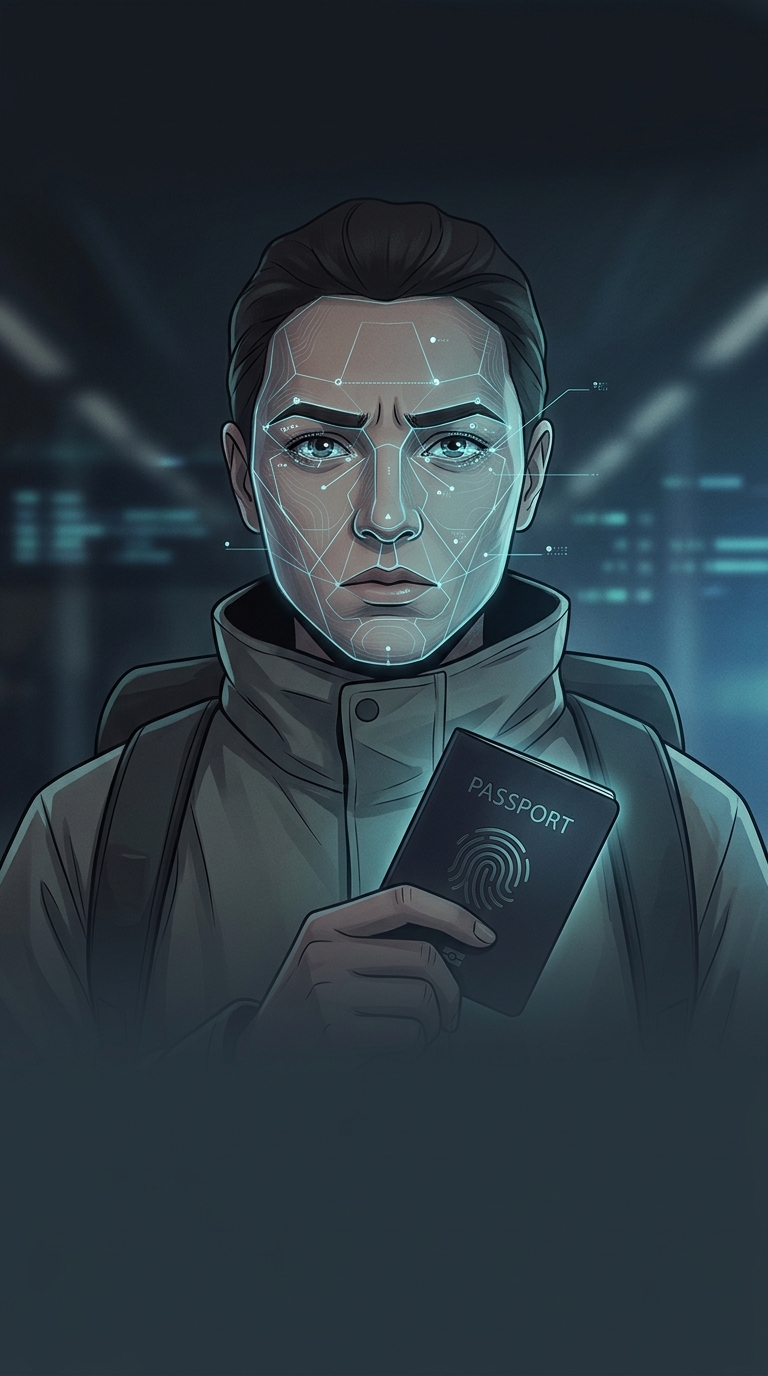
Facial-recognition software looks for patterns in the positions and shapes of features, such as the eyes, nose, and mouth. If a photo shows a strong expression, those features may look different from the way they appear during a later check. A neutral pose reduces that variation; it does not make recognition foolproof or eliminate the need for human judgment.
“No smiling” is not a universal rule
Photo requirements depend on the issuing country and can change. Some authorities call for a neutral expression, while others allow a natural, slight smile. The practical distinction is usually between a relaxed face and an exaggerated expression that alters the face’s appearance or obscures its features. Applicants should follow the current instructions for their own passport rather than assume every country applies the same rule.
The goal is not to make the photo look stern. It is to create a clear, repeatable image—one that still resembles you when you are not posing for a camera.