Why an e-passport can spark in a microwave
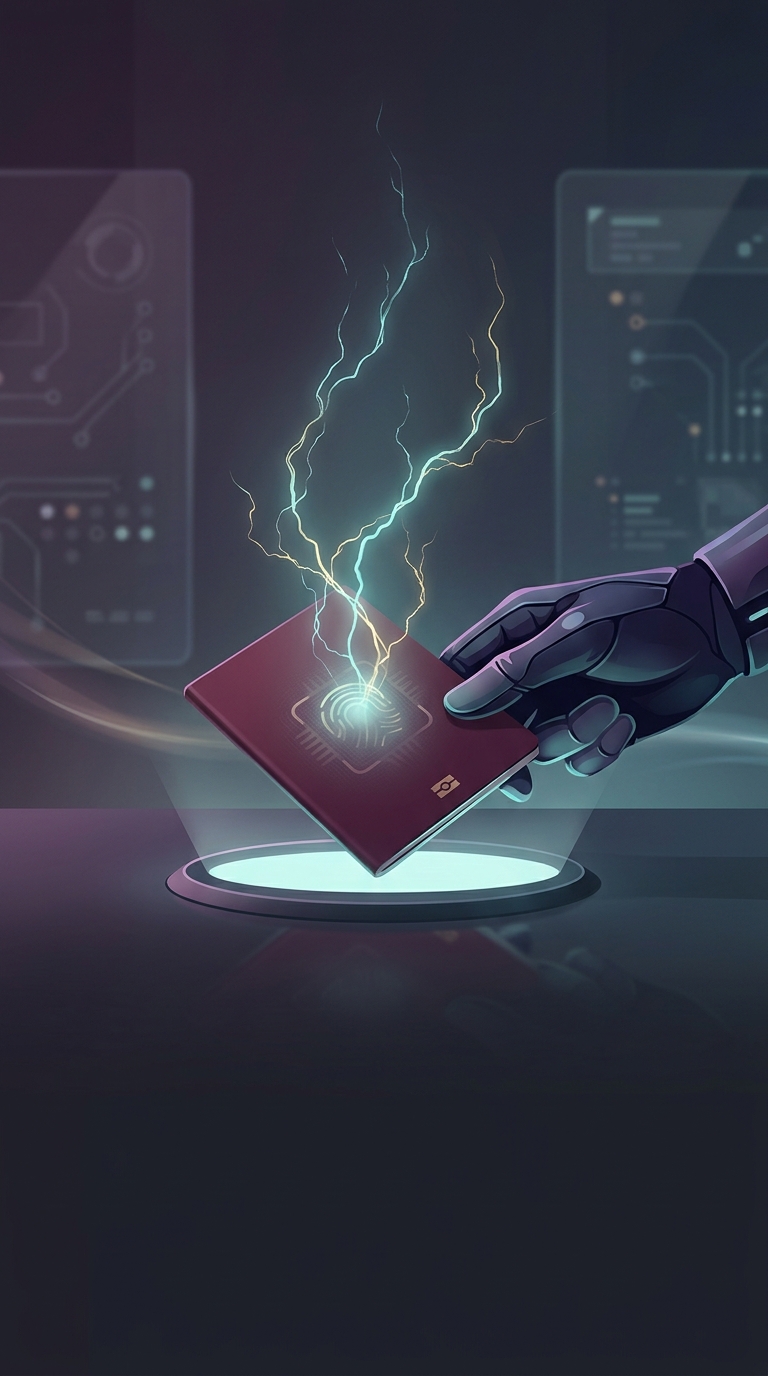
An e-passport contains a tiny electronic chip and a thin antenna, usually built into its cover. The antenna lets a reader communicate with the chip over a short distance. It is made of conductive material—often a fine metal trace arranged in a loop.
A microwave oven’s changing electromagnetic field can induce electrical currents in nearby conductors. In a passport, those currents may concentrate at small gaps or edges in the antenna, heating them enough to produce visible sparks or tiny arcs. The odd sight is a small-scale electrical discharge, not the chip sending out a signal or the passport somehow “reacting” to being read.
The damage can outlast the flash
The sparks may scorch or puncture the cover, damage the chip’s antenna, or harm the passport in other ways. If the antenna breaks, the chip may no longer communicate with passport readers—even if the booklet still looks usable. Paper, adhesives, and other materials in the passport can also be damaged by the heat.
The effect is not guaranteed: it depends on the passport’s construction and how it sits in the microwave. But a brief, unpredictable flash is enough to make the experiment a bad idea. A microwave is designed to heat food, not to test the electronics embedded in an identity document.