A road across the permafrost
The route commonly known as the Kolyma Highway crosses Russia’s remote Far East, connecting the region around Magadan with the interior near Yakutsk. Under Stalin, prisoners in the Gulag system were forced to build it across vast, sparsely settled terrain where moving people and supplies was difficult even before the work began.
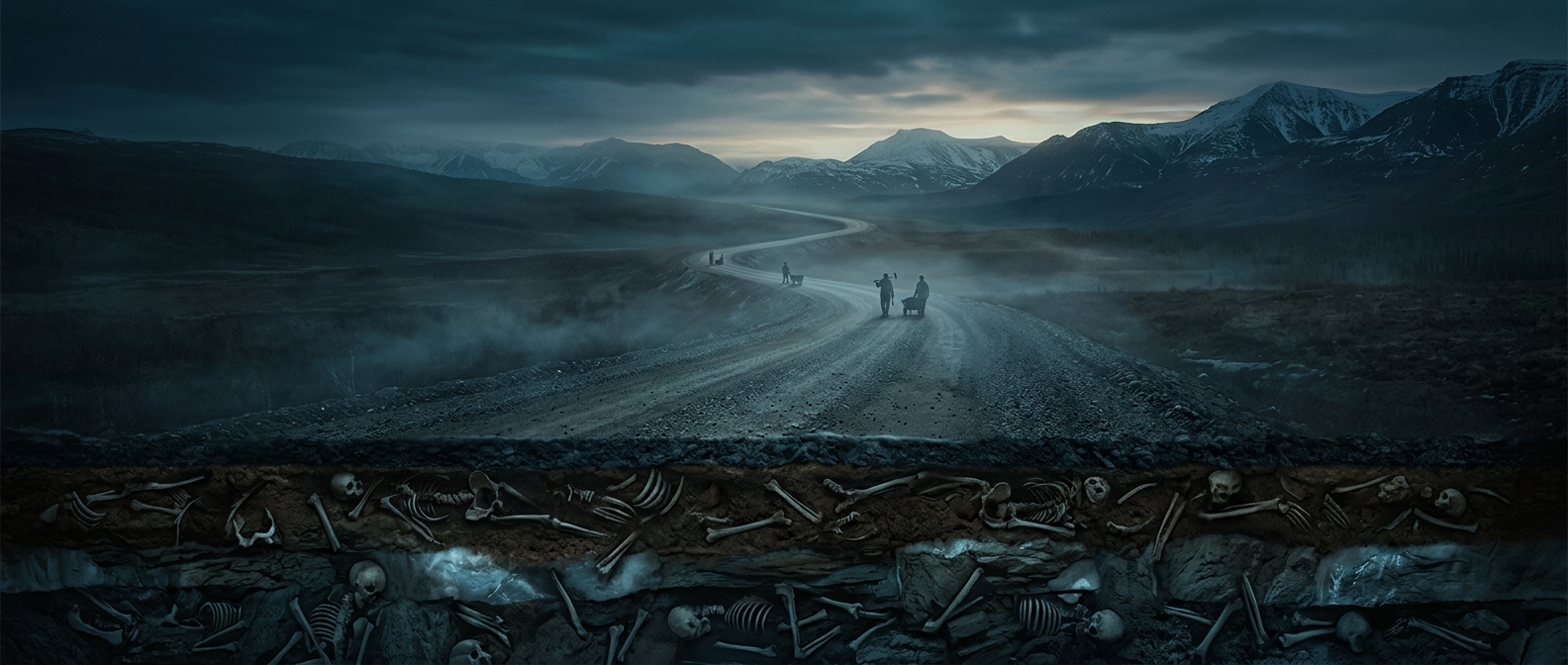
Permafrost—ground that stays frozen for years—shapes what construction can mean there. Digging graves in frozen soil can be extremely difficult, especially in winter. Accounts of the road say that some workers who died during construction were not buried separately, but were crushed into the road’s foundation. The claim is part of the route’s grim reputation; the broader reality is clear without it: the highway was built through coerced labor at a terrible human cost.
Why the road is called the “Road of Bones”
That name turns a practical route into a memorial. The road was meant to make travel and transport through an isolated region possible, but its construction depended on prisoners who had little choice about the work and endured severe conditions. The nickname carries the memory of those who died, whether or not any particular stretch contains human remains.
Today, the highway is still a way through a landscape where distance and climate make travel demanding. Its roadbed is also a reminder that infrastructure can outlast the system that built it: a route used for ordinary journeys can preserve the history of the people forced to make it.