Why Paris moved its dead underground
For centuries, Paris buried many of its dead in crowded churchyard cemeteries. By the late 1700s, some burial grounds were packed, and nearby residents complained of foul smells and other signs of decay. City officials needed somewhere to put the remains—and room to bury new bodies.
Beneath Paris lay abandoned limestone quarries, tunnels cut long before to supply stone for the city’s buildings. Officials chose part of this underground network as an ossuary: a place for storing human bones. Beginning in 1786, workers transferred remains from overcrowded cemeteries into the tunnels, a process that continued over many years.
From storage tunnels to a public ossuary
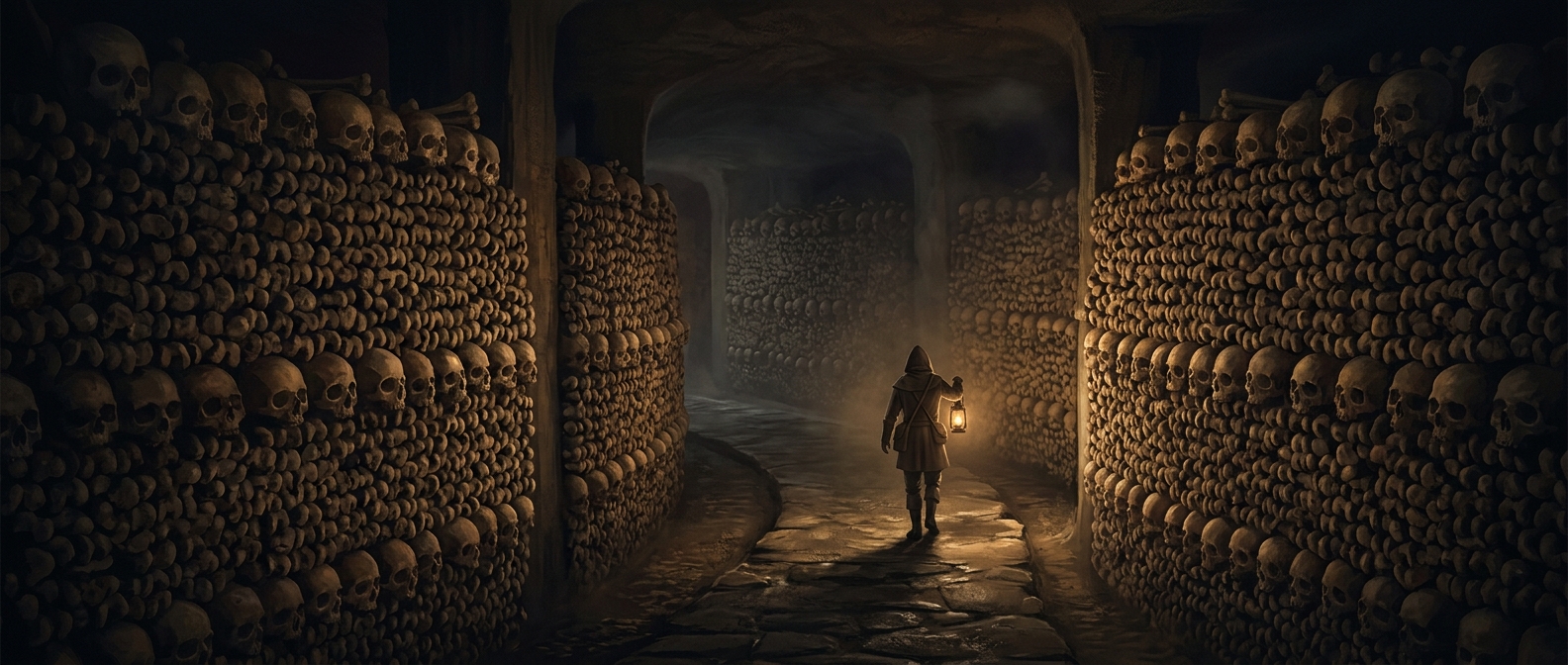
At first, the bones were deposited in heaps. Later, workers arranged skulls and long bones along the walls, creating the ordered faces visitors see today. The display was not simply a way to save space: it gave a deliberate, almost architectural form to remains that had been moved out of public view.
The result is a striking mismatch between the city’s surface and its foundations. Streets and buildings rise above a network where the dead were reorganized to solve a practical urban crisis. The catacombs’ famous scale comes from that decision: Paris dealt with overflowing cemeteries not by expanding them, but by carrying their accumulated remains into the quarries underneath the city.