Why Siberia Can Feel Bigger Than a Planet
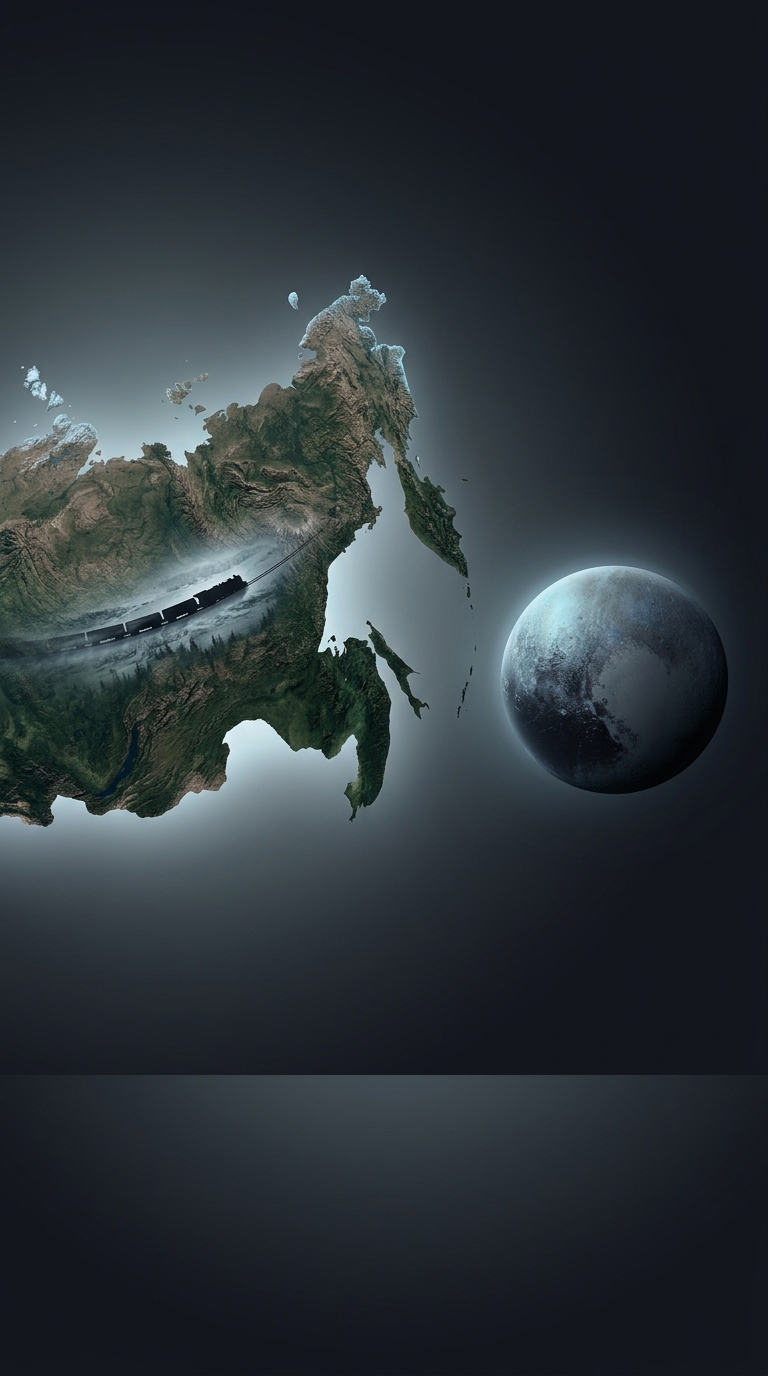
Russia covers about 17.1 million square kilometers, and much of its eastern territory lies in Siberia. The distances are real: rail journeys between major cities can take days, while remote settlements may be separated by long stretches of forest, tundra, and permafrost. But one comparison needs a correction: Pluto’s estimated surface area is about 17.7 million square kilometers, so it is slightly larger than Russia—not smaller.
Two Very Different Kinds of Area
Russia’s figure measures the area within the country’s borders. Pluto’s figure estimates the area of its entire roughly spherical surface. That means the comparison is a useful way to picture scale, but it is not a comparison between two equivalent kinds of territory: Pluto has no national borders or traversable land in the ordinary sense.
What Makes the Journey Feel Endless
On a map, Siberia’s vastness is easy to underestimate. At high latitudes, settlements and transport routes are sparse, and extreme cold can make roads, rail lines, and seasonal routes more consequential than straight-line distance suggests. A trip across the region is not simply a matter of covering kilometers; it depends on where infrastructure exists and when conditions allow travel.
That is why the planet-sized comparison sticks, even with the numbers corrected: Siberia’s scale is not just a statistic. It shapes how long people travel, how far communities are from one another, and how much of the landscape remains beyond an easy journey.