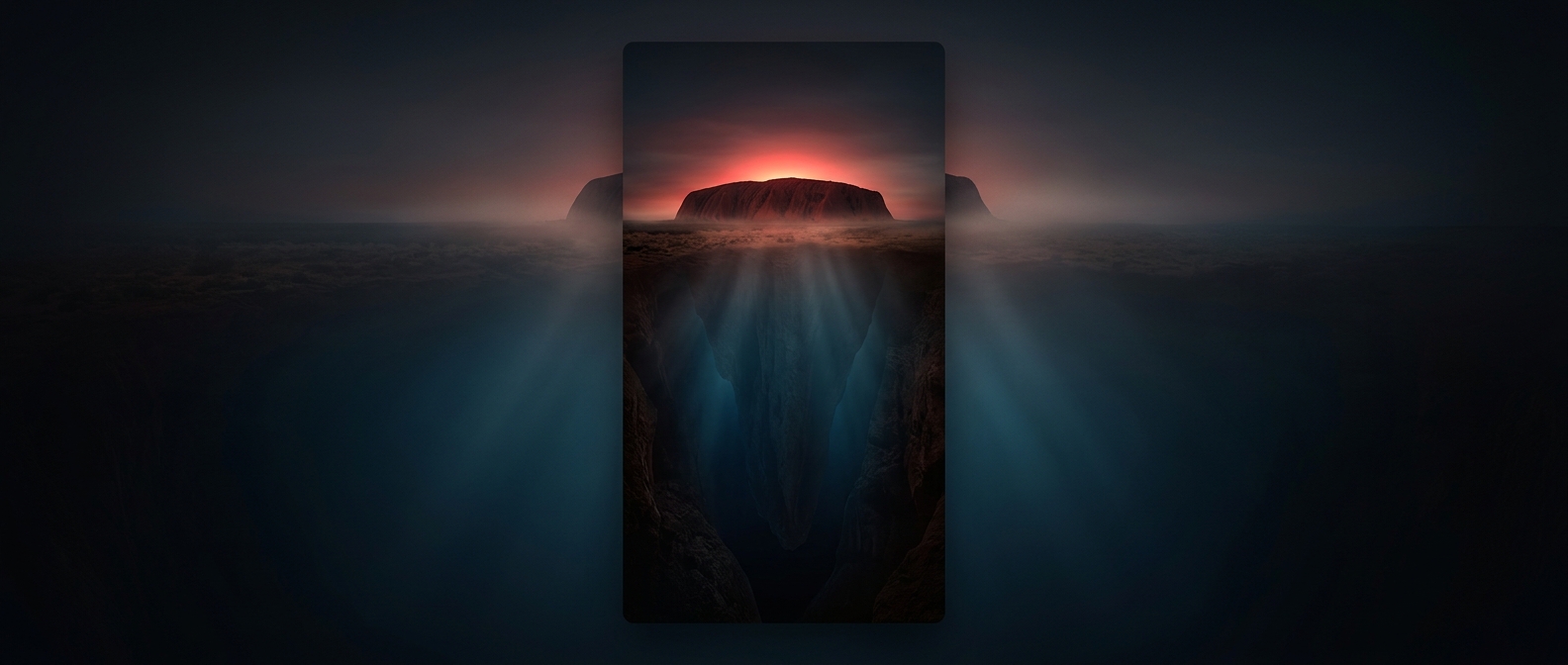
The rock continues beneath the plain
Uluru’s towering walls are only the exposed part of a much larger mass of rock. The formation extends below the surrounding ground, where weathered debris and soil conceal its lower reaches. That makes the visible monolith a poor guide to the full size of the rock body beneath it.
The red surface is arkose, a sandstone rich in feldspar. Its grains began as fragments of older rocks, carried by water and deposited in thick sediment layers. Over time, burial pressed those layers together and minerals cemented them into solid rock.
How buried layers became a landmark
The rock was later deformed and tilted steeply, bringing its layers close to vertical. Erosion then wore away the surrounding material and uncovered part of the rock mass. Uluru’s dramatic sides are therefore not simply the top of a rock rising from a flat base: they expose the edges of ancient layers that continue underground.
Iron-bearing minerals in the surface rock oxidize—much as iron rusts—giving Uluru its familiar reddish color. Freshly exposed rock is lighter, but weathering gradually deepens the red. The color visitors see is thus both a feature of the rock’s chemistry and a record of its exposure to the elements.
From the plain, it is easy to imagine Uluru as a self-contained object. Its hidden continuation is a reminder that the landmark is part of a much larger geological structure, shaped over immense stretches of time.