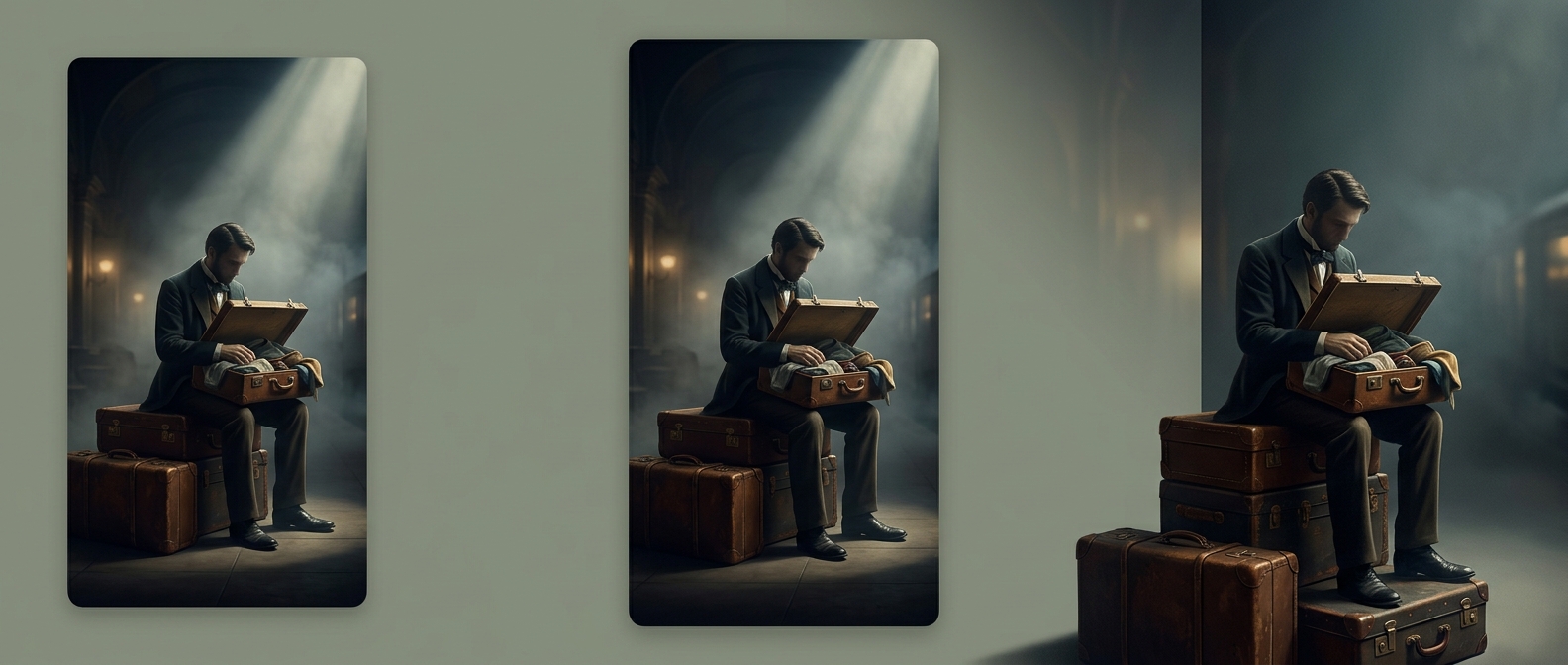
A suitcase stood for a life without a foothold
A suitcase is useful precisely because it carries only what someone needs while moving between places. It is not a cupboard, a room, or a home. So the image of a person living from one suggests more than frequent travel: it makes their whole life seem temporary, packed up and ready to leave.
That was the sting behind the expression. A settled home implied continuity—somewhere to return to, possessions kept in place, and routines that could last. By contrast, having no lasting address could be read as evidence that a person could not put down roots or keep their circumstances in order. The phrase turned that suspicion into a portable image.
From practical circumstance to judgment
The insult depended on treating mobility as a personal failing. Someone might move often because of work, money, family circumstances, or choice, but the expression blurred those different causes into one story: this person was always on the run from trouble. The suitcase made that story visible. It suggested a life reduced to what could be carried away, with no stable place to unpack it.
That is why the phrase can sound harsher than a simple description of frequent travel. It judges a person’s stability and character, not just their luggage. The same image can now be used more lightly, but its older force comes from the idea that a life always packed for departure is a life that has failed to settle.