A Dutch landscape rebuilt piece by piece
A windmill is more than a tower with sails. Its machinery was built for a particular job, and its shape and equipment can reflect that work: some mills ground materials, while others powered industrial tasks. Moving one therefore meant preserving a working structure, not simply saving a picturesque outline.
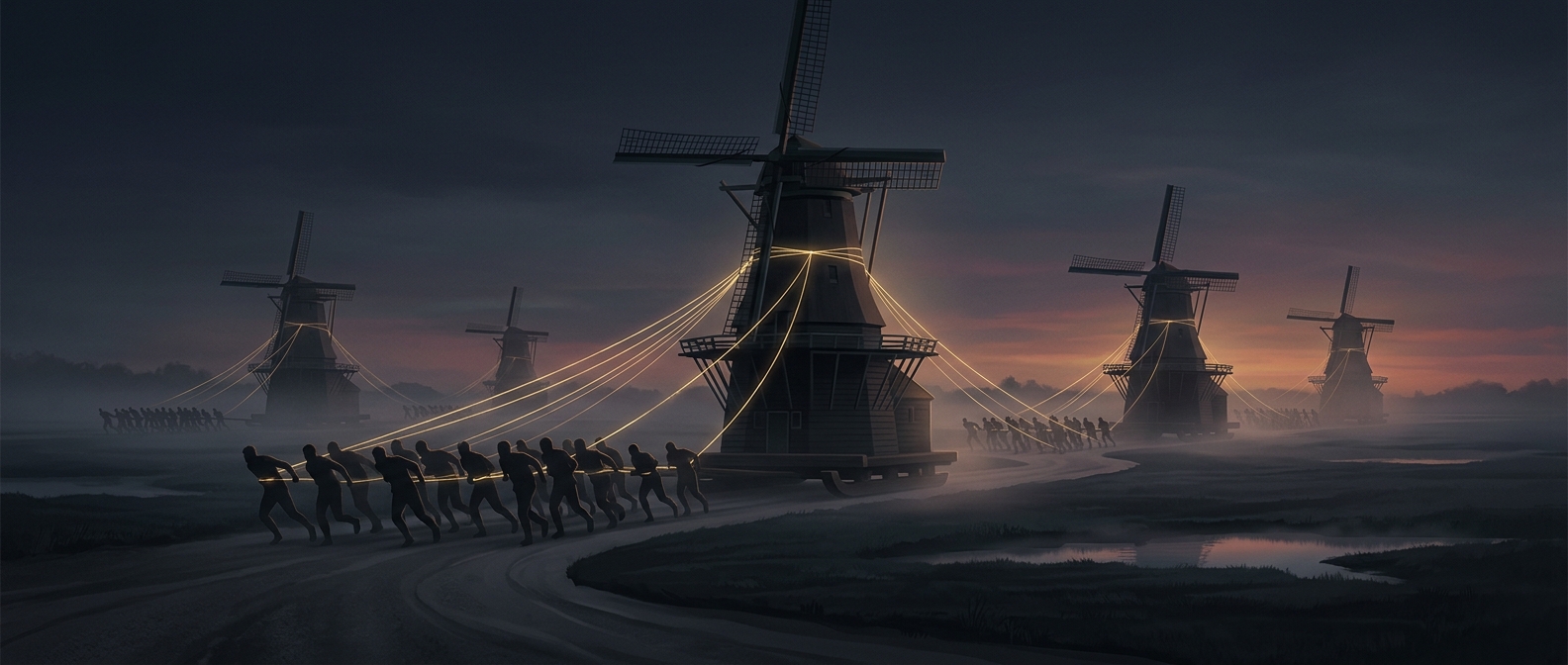
Most of the mills described here were taken apart, carried on flatbed trucks, and assembled again at this site. Dismantling made the journey possible; reassembly brought the separate structure back into a recognizable whole. The result gathers buildings that once stood in different places into one landscape.
Preservation through relocation
A historic landscape can disappear even when its buildings survive. Changes in land use, development, or the decline of the work a mill once did can leave a structure isolated or at risk. Relocation offers a tradeoff: the building may be protected, but it no longer stands in the setting that originally explained its place in local life.
Here, the mills’ arrangement creates a concentrated view of Dutch windmill heritage. It is not an untouched stretch of countryside; it is a landscape assembled to keep historic structures visible and together. That distinction is part of what makes the scene worth looking at: each mill carries its history with it, while the setting tells a newer story about how preservation sometimes requires moving the past.