The Stone Circle Has a Modern Foundation
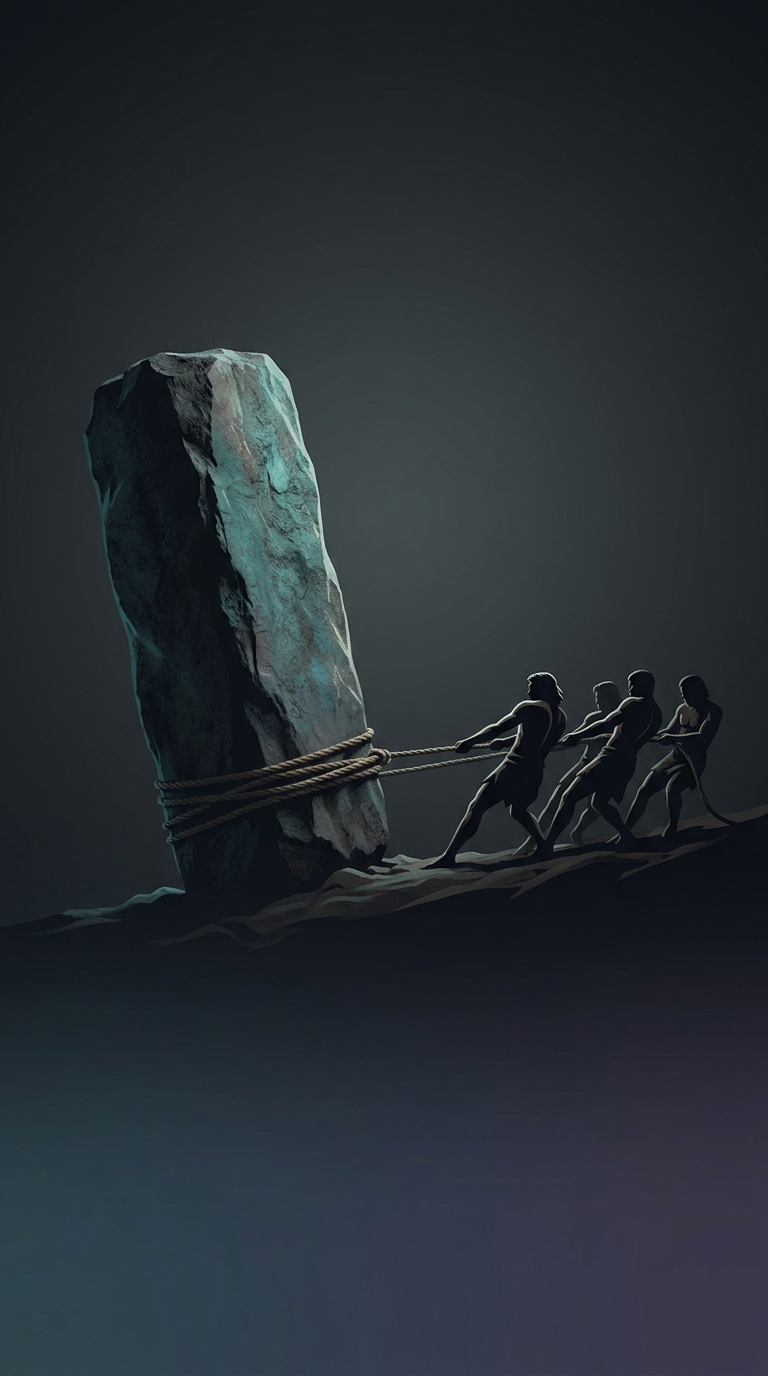
Stonehenge did not simply survive untouched from prehistory. By the late nineteenth century, some stones were leaning dangerously, while others had fallen. Left alone, the monument could have lost more of its original structure—not only through weathering, but because a tilted upright stone can place growing strain on the stones resting against it.
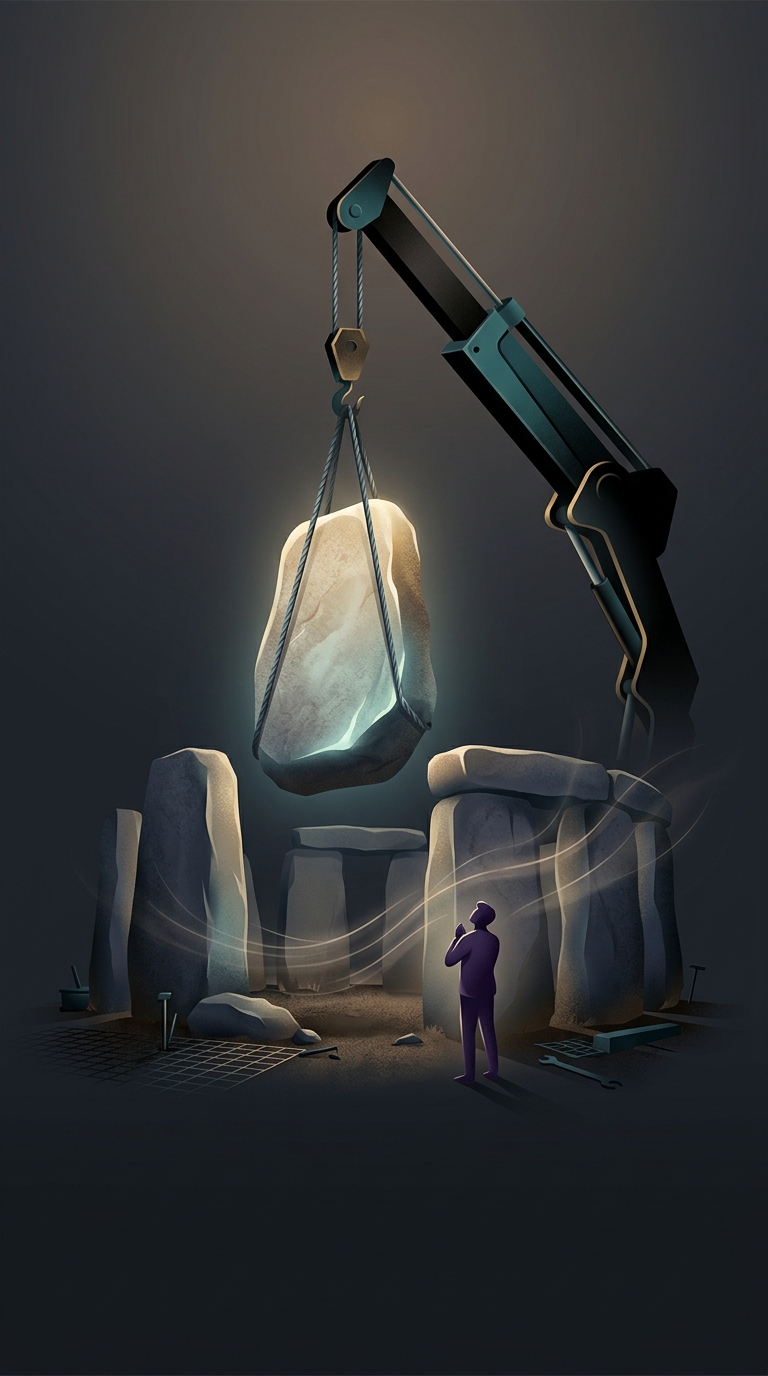
During the twentieth century, preservation work raised some fallen stones, steadied leaning ones, and reset stones that had shifted. Crews used cranes to lift the huge blocks, then placed them on concrete supports or foundations. In some cases, metal fittings helped hold stone elements together. These changes were meant to keep the monument standing, not to rebuild every missing part.
Ancient Stone, Modern Decisions
The work changed what visitors see. A stone that now stands upright may have been put back in position by modern engineers, and concrete may lie beneath a block that appears to rest directly on the earth. The circle is therefore both an ancient structure and a record of later choices about how to preserve it.
That distinction matters: Stonehenge’s present arrangement is not a perfectly untouched snapshot of its original form. Some of its stones were moved or stabilized, while many gaps and fallen fragments remain. When visitors look across the circle, they are seeing prehistoric craftsmanship held in place, in part, by twentieth-century engineering.