How Stonehenge’s bluestones crossed Britain
The bluestones at Stonehenge came from the Preseli Hills in southwest Wales, more than 150 miles from the monument in southern England. For Neolithic communities, moving a stone that weighed several tons was not a matter of finding one clever machine. It meant coordinating people, ropes, timber and repeated journeys across a landscape with no roads built for heavy loads.
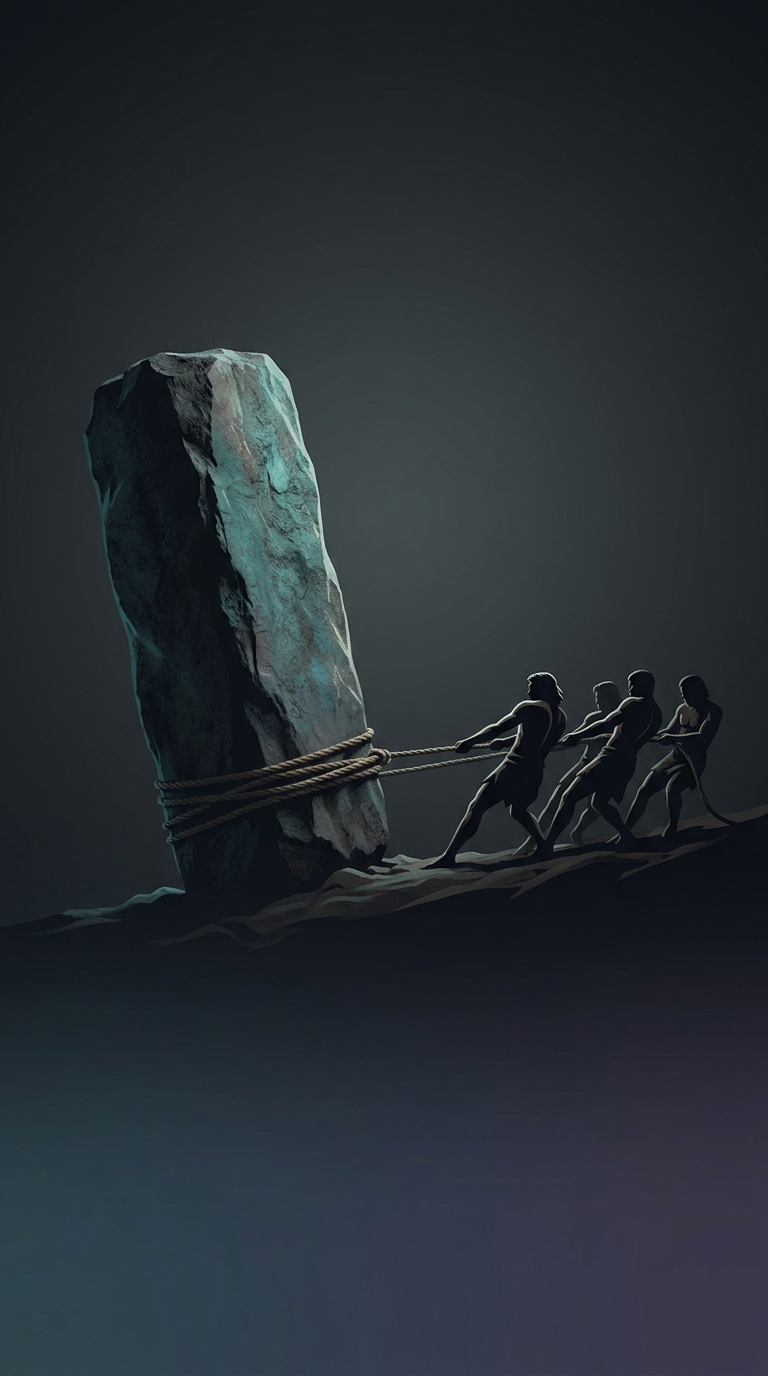
A likely method was to set a stone on a wooden sledge and haul it with ropes. Logs or timber tracks could help the sledge move over some ground, though rollers would themselves have been difficult to keep beneath a load on uneven terrain. The route may also have used rivers or coastal water for part of the journey, reducing the distance that had to be dragged overland. The precise route and techniques remain uncertain; the stones do not preserve a step-by-step account of their trip.
The hard part was organizing the journey
A sledge spreads a stone’s weight across a larger surface, but it does not make that weight disappear. Haulers would have needed to keep the load stable, manage slopes and muddy ground, and replace or reposition timber as they went. A route that worked in one stretch might fail in another, so moving the stones likely involved adapting the method to local conditions rather than following a single prepared track.
That effort also required planning beyond the hauling itself: people had to gather materials, prepare sections of the route and work together over a long distance. The achievement was not simply brute strength. It was the ability to turn local knowledge and cooperation into a transport system—one built from wood, rope and human labor rather than wheels.