Why the pilgrimage fits into a narrow season
At a high Himalayan shrine, access depends on more than the calendar. Snow and ice can make the approach impassable for much of the year, so the route opens during the warmer months, when travel becomes possible. But that brief window overlaps with the South Asian monsoon—the season of heavy, persistent rain.
That overlap creates a difficult choice: the same summer conditions that uncover the path also bring the weather most likely to disrupt it. Pilgrims must make the journey while the route is open, even though storms can change conditions quickly.
How rain turns a trail hazardous
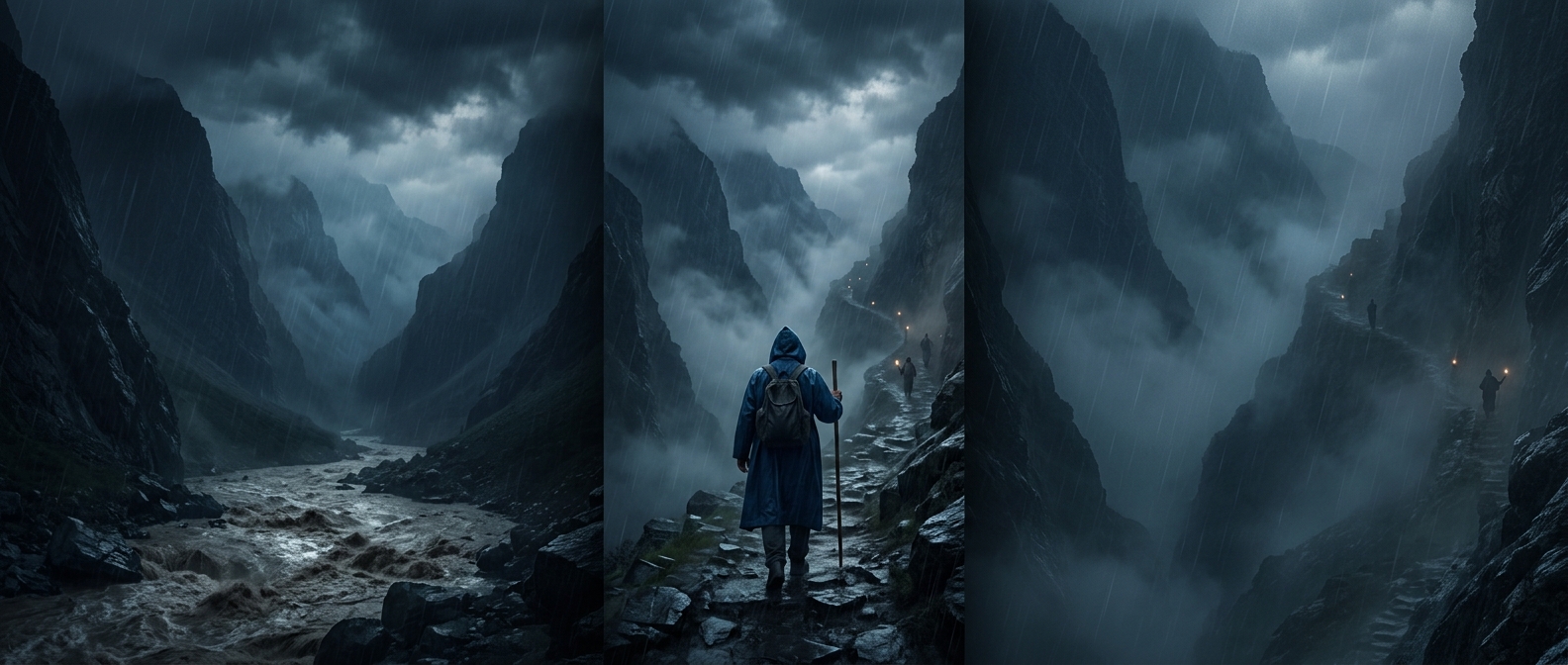
Himalayan routes often cross steep slopes and narrow valleys. When intense rain soaks the ground, slopes can give way in landslides; runoff can also rush into streams and turn crossings dangerous. A path that was passable earlier in the day may be blocked or cut off after a storm, leaving little room to detour.
The danger is not simply getting wet. Landslides can bury sections of trail, while sudden flooding can sweep across low crossings. With large crowds moving through the same constrained landscape, closures and delays can affect many people at once. The pilgrimage’s short season therefore concentrates both the journey and its risks: the way to the shrine opens with summer, just as monsoon rain begins to make the mountains unpredictable.