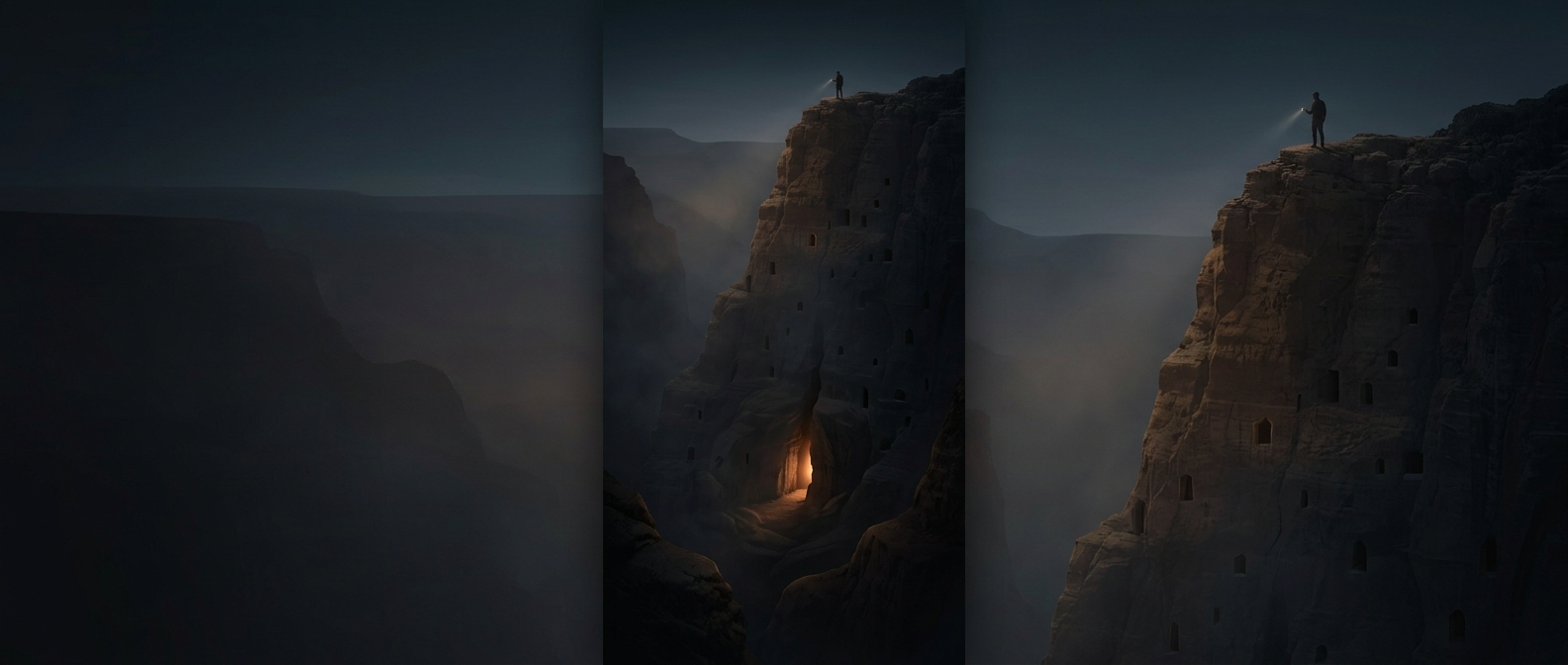
Why a Storm Can Grow Below the Rim
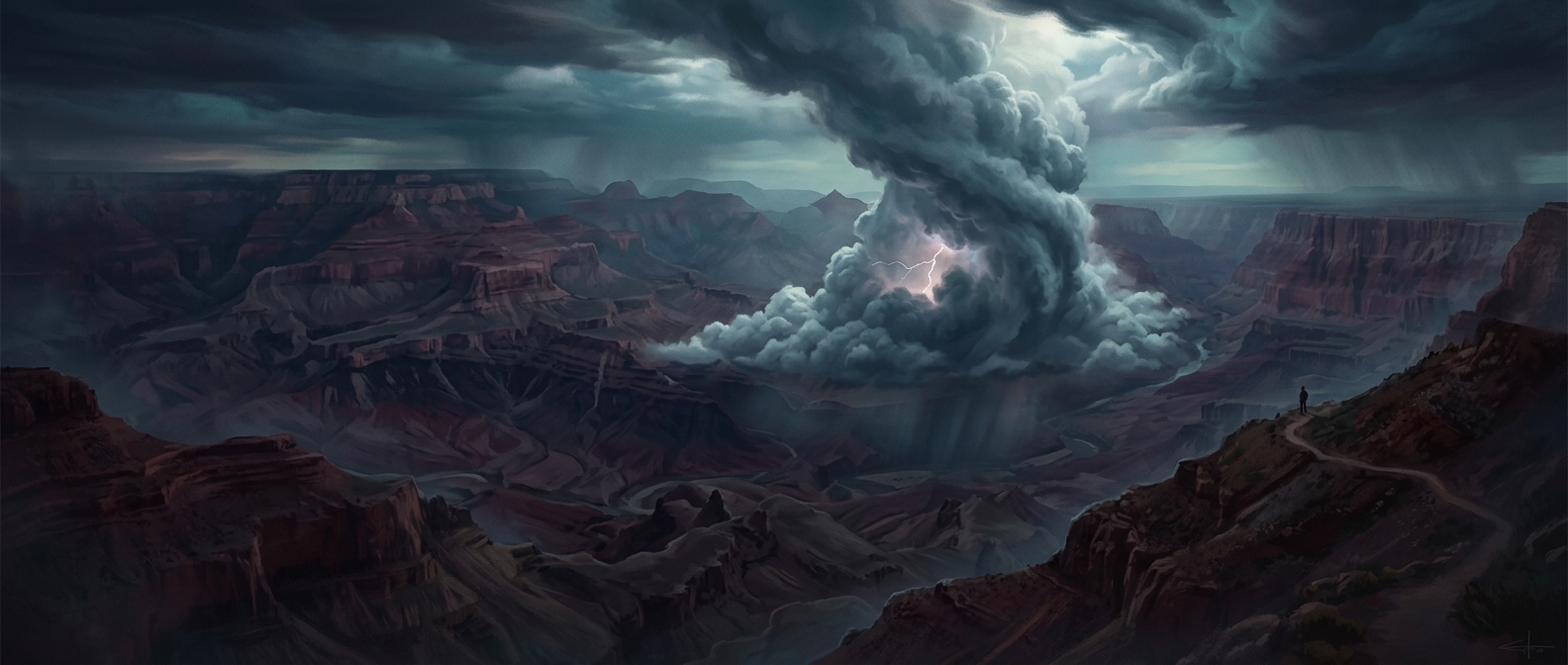
A canyon is not one uniform pocket of air. Its floor, steep walls, and rim sit at different elevations and receive sunlight at different times. As the sun warms exposed rock and the air beside it, that air can rise; winds moving up the slopes may also gather warm, moist air over a limited area. If the rising air cools enough, water vapor condenses into a growing cloud. In unstable conditions, that cloud can develop into a thunderstorm.
The process is local: nearby air may not be rising as strongly, and the storm may cover only part of the canyon. The rim can therefore remain under clear skies while a cloud builds below it. The canyon’s shape can steer winds and create sharp contrasts in sun and shade, but it does not guarantee a storm; moisture and atmospheric conditions still have to cooperate.
The View Can Be Deceptive
From above, the storm may look as if it is forming beneath your feet. In reality, the cloud is developing within a column of air at lower elevation, while the rim sits in a different layer of the atmosphere. A sunny viewpoint is no proof that the canyon below is calm: thunder, rain, and lightning can be confined to the storm’s path, with clear sky just a short distance away.