Why The King’s mask is more memorable than a costume
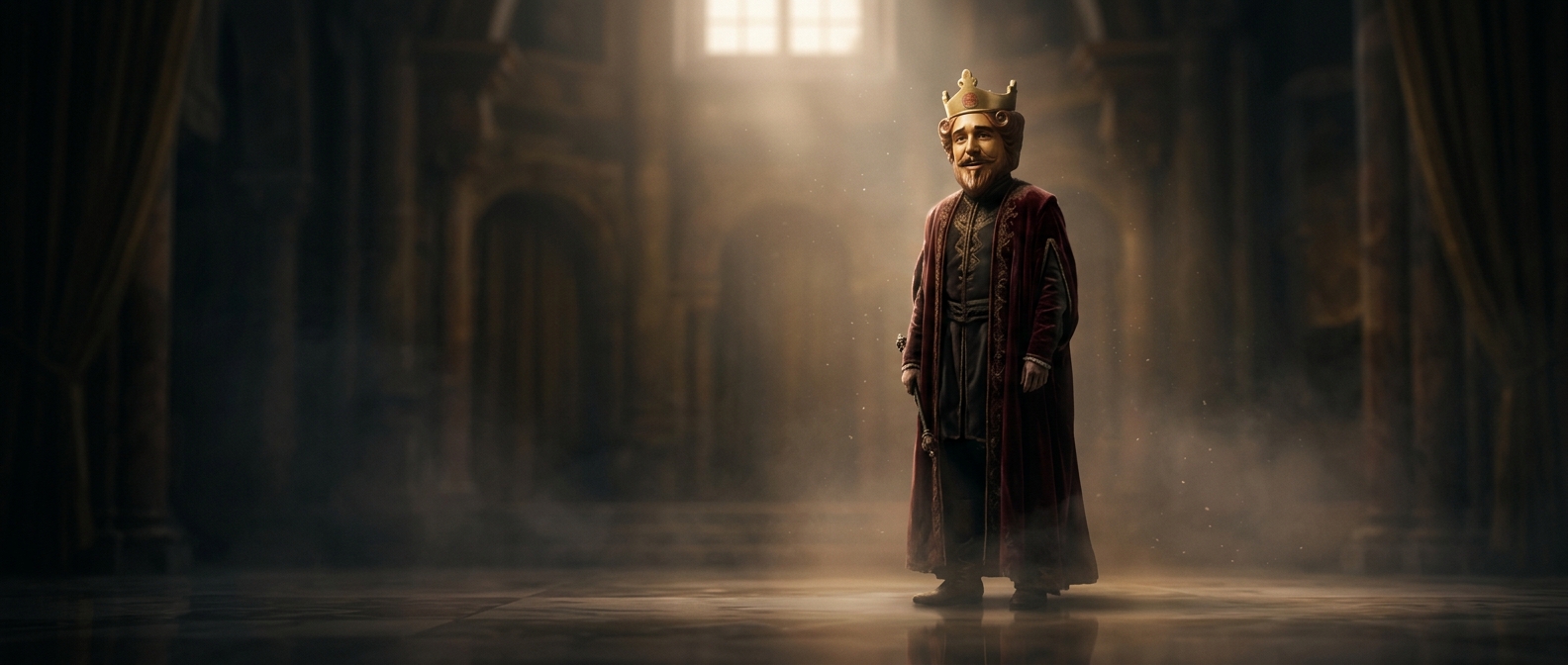
A conventional mascot often invites viewers to recognize a character and settle into a familiar tone. The King disrupts that expectation. His oversized mask hides the face’s small, expressive cues—eye movement, a changing smile, a reaction—while his body behaves like an ordinary person’s. That mismatch makes even a simple appearance feel strange: the viewer can see what he is doing but cannot read what he feels.
The effect depends on restraint. A detailed mythology or a set of special abilities would give viewers a ready-made explanation for the character. Instead, the mask leaves a gap between what is visible and what can be understood. Surprise fills that gap, making the image harder to dismiss as just another friendly cartoon mascot.
The ad’s interruption is the point
In a commercial, attention is scarce: people can look away, change channels, or scroll past. The King’s still, unreadable face works as a visual interruption before the ad has to explain anything. His appearance can create a small moment of uncertainty—Why is he here?—and hold the viewer’s attention long enough for the scene to unfold.
That does not require the character to be scary in a conventional sense. The unsettling quality comes from contrast: a polished monarch’s mask in an everyday setting, with no clear emotional response to guide the audience. The result is a mascot whose most useful feature is not what he can do, but how little his face tells you.