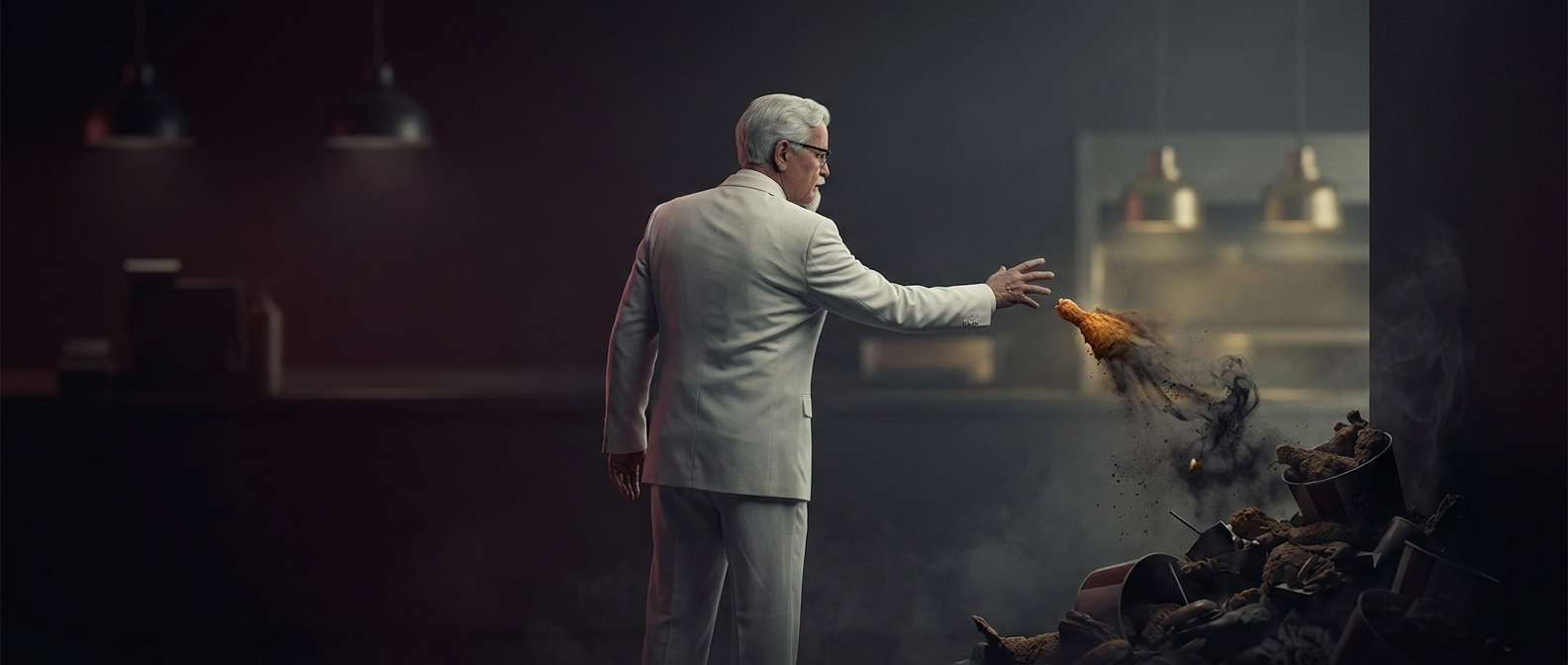
A mascot built out of the menu
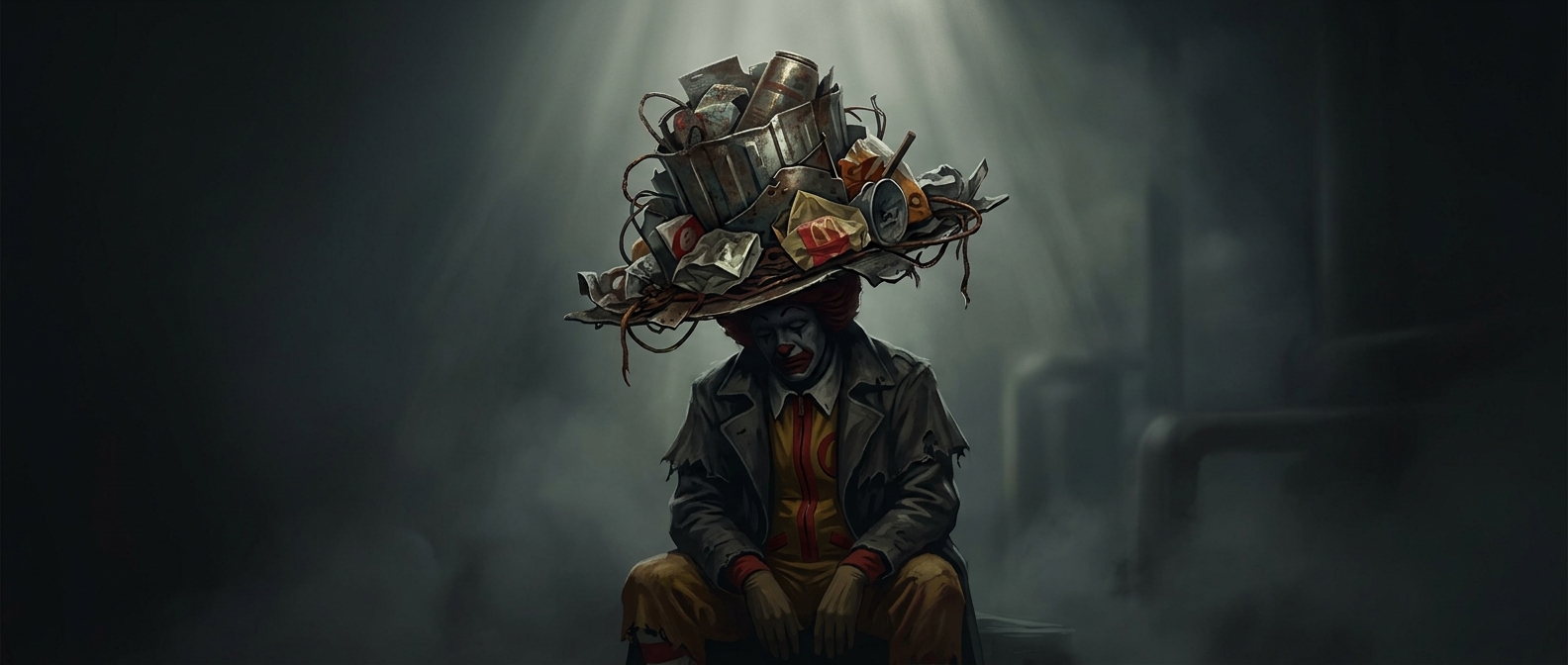
Ronald McDonald’s first look treated the food itself as costume design. Instead of giving the character a polished clown outfit, it turned familiar restaurant packaging into wearable props: the meal sat above his head, while a cup became part of his face. The result was less a conventional clown than a walking advertisement assembled from the things customers could order.
That approach made the connection to McDonald’s immediate, but it came with a tradeoff. The oversized food shapes made the character visually memorable; the cup strapped to his nose also made the design awkward and uncanny. What reads today as nightmare fuel was a blunt form of brand recognition: even the clown’s body pointed back to the restaurant.
From product gag to lasting character
A mascot has to do more than display a product. It must also work as a character that can appear again and again in advertising. As Ronald’s public image became more established, the food-packaging gimmick gave way to a more recognizable clown appearance. The strange first costume remains a snapshot of an early advertising idea in its most literal form: make the restaurant’s menu impossible to miss by putting it on the mascot.