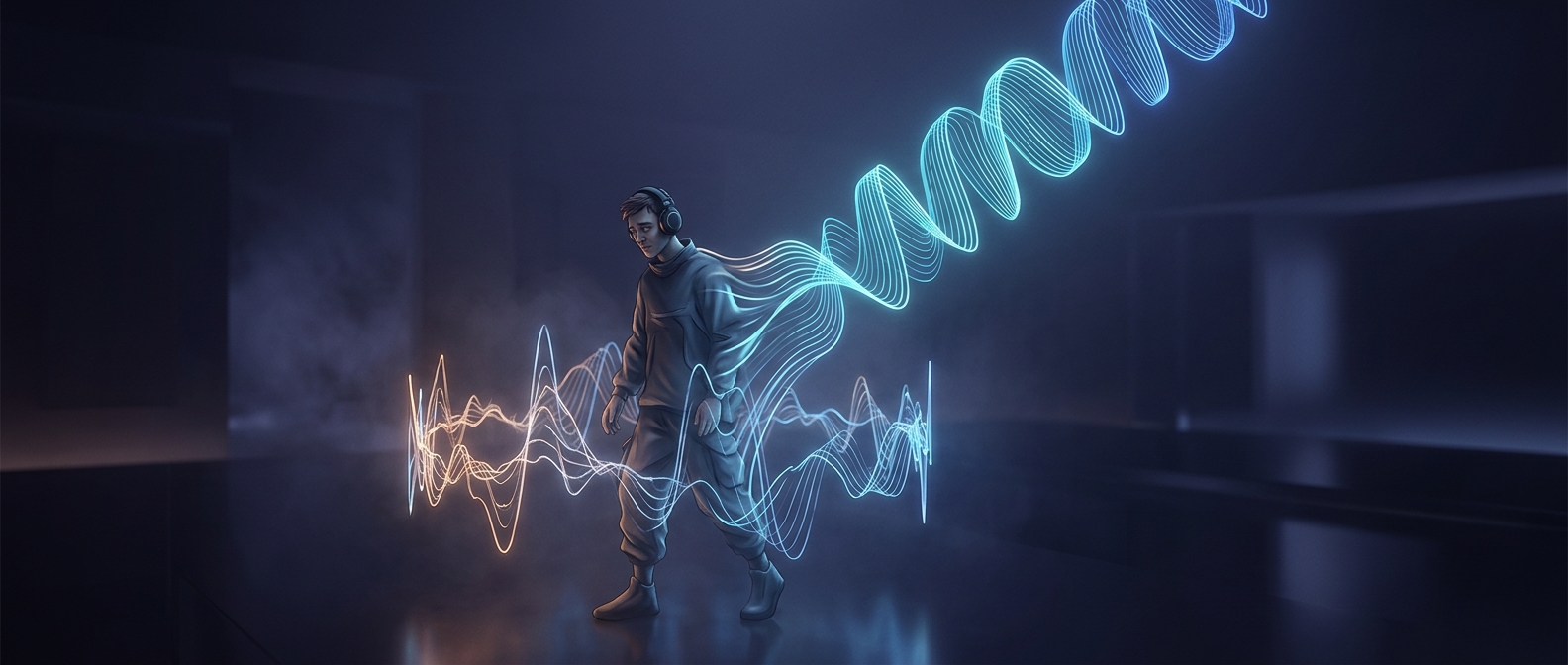
How playback gets faster without raising the voice
A recording is a sequence of sound samples. Simply playing those samples more quickly shortens every sound wave, raising its frequency—and therefore the voice’s pitch—along with the speech rate. That is why old-fashioned speed changes can make a speaker sound squeaky.
Playback apps instead use time stretching: digital processing that changes a recording’s duration while aiming to preserve the pitch of its sounds. The software examines tiny slices of audio and rearranges or rebuilds them so speech takes less time without proportionally squeezing each sound wave. More advanced methods track how sound waves line up from one slice to the next, helping the result remain smooth rather than turning into a jumble.
Why very fast speech can still sound strange
Keeping pitch steady does not mean the recording is untouched. Compressing time gives each syllable and pause less room, and the software has to decide which details to shorten, overlap, or reconstruct. At modest speed increases, those changes may be hard to notice. Push the rate further, and consonants can blur, pauses can vanish, or the voice can take on a slightly metallic or watery quality.
Different apps use different processing methods, so they may handle the same recording differently. The practical tradeoff is that faster playback can save listening time, but beyond a point, the details that make speech easy to follow are among the first things to suffer.