How a meteorite can make a different kind of diamond
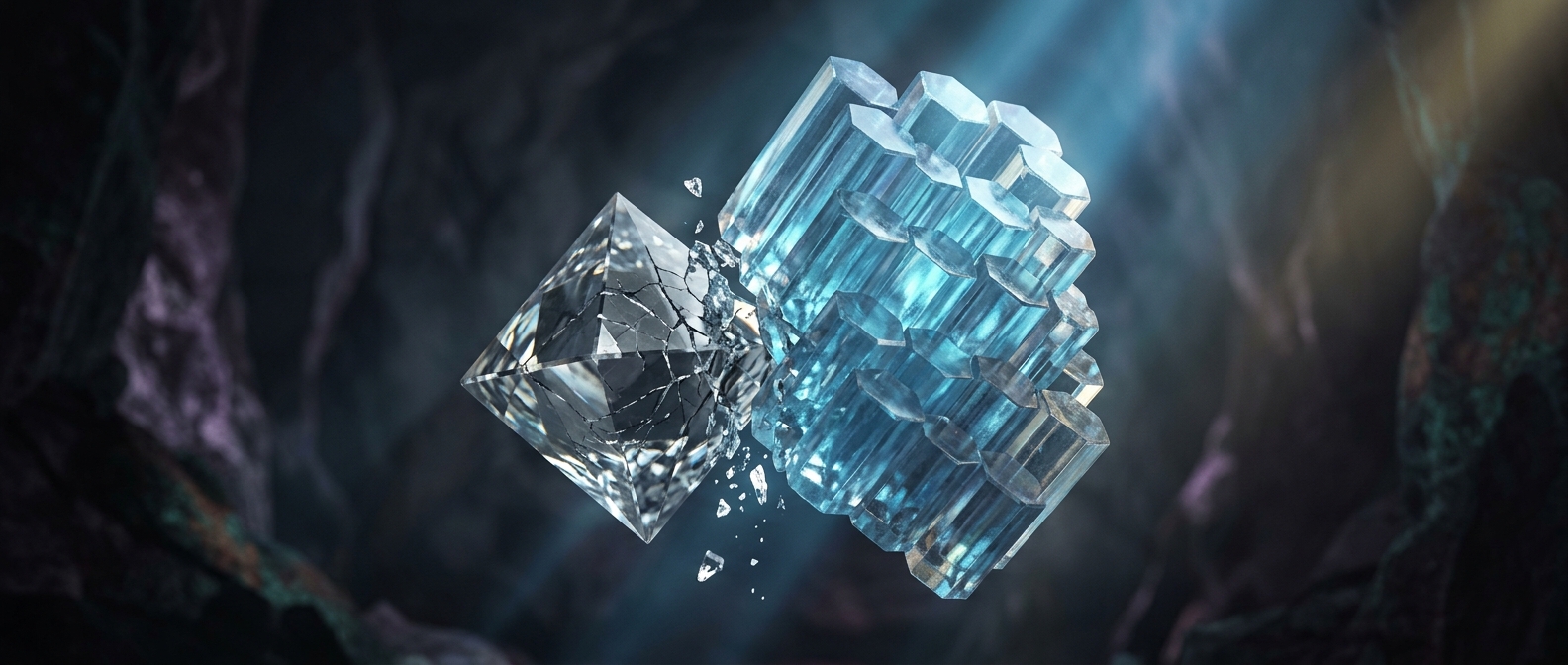
Lonsdaleite is a form of carbon whose atoms are arranged in a hexagonal pattern. Ordinary diamond has a cubic pattern: each carbon atom bonds to four neighbors in a three-dimensional framework. The ingredients are the same, but the geometry differs—and in crystals, geometry helps determine how a material responds to pressure and scratching.
The impact makes the structure
Lonsdaleite is associated with meteorite impacts, where shock waves can compress carbon-rich material extremely quickly. That sudden squeeze can force carbon atoms into a diamond-like structure without giving them much time to settle into the arrangement found in ordinary diamond. The result is a crystal structure that researchers have also been able to produce in laboratory experiments under high-pressure conditions.
The proposed advantage is that lonsdaleite’s hexagonal arrangement could resist deformation more strongly in certain directions. But “harder” is not a simple label: measured hardness depends on the direction and quality of a crystal, as well as on how it is tested. A tiny, flawed grain may behave very differently from a large, flawless crystal.
Why the superhardness claim remains open
Natural lonsdaleite samples are extremely small and often mixed with ordinary diamond or other material. That makes it difficult to isolate the crystal and measure its hardness cleanly. Some apparent evidence for lonsdaleite may also come from heavily distorted or layered forms of diamond, complicating the question of exactly what structure was tested.
So lonsdaleite is a plausible candidate for a material harder than ordinary diamond, not a settled replacement for it. The crucial test is whether researchers can make a sufficiently large, well-characterized crystal and compare its resistance to deformation directly. Until then, the meteorite’s brief, violent compression offers a striking recipe for a potentially tougher carbon structure—but not yet a definitive hardness record.