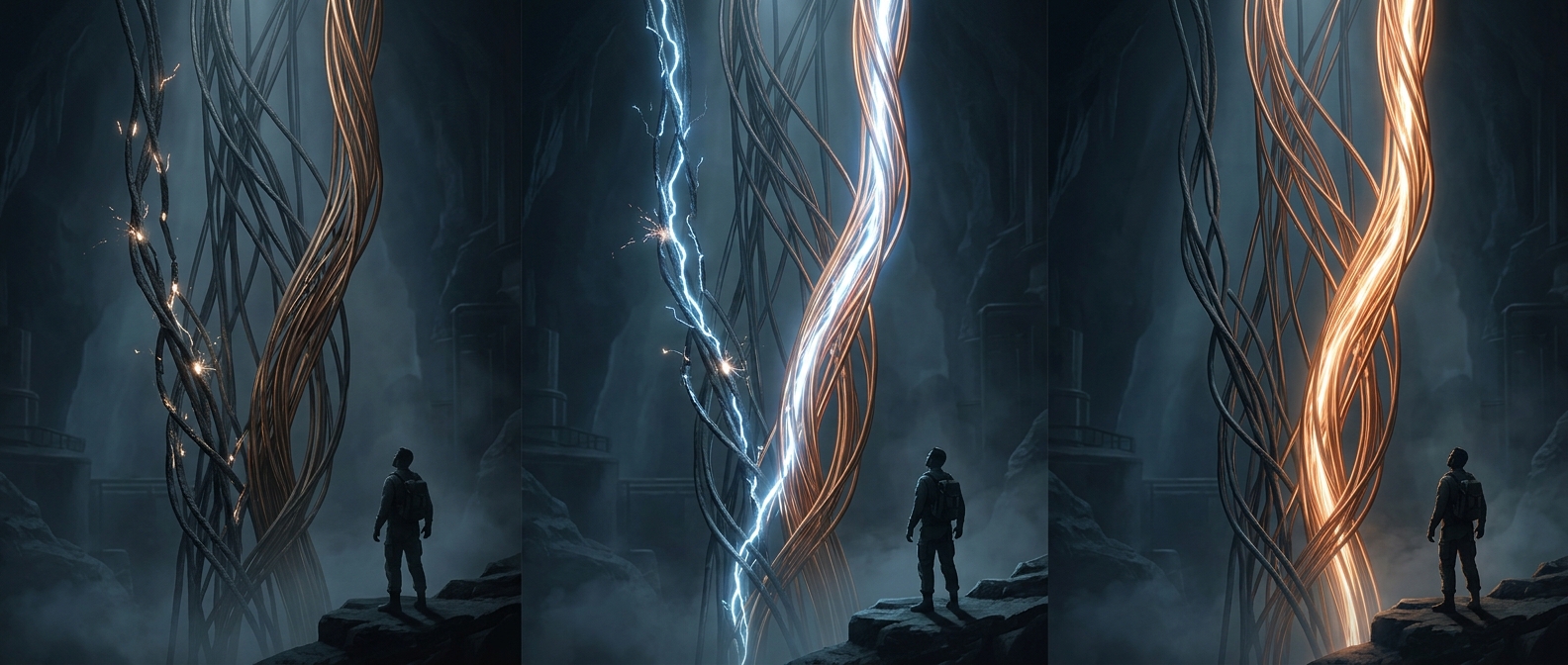
Why Copper Makes a Better Electrical Path
In a metal, electrical current is carried by electrons that can move through the material. Their motion is not perfectly smooth: they interact with the metal’s atomic structure, and those interactions impede the flow. The resulting opposition is called electrical resistance. For wires of the same length and thickness under comparable conditions, copper offers much less resistance than iron, so it can carry a given current with less electrical energy turning into heat.
The Advantage Adds Up Along a Wire
A wire’s resistance depends not only on what it is made of but also on its dimensions. A longer wire gives charge more material to pass through; a thinner one provides less room for the flow. Copper’s high conductivity—the ease with which charge moves through it—helps offset those constraints, especially in long runs or compact wiring where reducing resistance matters.
Less resistance can mean less heat produced in the wire during operation. That is useful because unwanted heating wastes energy and can make electrical systems harder to manage. It does not mean a copper wire cannot get hot: current, wire size, insulation, and surrounding conditions still matter.
Why Iron Still Has a Place
Conductivity is only one factor in choosing a material. Cost, strength, weight, corrosion behavior, and the demands of a particular design also matter. But where the goal is to carry current efficiently in a practical wire, copper’s lower resistance makes it a natural choice. The difference is consequential over a whole circuit: each stretch of wire contributes resistance, so a better-conducting material reduces losses along the route.