A supply crisis changed rubber’s scale
Before the Second World War, much of the world’s natural rubber came from plantations in Southeast Asia. As Japanese forces advanced through the region, supplies to the Allied powers were cut off. Synthetic rubber was not a new idea, but the emergency made a dependable substitute strategically essential. Governments and manufacturers rapidly expanded factories and coordinated production on a scale that peacetime markets had not demanded.
Building elasticity from chemical ingredients
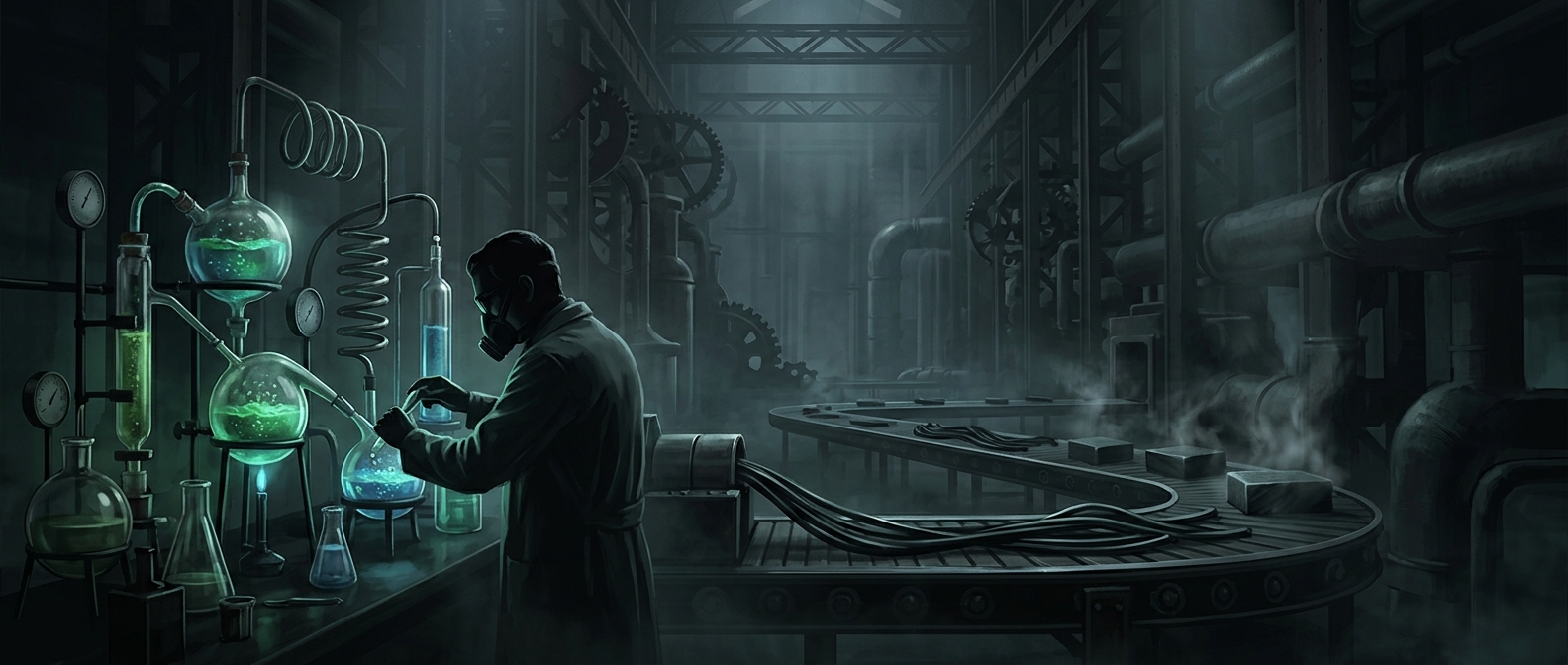
Natural rubber begins as latex, a milky fluid tapped from rubber trees. Synthetic rubber is built from smaller chemical molecules, often derived from petroleum or other fossil-fuel feedstocks. Manufacturers link those molecules into long, flexible chains—the structure that lets rubber stretch and return toward its original shape.
The ingredients and manufacturing process can be varied to change how a rubber behaves. A formulation for tires, for example, must withstand repeated flexing and heat; other products may need to resist oil, weather, or chemical exposure. “Synthetic rubber” is therefore a family of materials, not one universal replacement.
Why both kinds remain useful
The wartime push established synthetic rubber as an industrial mainstay, but it did not make natural rubber obsolete. Each type has a different balance of properties, and manufacturers choose or combine materials to suit the job. A tire or machine part is not simply made of “rubber”: its performance depends on the particular rubber and the recipe of additives mixed into it.
The lasting consequence of the shortage was not a complete switch from trees to factories. It was the ability to produce rubber with selected properties—and to keep essential products moving when a natural supply chain failed.