Why grid frequency moves
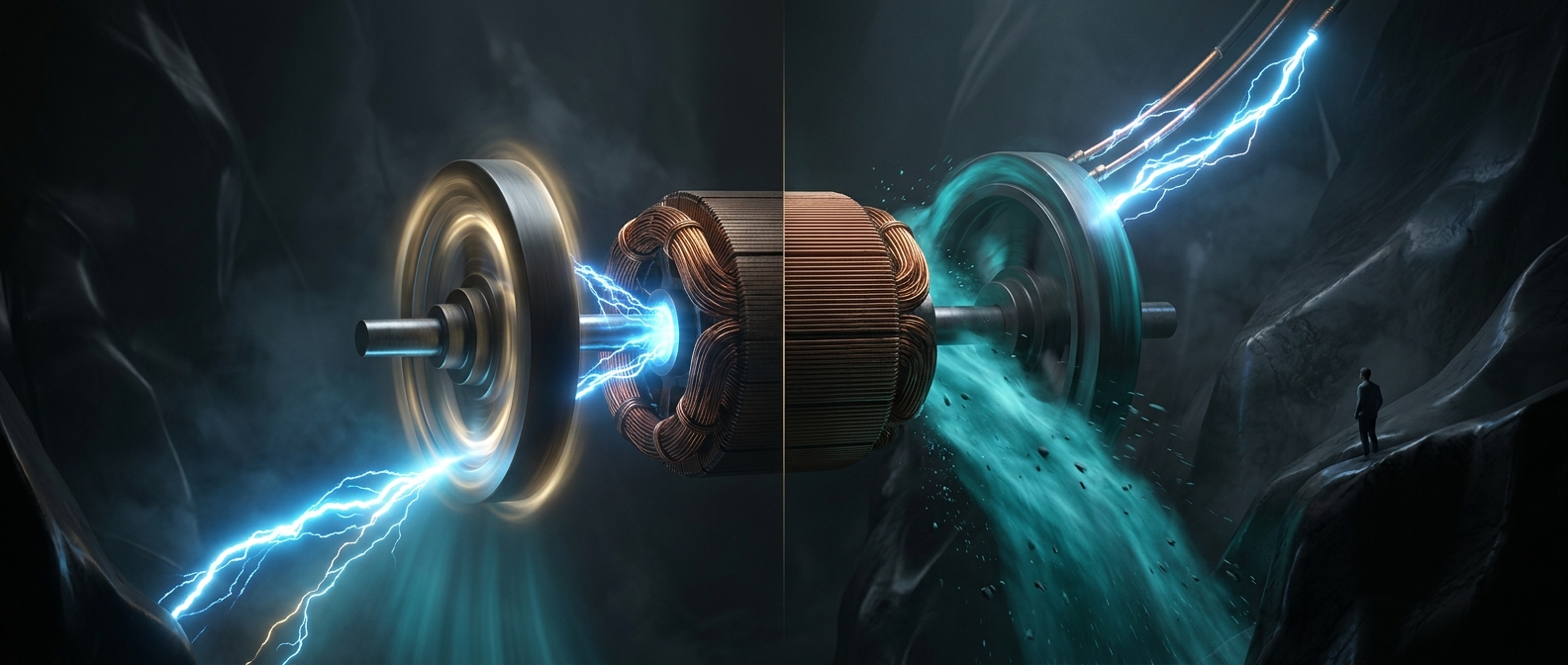
Most power grids distribute alternating current, whose flow reverses direction in a regular cycle. In a connected grid, generators are synchronized to that shared rhythm. When electricity use rises faster than generators can supply it, the electrical load puts extra drag on their rotating parts, slowing them slightly. The rhythm—and therefore the grid’s frequency—falls. If generation exceeds demand, the rotors speed up and frequency rises.
That makes frequency a live signal of the grid’s overall balance, not a meter of how much electricity any one home is using. Operators watch it because a growing mismatch can spread across the interconnected system.
How the balance is restored
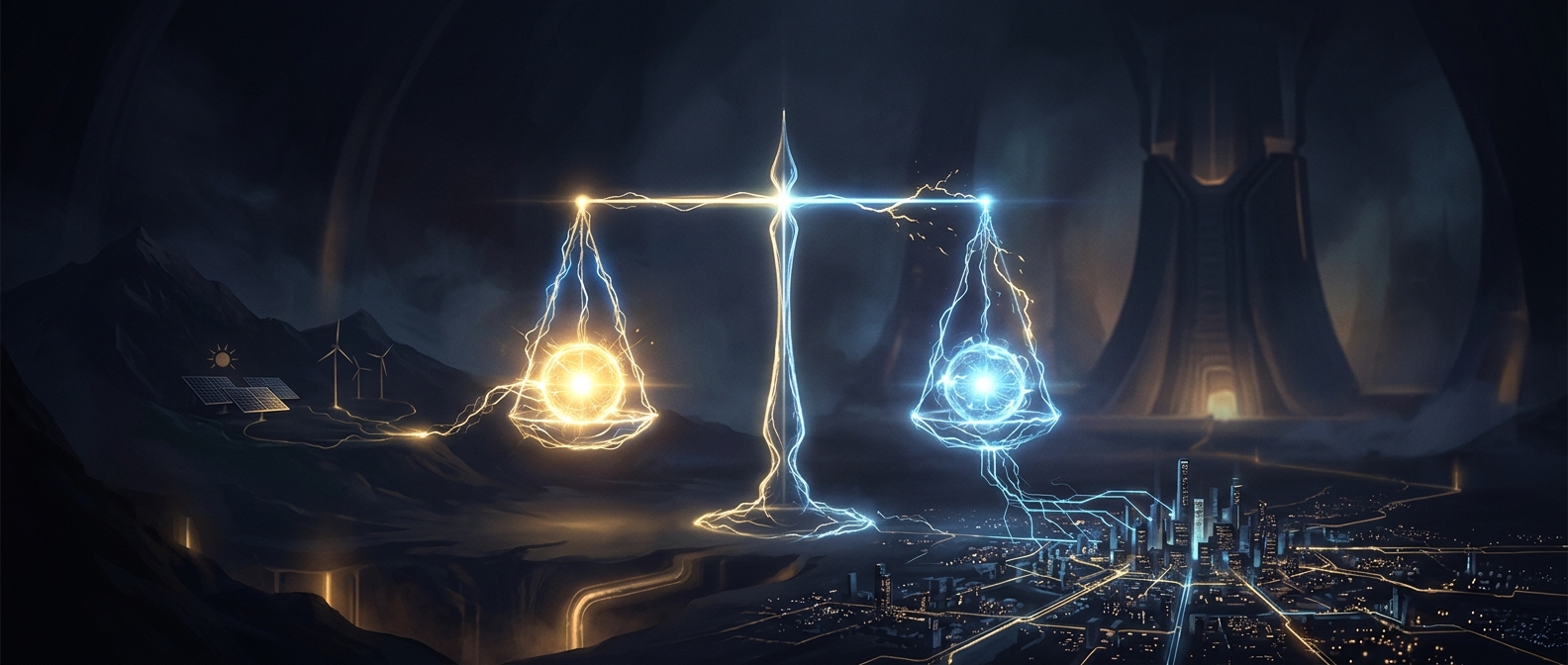
Grid operators and automated controls respond by changing supply or demand. They can increase generator output, reduce it when there is a surplus, or call on storage. A battery can absorb electricity when the grid has more than it needs, then release electricity when demand outpaces supply. Its rapid response can help steady the system while slower adjustments take effect.
The goal is not to hold every generator at an unchanging speed. It is to keep the shared frequency close to its normal target as power use and production continually shift. If frequency moves too far, protective equipment may disconnect generators or other equipment to prevent damage—an action that can make the supply-demand problem harder to manage.
A small signal with large consequences
A change in frequency is the grid’s physical response to an imbalance: it reflects the moment when the power being drawn and the power being produced do not quite match. Watching that signal lets operators act before a modest mismatch becomes a wider disruption.