How a changing magnetic field creates voltage
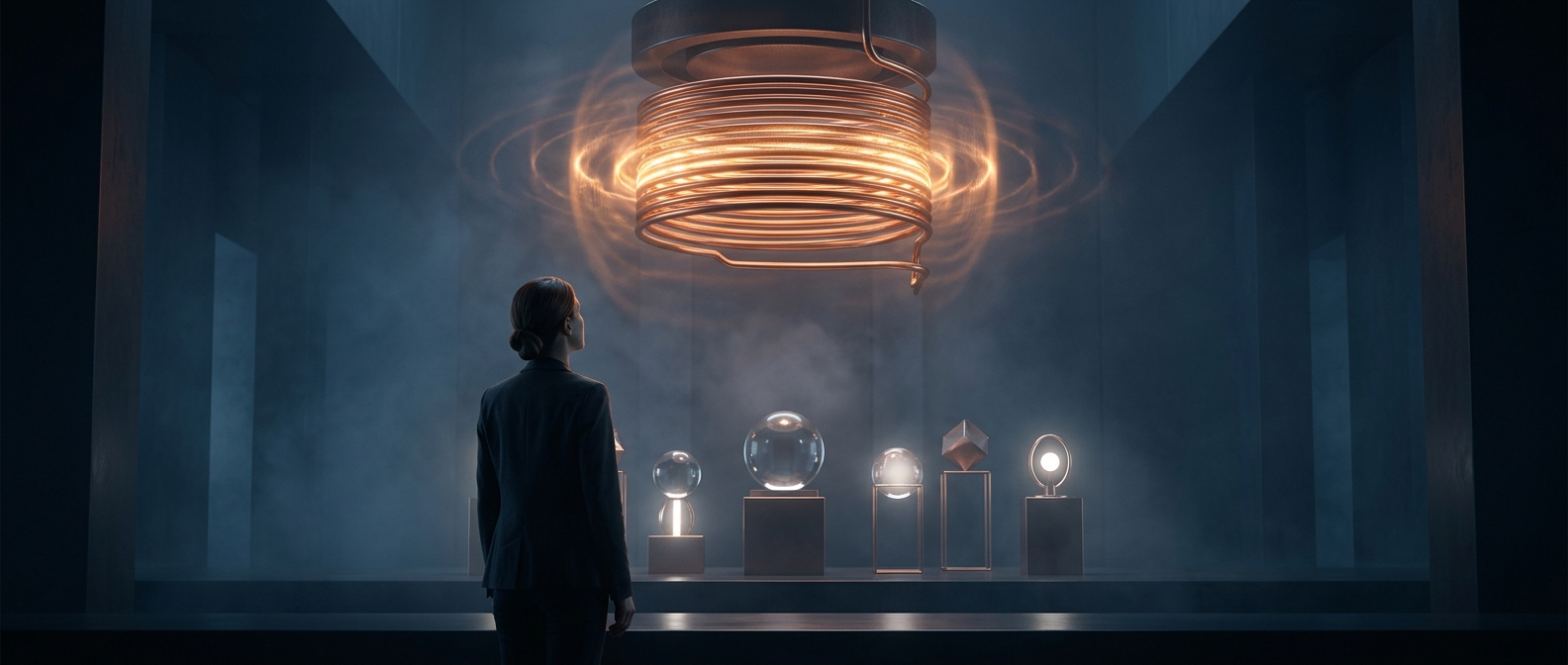
A coil of wire contains electrons that can move through the metal. When a magnet moves nearby, its magnetic field changes across the loop. That changing field creates an electric push around the wire—a voltage—even though the magnet never touches it. This effect is called electromagnetic induction.
Motion makes the difference
A stationary magnet beside a stationary coil produces no continuing induced voltage: the field through the coil is not changing. Move the magnet toward or away from the coil, however, and the magnetic field passing through the loop changes. Moving the coil instead can produce the same effect. Faster motion or a stronger magnet generally makes the change larger, increasing the induced voltage.
The direction matters, too. Reverse the magnet’s motion and the voltage reverses direction. In a closed circuit, that voltage can drive current. The induced current creates its own magnetic field, which opposes the change that produced it. That opposition is why the magnet can feel harder to move when the coil is connected to a load.
From a simple coil to a generator
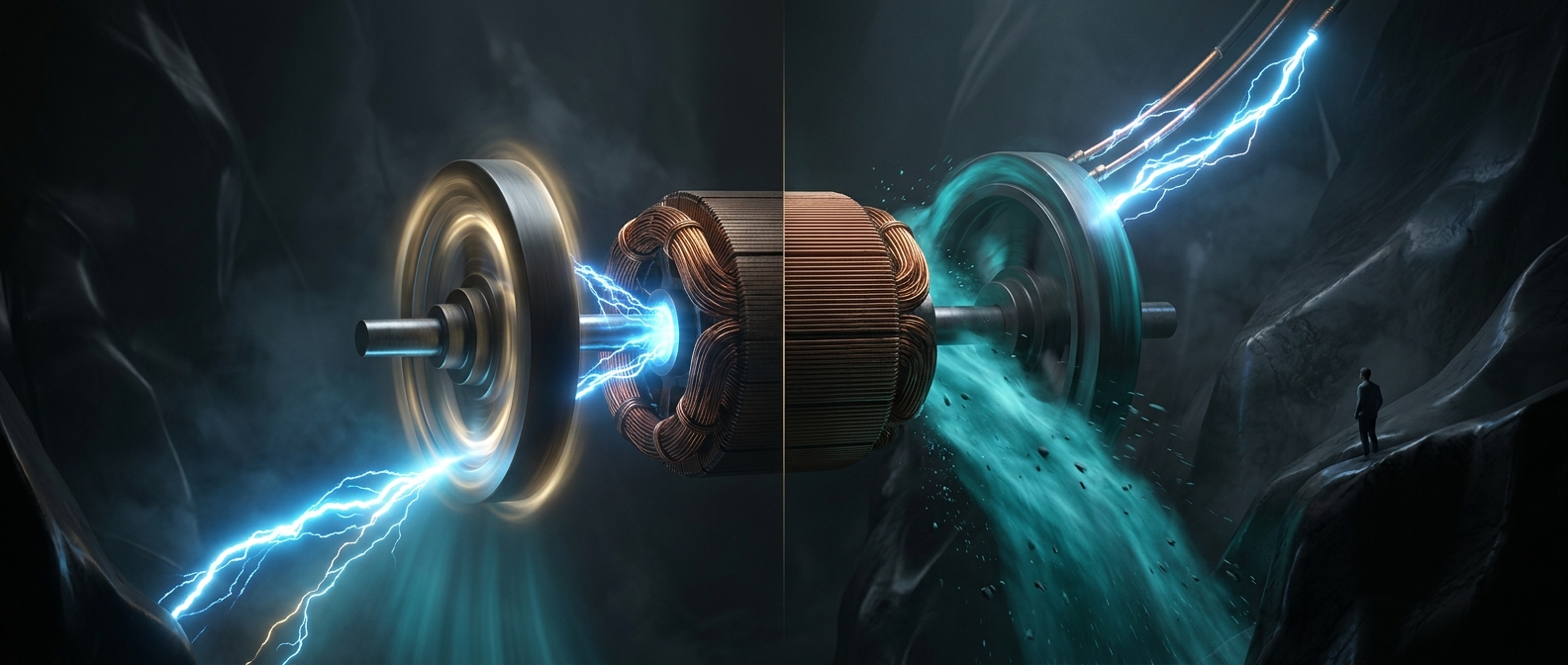
Generators use the same principle on a larger, continuous scale. A turbine turns coils or magnets so that the magnetic field through the coils keeps changing. The resulting voltage drives current through the connected circuit. In a hand-cranked flashlight, the chain is especially visible: turning the crank supplies the motion, induction produces electrical energy, and the circuit sends it to the light.
The key is not magnetic attraction by itself, but a changing magnetic field. That is how mechanical motion can become electrical energy without a magnet ever making contact with the wire.