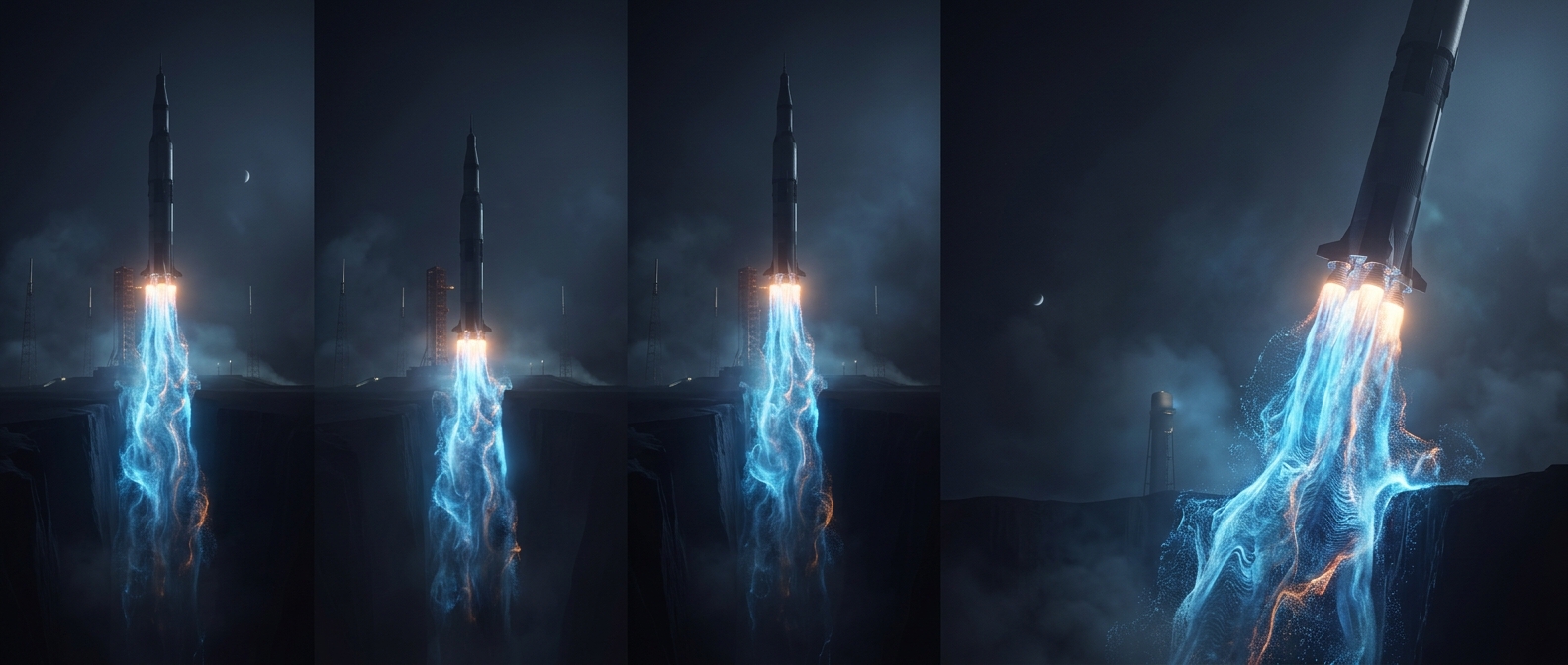
How a rocket launch reaches a seismograph
A seismograph does not identify the cause of a tremor. Its sensor responds when the ground moves, and its recording shows that movement over time. During a Saturn V launch, the engines produced intense sound waves that pressed on the surrounding air and ground, while the launch itself also generated vibrations that traveled through the ground. Either route could set the instrument moving.
The signal could therefore look like a burst of seismic activity even though no fault had slipped. The instrument was accurately recording motion; interpreting what caused it required context.
From engine roar to recorded wiggles
Sound is a pressure wave. When the powerful noise from a launch reaches the ground, it can make the surface vibrate. Those vibrations can then travel onward through the ground, where a seismograph’s sensor detects them. The rocket’s physical interaction with its launch site adds another source of vibration.
A seismograph turns that motion into a trace: as the ground shifts, the sensor’s internal parts move relative to the instrument’s frame, producing a record of the shaking. The trace can reveal when the motion began and how it changed, but its shape alone does not label the event “rocket” or “earthquake.”
Why the distinction matters
Earthquakes and launches can both leave real signals on seismic instruments, but the causes differ. An earthquake begins with sudden movement underground; a launch produces a powerful, sustained event whose timing is known. That surrounding information helps researchers tell a man-made vibration from tectonic activity.
The striking point is that a seismograph records ground motion, not geological meaning. A Saturn V could make the needle—or its modern equivalent—write a dramatic trace without the Earth’s crust breaking at all.