A mill could lift water in stages
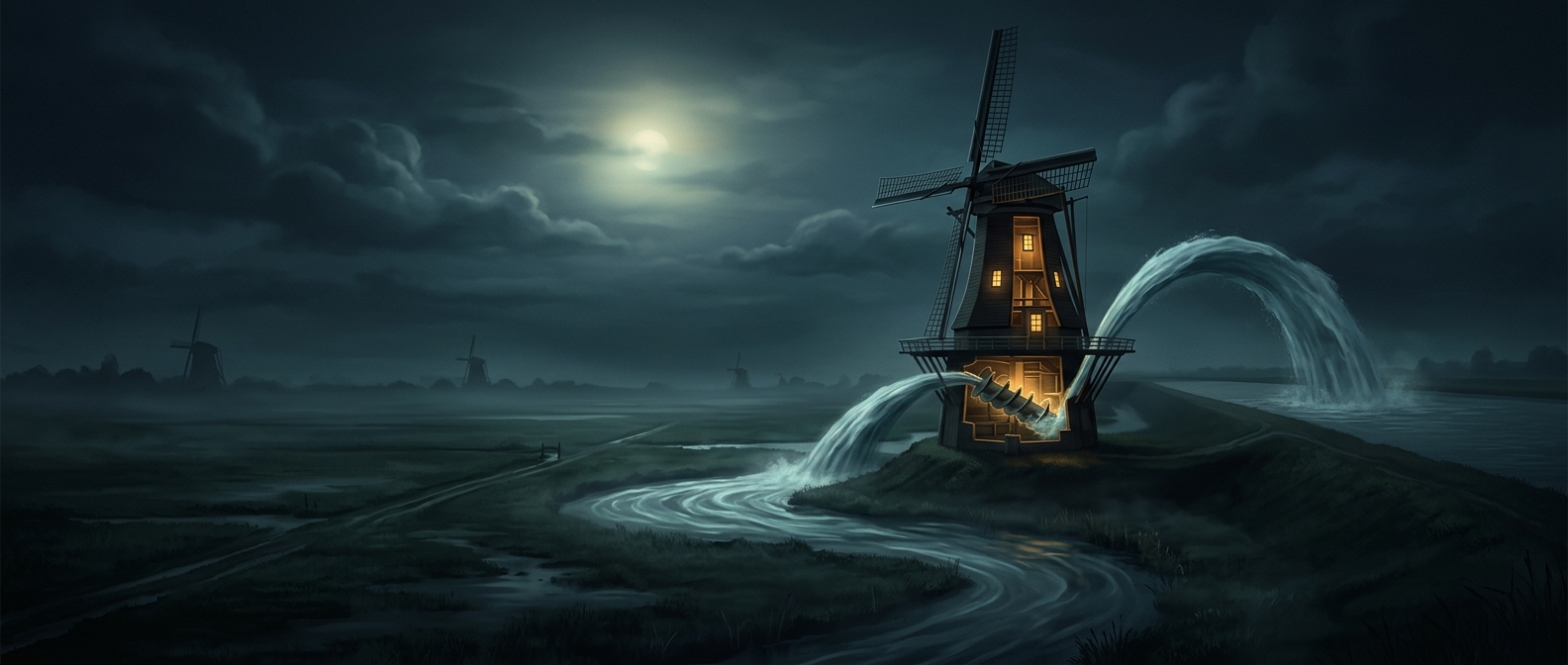
A drainage windmill was a pump driven by the wind. Its sails turned a shaft inside the mill, powering a device that raised water: often a large scoop wheel or a screw-shaped pump. The water did not need to travel far upward in one leap. Where the difference in level was too great, a chain of mills could lift it from one basin to the next, each mill raising it a little higher.
The land had to be drained—and kept drained
Much of the Netherlands is low and flat, and some reclaimed land lies below the level of surrounding waterways. A dike could hold back water, but it also trapped rain and seepage inside the enclosed area. Mills moved that water into higher canals, which carried it toward rivers or the sea. This enclosed, drained tract is called a polder.
The work was continuous, not a one-time construction job. Rain, groundwater, and seepage kept replenishing the water that had been pumped away. If pumping stopped for long enough, fields could become waterlogged again, threatening crops and making roads and settlements harder to use.
Why wind power suited the task
Wind offered a local source of power in a landscape where fuel could be costly to bring in. But it was also intermittent: a mill could pump only when the wind turned its sails. Drainage therefore depended on managing water in canals and storage basins as well as on the mill itself. The machinery turned a changing natural force into practical control over water levels—and made farming possible on ground that otherwise could not reliably stay dry.