Why Hungarian gulyás stays brothy
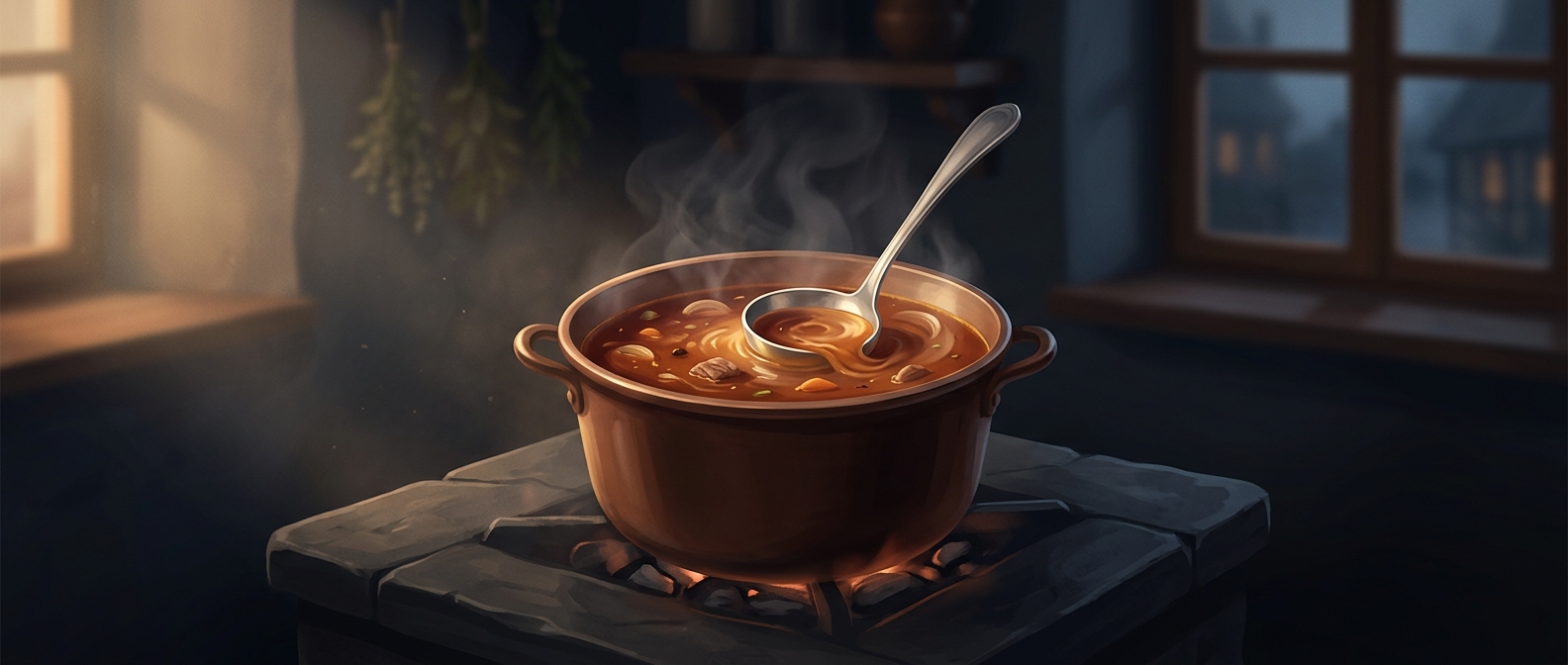
Traditional Hungarian gulyás is built around meat simmered in seasoned liquid, not around a sauce thickened to cling to the ingredients. Beef, onions, paprika, and water or stock cook together; potatoes and sometimes small pinched noodles may join the pot. The result is substantial, but the broth remains loose enough to ladle and sip.
That distinction can get blurred abroad, where “goulash” often means a thick meat stew. In Hungary, some thicker paprika-rich dishes are closer to pörkölt, a separate braised-meat preparation. Recipes vary, but a bowl of gulyás is generally understood as soup.
Paprika flavors the liquid
Paprika supplies color and a rounded pepper flavor, but it is not a thickener. Cooks commonly stir it into softened onions and fat, then add liquid soon afterward. Paprika’s flavor compounds disperse well in fat, which helps season the pot; prolonged high heat can scorch the powder and make it bitter. Once the liquid is added, gentle simmering lets the meat and aromatics flavor the broth without reducing it into a dense coating.
Potatoes can release a little starch as they cook, giving the soup some body. But the goal is not the velvety, concentrated texture of a roux-thickened stew. The bowl’s richness comes from what the broth carries, not from how thick it is.
A practical difference at the table
Because the liquid is part of the dish rather than a sauce, gulyás is served in a bowl and eaten with a spoon, with bread useful for catching the last of the paprika-scented broth. Its hearty character comes from a full serving of meat and vegetables—not from making the liquid heavy.