The countryside is written into Valencian paella
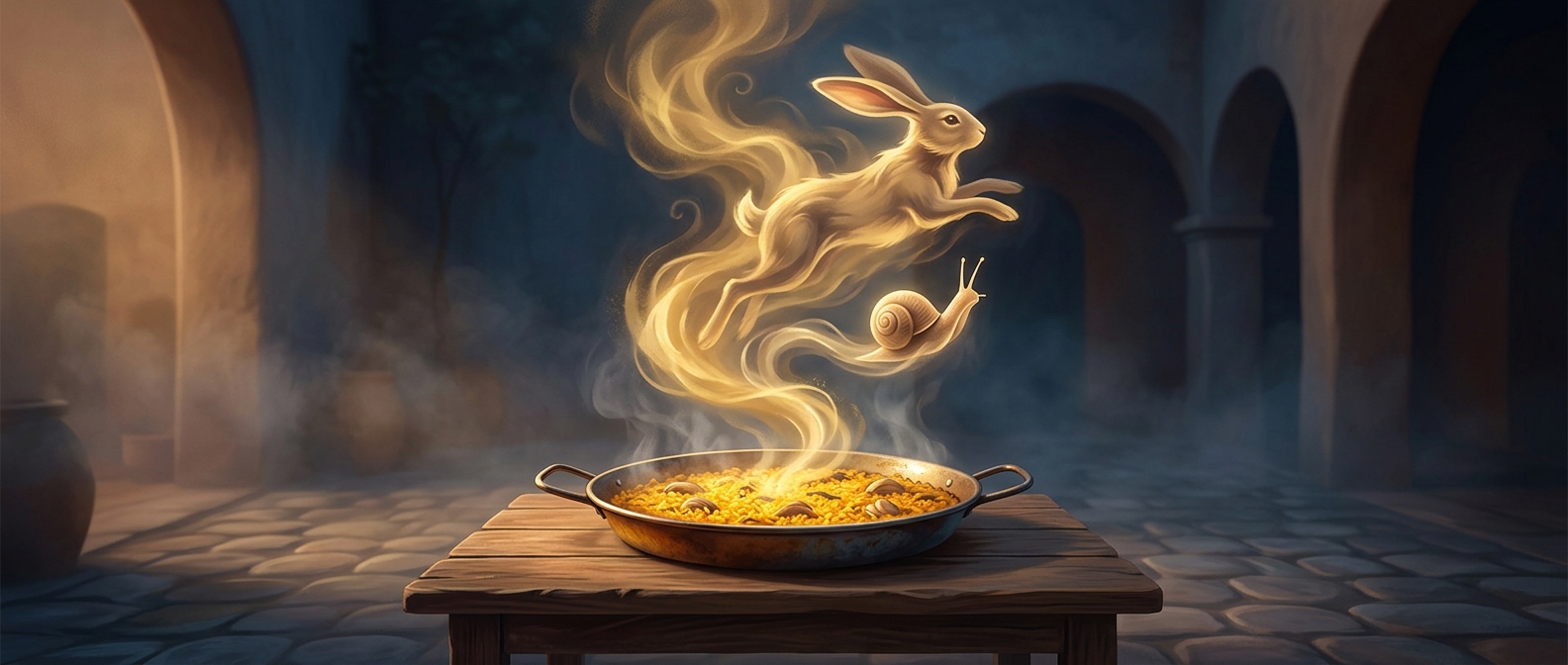
Traditional Valencian paella grew from the practical cooking of the region’s rural communities. Rice could be paired with ingredients close at hand: rabbit from the surrounding countryside, poultry, vegetables, and sometimes snails gathered after rain. The familiar combination is not a chef’s arbitrary flourish; it reflects a meal shaped by local farms and fields.
Snails are especially tied to that landscape, but they are not a compulsory ingredient in every household’s version. Traditional recipes vary, and cooks have always worked with what was available. The dish’s identity comes from this regional pattern of ingredients and technique, not from a universal checklist.
Why the pan matters as much as the ingredients
Paella is cooked in a broad, shallow pan, which spreads the rice into a relatively thin layer. That shape helps the liquid evaporate as the rice cooks, rather than leaving it soupy. The rice takes on flavor from the cooking liquid and the ingredients around it, while the bottom can form a toasted layer called socarrat—a prized crispness when it is achieved without burning.
That method helps explain why paella can accommodate different local ingredients without becoming an entirely different kind of meal. Seafood versions reflect another setting and another pantry; they are popular in their own right. Valencian paella tells a story of one particular landscape, while paella more broadly has room for regional variation.