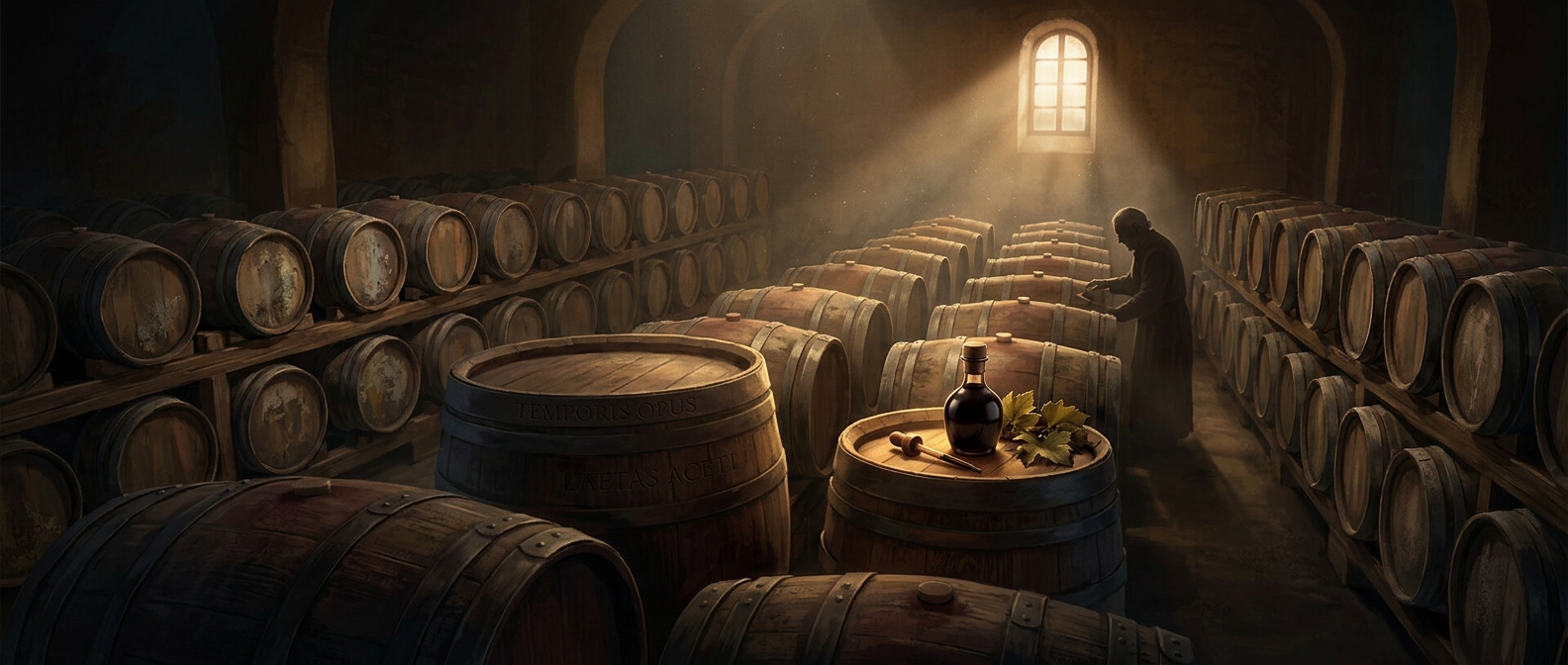
How a grape must becomes concentrated
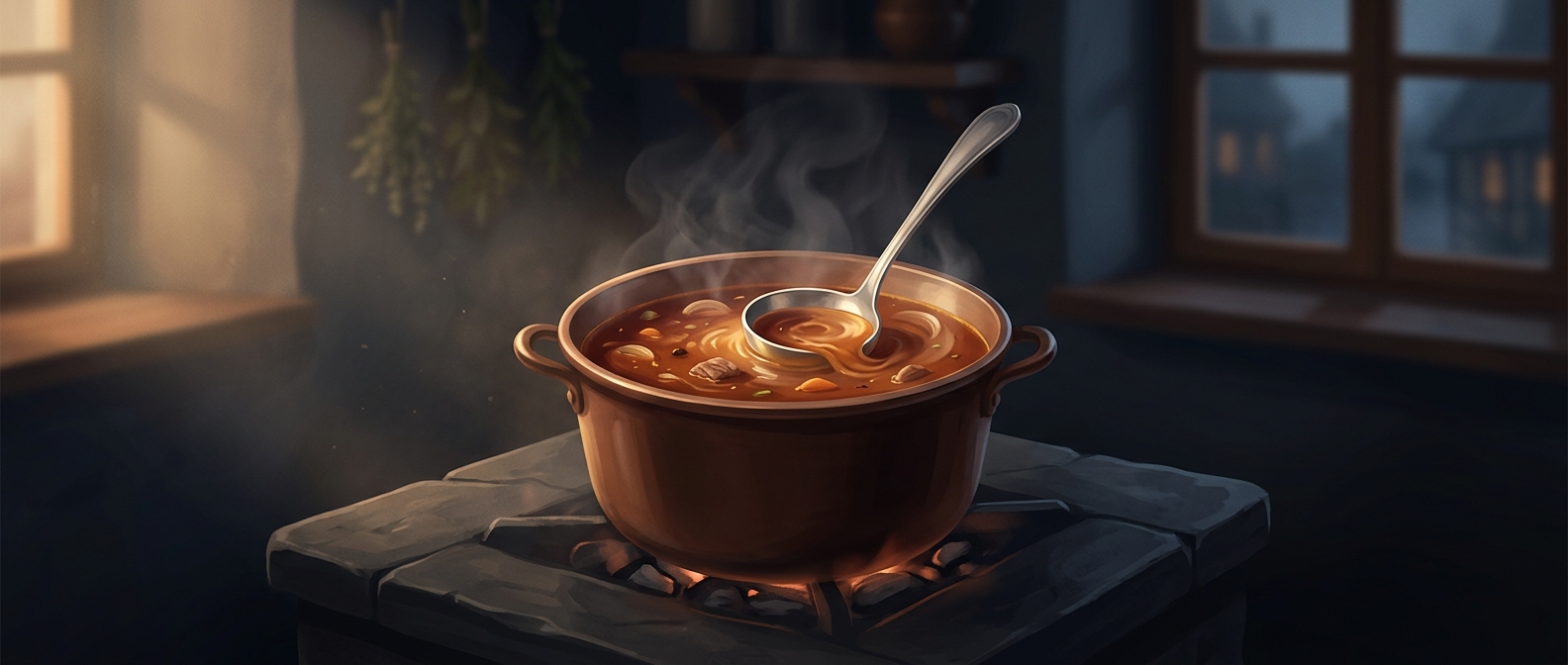
Traditional balsamic vinegar begins as grape must—the juice and pulp of freshly pressed grapes—which is cooked down before it ferments. Microorganisms turn some of its sugars into alcohol and then acetic acid, the sharp-tasting acid that gives vinegar its bite. As the liquid rests in porous wooden casks, water escapes through the wood into the surrounding air. The remaining sugars, acids, and flavor compounds become more concentrated.
The casks also shape the flavor. Slow contact with wood and air supports gradual chemical changes that can soften harsh edges and add aromas from the different woods. It is not simply a matter of leaving grape juice untouched until it tastes stronger: concentration, fermentation, and aging all contribute to the result.
Why the liquid moves between casks
A traditional aging set uses a sequence of casks that decrease in size. When vinegar is drawn from the smallest, oldest cask, it is replenished with some of the vinegar from the next cask; that cask, in turn, receives liquid from a larger one. Freshly prepared must eventually enters the largest cask. This staggered transfer lets younger vinegar join older vinegar gradually, rather than making each barrel a sealed, separate batch.
Smaller casks expose more liquid to wood relative to the amount they hold, helping the final stages of concentration. But the process is slow: water keeps evaporating, while the remaining liquid thickens and its flavors develop. By the time a portion reaches the smallest cask, it carries traces of a long chain of aging—not just the contents of one barrel, but the accumulated work of the entire sequence.