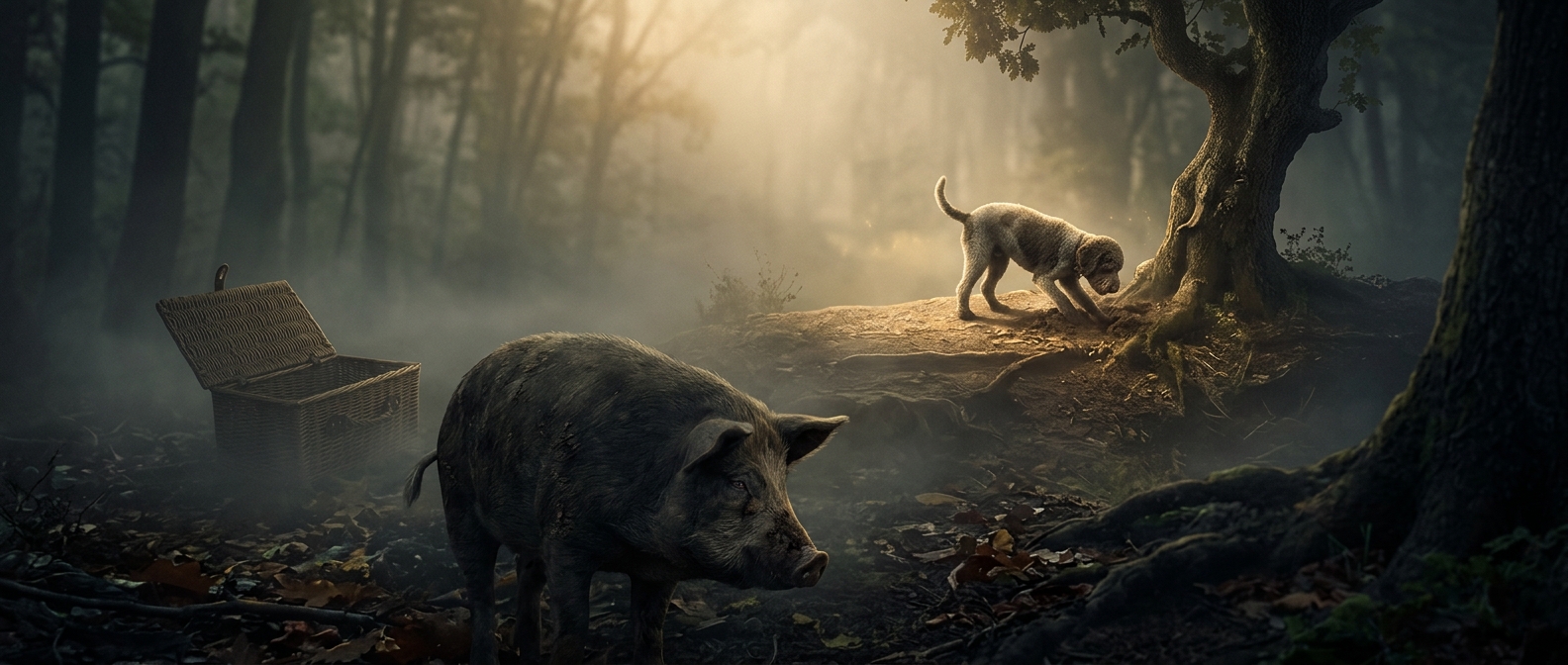
The useful nose is the one that waits
Truffles grow underground, often among tree roots, and release aromatic compounds that can seep through the soil. A trained animal can detect that scent before the fungus is visible. But finding a truffle is only half the task: the hunter also needs to reach it without losing or damaging it.
Pigs have a natural attraction to truffles, partly because their scent resembles compounds associated with a male pig’s reproductive odor. That instinct can make a pig eager to root at the exact spot where the fungus lies. The animal may eat the truffle before its handler can retrieve it, or churn up the surrounding soil while trying.
Training turns detection into cooperation
Dogs can also learn to recognize truffle odor, but they are not compelled to eat the fungus. Hunters reward them for indicating a find—by pausing, pawing gently, or otherwise signaling—then take over the digging. The dog’s job is to locate; the person’s is to uncover the truffle carefully.
That division of labor matters because truffles are delicate and grow in a network of roots and soil. Digging too broadly can disturb the site, while leaving the fungus in place until the handler arrives helps keep the harvest controlled. A dog that can stop at the scent gives the hunter a moment to use a small tool and collect the find.
The switch, then, was not simply a contest of noses. A successful hunting partner had to detect the truffle and let the human claim it.