What the lye bath does to pretzel dough
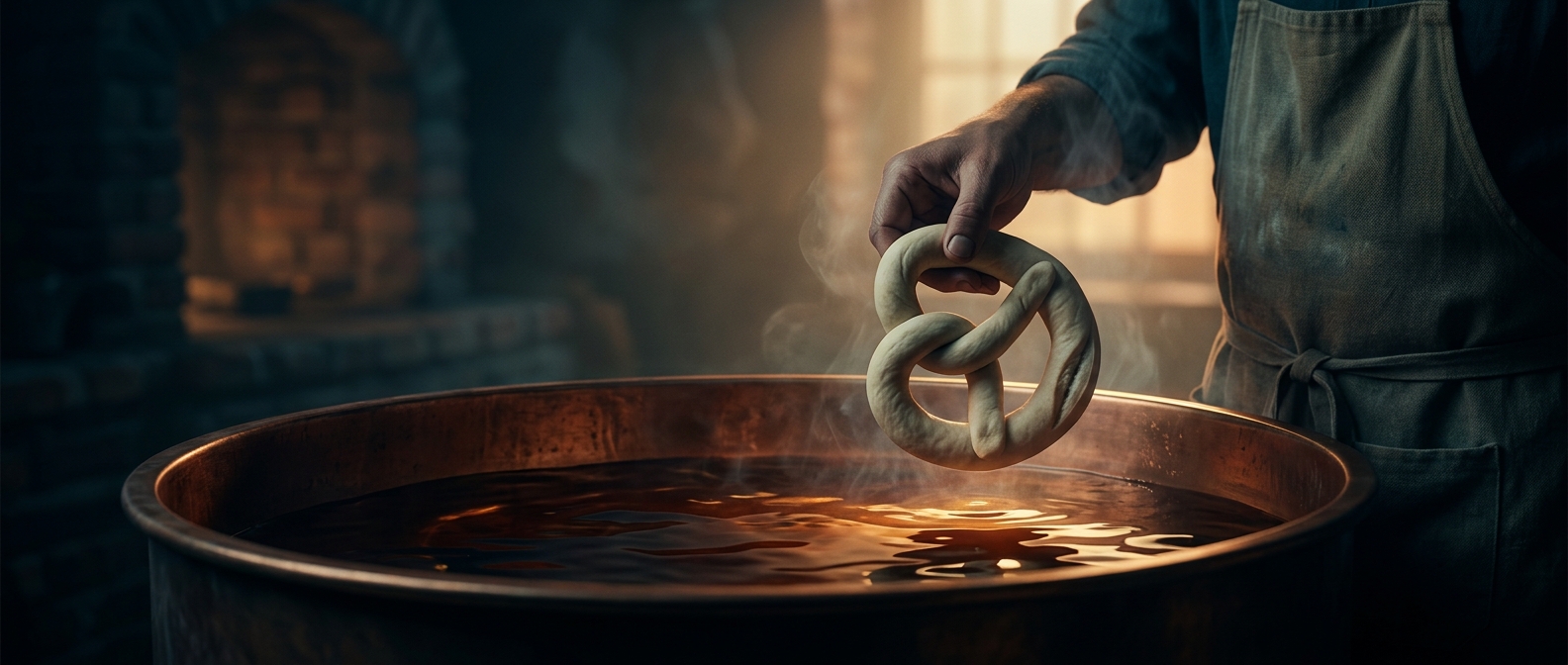
Lye is a strong alkaline solution: its pH is high, meaning it has very few free hydrogen ions. A quick dip raises the dough’s surface pH without soaking the whole pretzel. That matters because browning reactions depend on the conditions right at the surface, where the dough meets the oven’s heat.
Why the crust turns brown and tastes different
As the pretzel bakes, sugars react with amino acids—the building blocks of proteins—in a process called the Maillard reaction. Alkalinity makes this reaction proceed more readily, so the dipped surface develops color and complex roasted, savory notes faster than untreated dough. The result is the deep brown, flavorful crust associated with pretzels, while the interior stays soft and comparatively mild.
The bath also changes how the surface behaves during baking. Because the exposed dough browns quickly, the pretzel can acquire its characteristic finish without needing to bake long enough to dry out the center. The distinctive flavor is therefore not simply seasoning on top: it is created in the crust as the dough heats.
A brief dip, followed by careful handling
Food-grade lye is caustic, meaning it can burn skin and eyes, so preparing the solution requires protective handling. Once the pretzel is baked, the alkaline surface has reacted and the lye is no longer present as a raw bath coating. The short treatment is a small step with an outsized effect: it sets up the crust’s color and flavor before the pretzel even enters the oven.