A small barrier with a second purpose
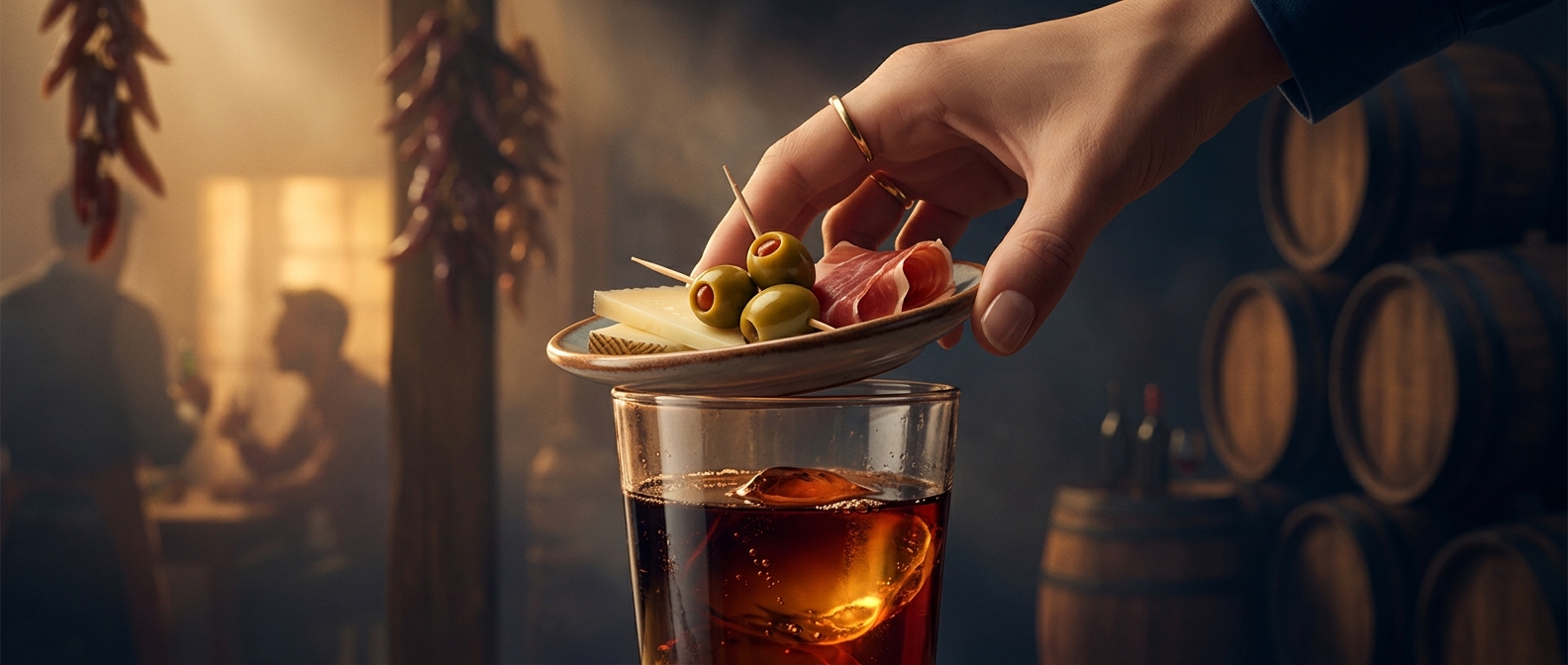
An uncovered drink is an easy landing place for a fly. In the familiar tapas origin story, a piece of bread or meat placed over a glass served first as a physical barrier: it made it harder for insects to reach the drink. Once the cover was edible, it could also be eaten, turning a bit of protection into a snack.
That practical sequence helps explain why the story has endured. It links an ordinary serving problem to a memorable change in how food was presented—and it gives the word tapa, meaning “cover,” a fitting role in the tale. But a neat explanation is not the same as a documented origin. The fly-guard account remains one story among debated explanations for tapas.
From cover to custom
The story’s appeal lies in how easily a useful object can acquire another purpose. A morsel set on a drink need not have begun as a planned course; it could be treated as part of serving the beverage. Repeated over time, that kind of pairing could make food alongside a drink feel customary, even as the original practical reason faded.
The tale cannot establish when or where that change happened, so it should not be treated as a complete history of tapas. Its lasting value is more modest: it shows how a Spanish food tradition can be remembered through a concrete act of everyday problem-solving—placing something edible between a drink and the flies.