How a Small Gesture Becomes a Food Cue
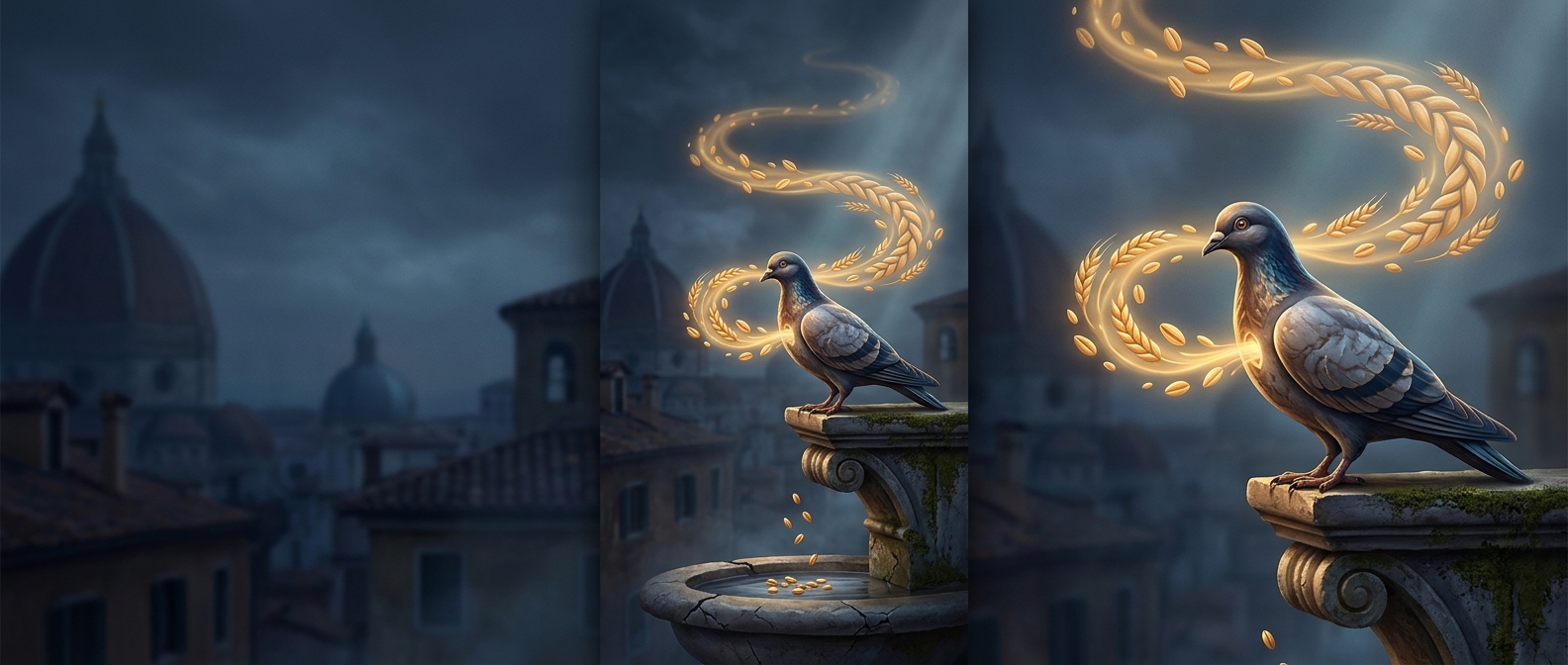
A pigeon does not need to recognize bread in someone’s bag to start paying attention. It can learn that certain human actions tend to come just before food appears. A person stopping, reaching into a bag, or scattering crumbs becomes a predictive cue: a signal that makes a meal more likely.
The learning is built from repeated sequences. The bird watches people, then sees crumbs land; later, it may approach sooner when it notices the same familiar movements. If food follows, that experience strengthens the association. If nothing appears, the cue is less useful.
Watching Is Not the Same as Knowing
This does not require pigeons to understand that someone intends to feed them. They can respond to visible patterns without grasping the person’s purpose. Nor must every bird learn in exactly the same way: seeing other pigeons gather can draw attention to a spot, while finding food there can confirm that the spot is worth revisiting.
Over time, the neighborhood becomes a map of probabilities. A bag opening is not a guarantee, but it may be a better bet than an empty stretch of pavement. That is why a brief pause or a familiar reach can bring pigeons close before a crumb has even hit the ground.