Cleanliness is part of the instrument
A spacecraft can carry cameras, sensors, and sample containers that must work without hands-on repair. That makes contamination a design problem, not merely a housekeeping one. A particle on an optical surface can scatter incoming light, reducing contrast or creating a misleading mark. On other instruments, residue can alter what a sensor detects or contaminate material intended for analysis.
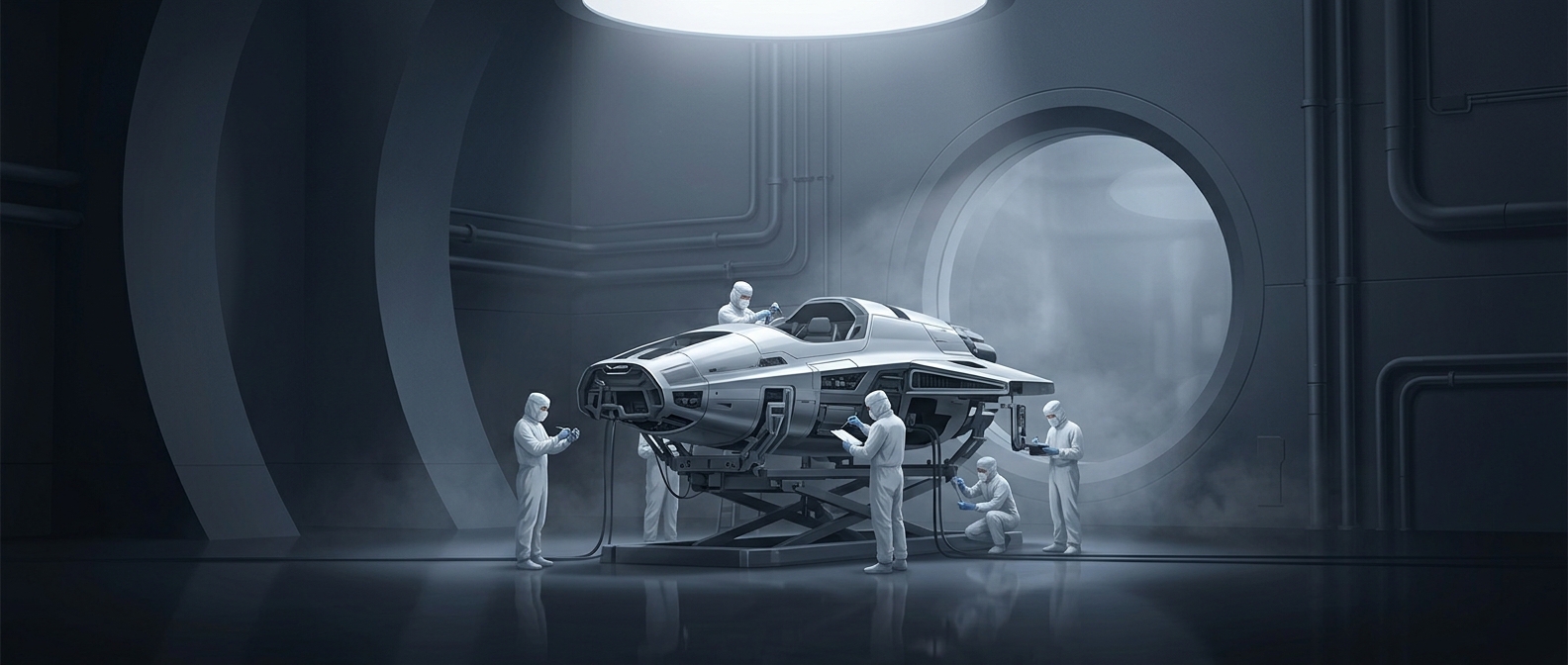
Clean rooms reduce the chances that such material reaches the spacecraft while it is exposed during assembly. They use filtered air, controlled cleaning, and clothing that limits particles shed from people. Workers also follow procedures for moving tools and components: ordinary fabrics, packaging, and handling can all introduce debris. The aim is not a perfectly empty room, but a controlled environment whose cleanliness can be checked.
Contamination can travel with a mission
Dust is only part of the concern. Earth microbes can cling to equipment, and a spacecraft may carry them to another world or, on a sample-return mission, bring contaminated material back. That is why teams track biological as well as physical contamination, especially around hardware that will contact a sample. Keeping the spacecraft clean helps scientists distinguish what came from the target from what may have arrived with the equipment.
Checks continue beyond the room itself. Teams inspect exposed surfaces and monitor the environment, then protect sensitive hardware when it is not being worked on. These precautions cannot make a spacecraft risk-free, but they reduce avoidable uncertainty. Once a camera is in orbit—or a sample is sealed for its trip home—a speck that could have been removed on Earth may be impossible to separate from the evidence.