A First Step That Set the Tone
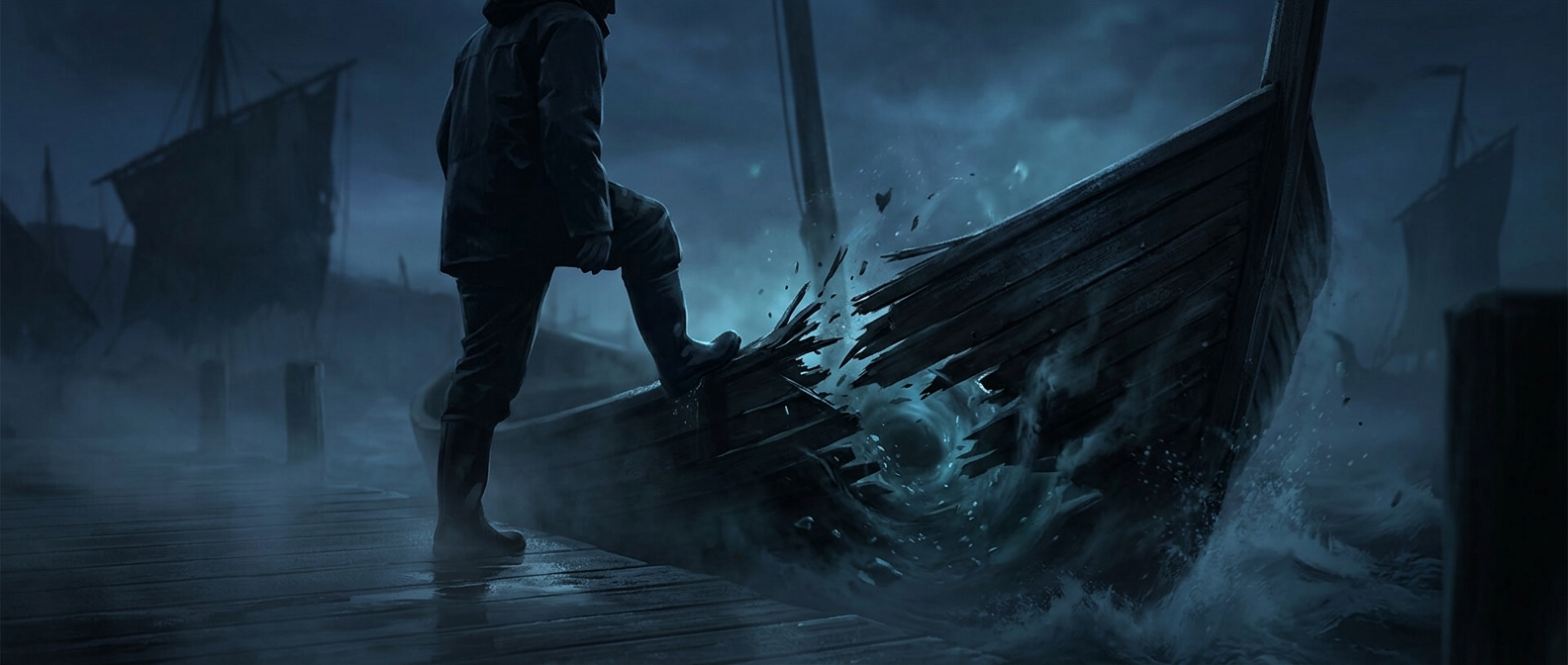
For sailors, boarding a ship was more than getting from shore to deck: it marked the start of a voyage whose hazards could not be fully controlled. In that setting, even an ordinary movement could acquire meaning. Stepping aboard left-foot-first was treated as an omen of misfortune, with the feared consequence extending beyond the sailor to the wooden vessel and its journey.
Why the Threshold Mattered
A ship’s side formed a literal boundary between land and sea—and between familiar routines and the uncertainties of a voyage. Rituals at that boundary offered a small way to act on anxiety: begin the journey correctly, and perhaps avoid inviting trouble. Such customs could also be reinforced socially, as experienced crew members passed expectations on to newcomers.
The superstition did not make a left-footed step dangerous in itself. Its force lay in what sailors believed the act signaled. When a voyage depended on weather, seamanship, and luck, a minor ritual could become part of preparing for what lay ahead.
The Cost of Getting It Wrong
The rule’s stark consequence—ruin for the ship’s voyage—made the first step memorable. It turned boarding into a moment to watch, not merely a practical act. For a crew about to leave the safety of shore, that tiny pause at the rail gave uncertainty a shape: one foot could be placed carefully, even when the sea beyond it could not.