Why a Cat Could Feel Like a Good Omen at Sea
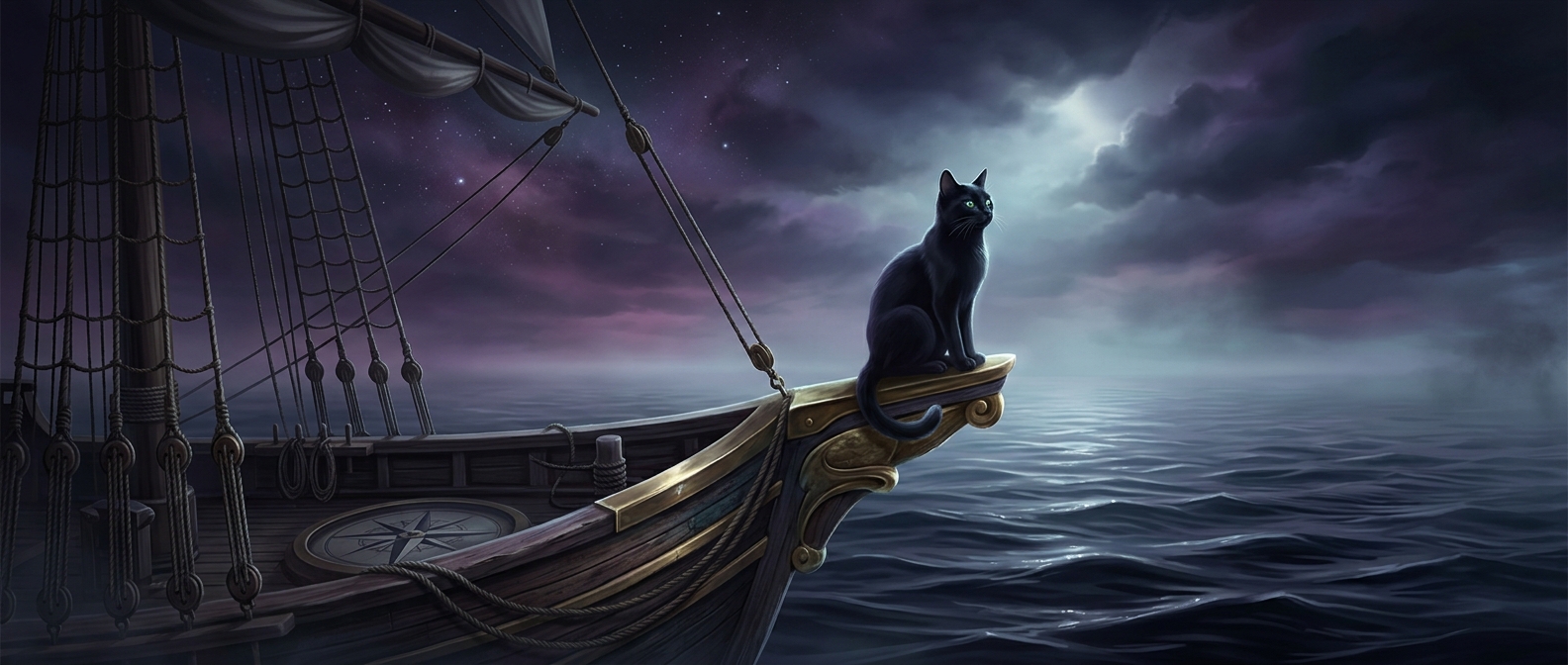
A voyage put sailors in the path of storms, illness, and equipment failures they could not control. In that setting, a familiar animal aboard could become more than a pet: it offered company during long stretches at sea and a small, reassuring sign of good fortune. Some maritime traditions gave black cats that role, though beliefs about their luck varied from place to place.
A Superstition With a Practical Side
Cats also had a useful job on ships: hunting mice and rats. Rodents could damage food stores and chew through materials, so a cat’s presence had everyday value even when sailors attached symbolic meaning to it. The two roles could reinforce each other: an animal that helped protect the ship’s supplies might also be treated as a protector of the voyage.
That did not make a cat a safeguard against rough water or wrecks. Its luck belonged to the realm of folklore—a way to give shape to uncertainty, not a force that could steer a ship. The striking part is that the same animal could be both working crew and good-luck charm, with practical help and hopeful meaning sharing the deck.