How a cassette became computer storage
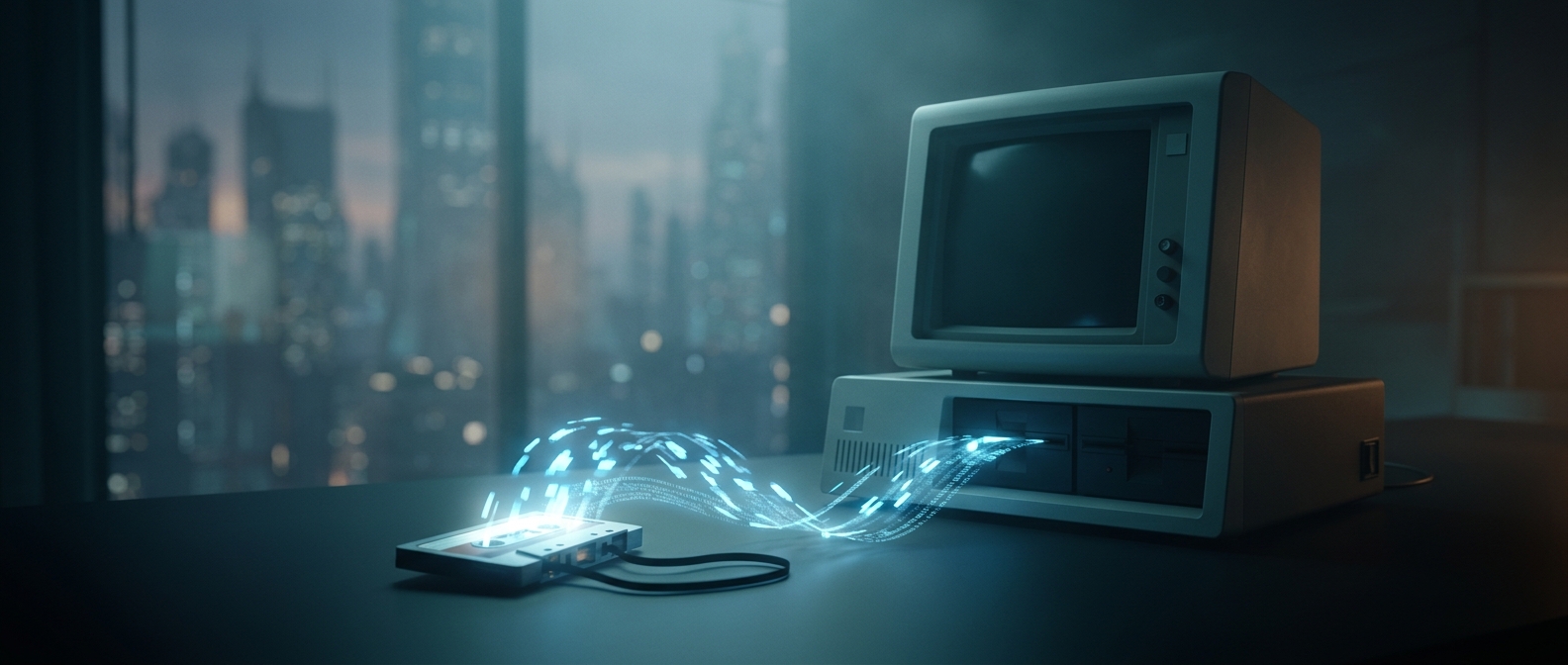
The IBM PC’s cassette port turned program data into sound signals that an ordinary tape recorder could store. When a program was saved, the computer encoded its instructions as patterns of audio tones and sent them through a cable to the recorder. To load the program later, the recorder played those tones back; the PC’s cassette circuitry converted them into data the computer could use.
The tape did not contain music or spoken instructions. Its sounds were a physical representation of digital information—more like a long, audible data stream than a file stored at a particular address.
Cheap, but slow and sequential
A cassette deck was often cheaper than a floppy-disk drive, so it offered a way to save and reload programs without buying a disk system. The tradeoff was how tape works: the computer had to wait while the tape moved through the recording. Finding a particular program could mean rewinding or fast-forwarding, and a weak or interrupted recording could make the data unreadable.
A floppy disk, by contrast, let a computer reach different parts of the disk more directly. That made disk storage more convenient, but it cost more. Cassette storage made sense when keeping the initial cost down mattered more than speed or quick access.
A PC that could start without a disk
The cassette connection was especially useful because an IBM PC could start in its built-in Cassette BASIC environment, then load or save BASIC programs on tape. Owners could begin experimenting without first installing a floppy drive. The port was not simply an audio input: it was a low-cost route into saving computer work, with the tape’s slow, one-way-at-a-time nature built into the experience.