Why a Unicycle Seat Is Shaped Like a Perch
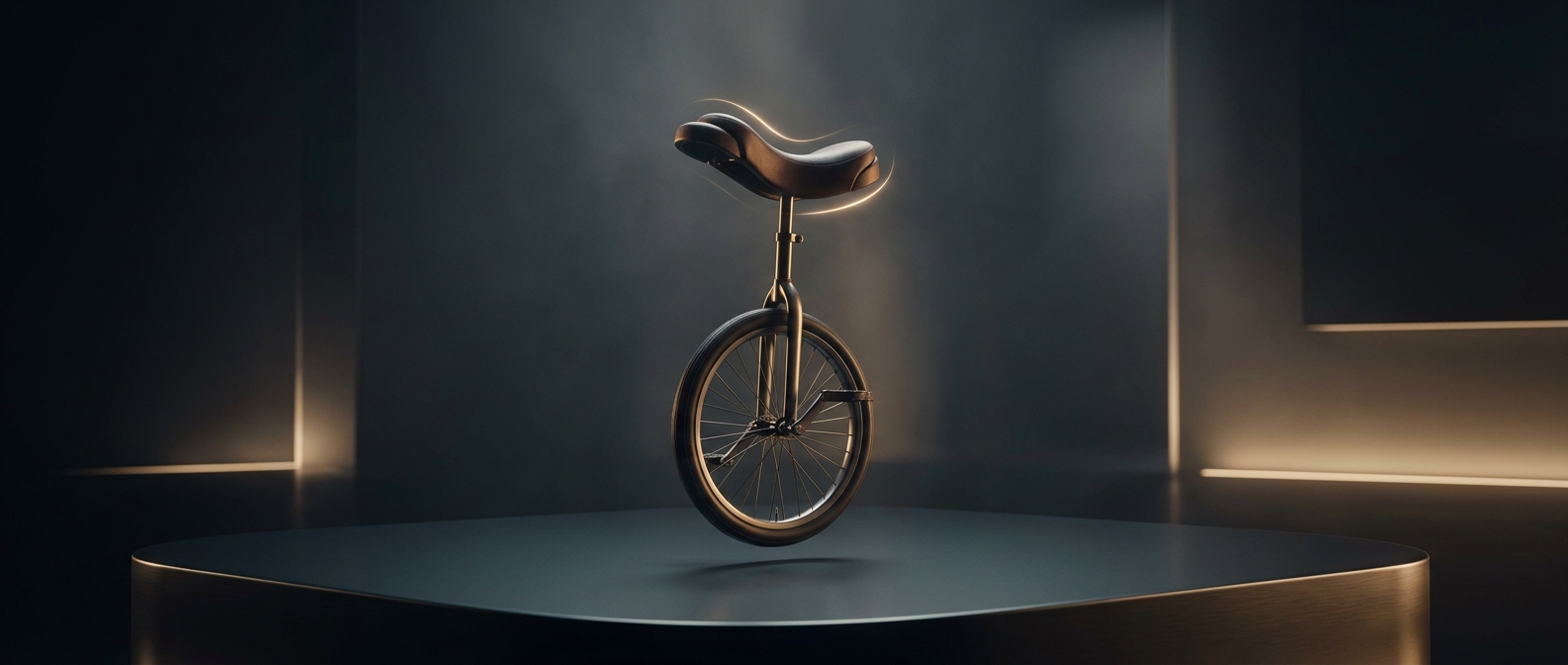
A unicycle’s seat has to fit into the rider’s pedaling motion, not simply provide a broad place to sit. Each pedal stroke brings a thigh close to the body and then carries it around the wheel’s hub. A wide, flat saddle would occupy some of that moving space, increasing the chance of rubbing or forcing the rider’s legs into an awkward path.
The pronounced curves leave room alongside the seat for the thighs while giving the pelvis a narrow place to rest. The result is less like an armchair and more like a perch: supportive enough to connect rider and machine, but shaped around movement rather than stillness.
The Seat Is Part of the Balance System
On a unicycle, the rider’s body must continually make small adjustments as the wheel moves. The legs provide much of the control: pressure on the pedals drives the wheel, while shifts in weight and leg position help keep the rider aligned. A bulky saddle could interfere with those adjustments, even if it seemed more comfortable when standing still.
That creates a familiar engineering tradeoff: cushioning and width can help on a stationary seat, but clearance and freedom of movement matter more on a machine whose rider’s legs are always working. The curved profile makes the saddle fit the action of riding—where a little extra room for each passing thigh can matter more than a broad surface to lounge on.