When a Thank-You Looks Like Lost Property
In Japan, a meal or hotel bill generally pays for the service as well as the food or room. A tip is not usually expected as a separate reward. So when a customer leaves cash on a table, staff may read the gesture not as extra payment but as money someone has accidentally dropped or forgotten.
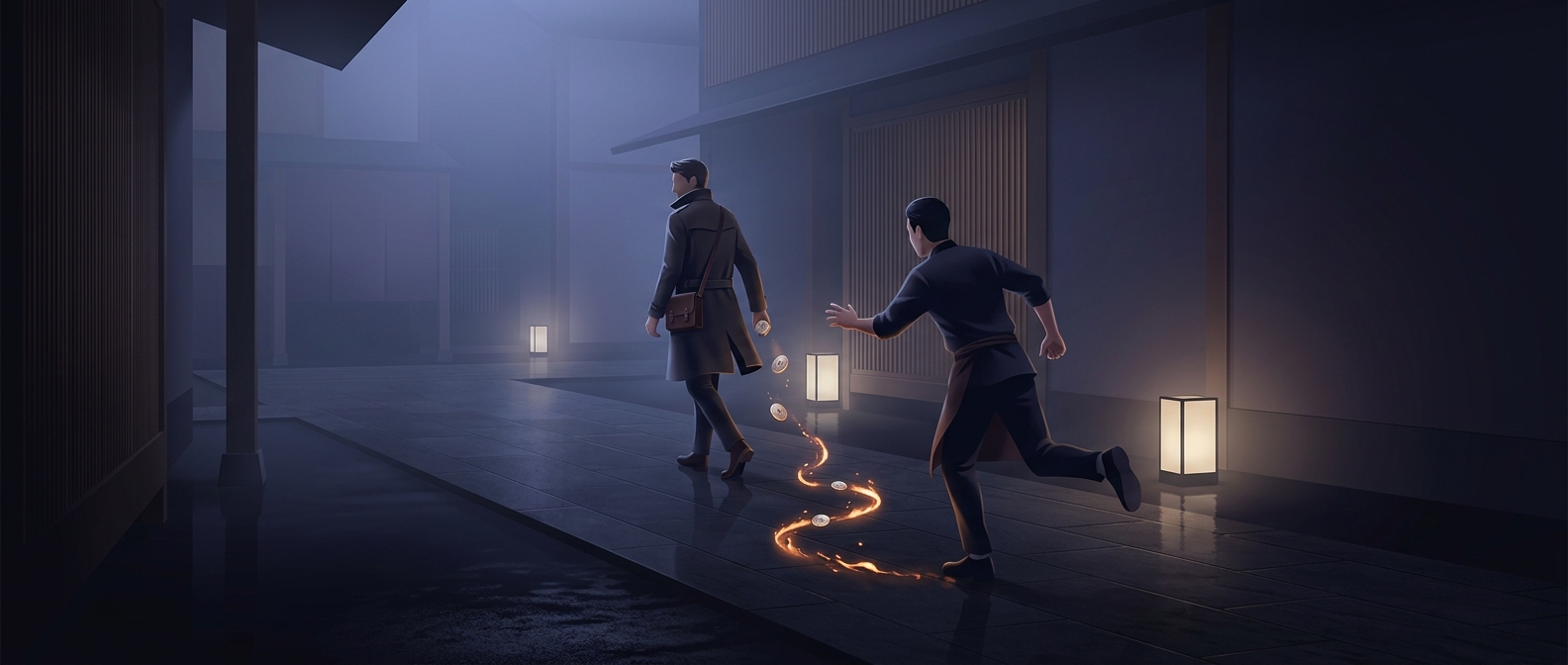
That interpretation changes what happens next. Rather than quietly keep the cash, an employee may follow the departing customer to make sure it gets back to its owner. The chase is less a rejection of gratitude than an attempt to resolve what looks like a mistake.
Gratitude Without an Envelope
The expectation reflects a service ideal often described as omotenashi: attentive hospitality offered as part of the interaction, not something that must be bought with an extra payment. The word is sometimes translated as “hospitality,” but here the practical point is simple: good service is ordinarily built into the price and the job.
For visitors, a sincere thank-you is usually clearer than leaving cash behind. If you want to express appreciation in a more substantial way, follow the setting’s local guidance rather than assuming a tip will be understood. In a place where cash left on the table can look like a loss, the most considerate gesture may be to leave nothing extra at all.